
Why Has GRAP Been Activated?
The Commission for Air Quality Management (CAQM), the statutory body responsible for managing air quality in the region, invoked Stage 1 after Delhi's average Air Quality Index (AQI) crossed the 201 threshold, entering the 'Poor' category. On October
20, the AQI was in the 'Moderate' range at 179, but it sharply deteriorated to 244 by the afternoon of October 21, prompting the action. Forecasts from the IMD and IITM suggest the air quality is likely to remain in the 'Poor' zone in the coming days, making these preliminary measures necessary to prevent a slide into 'Very Poor' or 'Severe' conditions. GRAP is designed as a proactive system, implementing progressively stricter measures as pollution levels rise, rather than reacting after a public health emergency has already begun.
What Are the Stage 1 Restrictions?
Stage 1 focuses on curbing key sources of particulate matter before they spiral out of control. The measures are enforced across Delhi and its adjoining NCR cities. Key rules now in effect include a strict ban on all open burning of municipal solid waste and biomass. For commercial establishments, the use of coal and firewood in tandoors at hotels and restaurants is now prohibited. Authorities will intensify efforts to control dust, which includes regular mechanised sweeping and sprinkling of water on roads. All construction and demolition sites must strictly adhere to dust control norms. Enforcement of Pollution Under Control (PUC) certificates for all vehicles will be tightened, and traffic police will be deployed to ensure smooth traffic flow and prevent congestion, which contributes to vehicular emissions. The use of diesel generator sets is also restricted, permitted only for essential or emergency services.
Understanding the GRAP Framework
The Graded Response Action Plan is a four-stage emergency protocol based on Delhi's AQI. Each stage triggers a specific set of actions that become more stringent as the air quality worsens. The stages are: Stage I ('Poor' AQI: 201-300), Stage II ('Very Poor' AQI: 301-400), Stage III ('Severe' AQI: 401-450), and Stage IV ('Severe+': AQI >450). An important feature of GRAP is that its measures are cumulative; when a higher stage is invoked, the restrictions from all previous stages remain in force. The goal is to create a predictable and orderly response, involving multiple agencies like the traffic police, municipal corporations, and pollution control committees, all acting in coordination under the direction of the CAQM.
What This Means for Residents
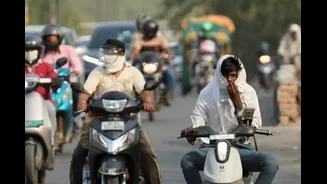
While Stage 1 does not impose drastic curbs on public movement like the odd-even scheme, it signals the start of the 'pollution season' and serves as a critical alert. Residents are encouraged to contribute by minimising personal vehicle use, opting instead for public transport or carpooling. It's crucial to ensure your vehicle's PUC certificate is up to date to avoid penalties. For health, it is advisable to limit outdoor exertion, especially for vulnerable groups like children, the elderly, and those with respiratory conditions. You should monitor the daily AQI in your specific area and consider using air purifiers indoors. These early, smaller steps by both government and citizens are vital in the collective effort to ensure the air remains breathable through the challenging winter months ahead.
What Comes Next?
If air quality continues to decline, the CAQM sub-committee will invoke Stage II of GRAP. This would trigger more stringent measures, such as increasing parking fees to discourage private transport and enhancing services for buses and the Metro. Stage III, triggered by 'Severe' air quality, brings even stricter actions, including a ban on construction and demolition activities and restrictions on the entry of specific categories of vehicles into Delhi. The final level, Stage IV, is an emergency protocol for 'Severe+' conditions, which could involve banning trucks from entering Delhi and considering measures like a return to remote work for 50% of staff in public and private offices.