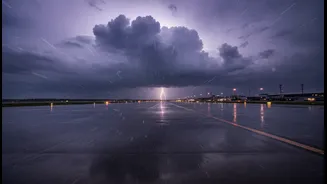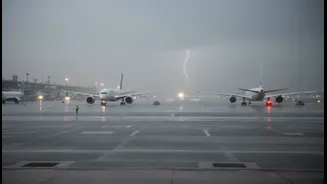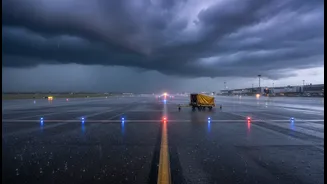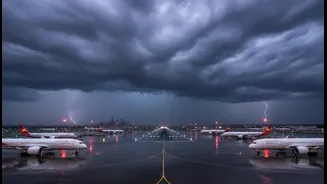







Monsoon is an Annual Reality
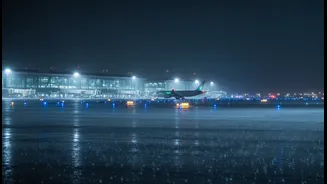
First, a dose of context: heavy rain and its impact on travel are an annual feature in Kolkata. Like other coastal cities, Netaji Subhas Chandra Bose International Airport (NSCBI) is built to handle significant rainfall. The monsoon season predictably
brings spells of intense showers that affect visibility and can cause temporary waterlogging. As recently as July 10, 2026, airlines like SpiceJet issued advisories for potential delays due to heavy rain in Kolkata, a standard precautionary measure. The India Meteorological Department (IMD) frequently issues alerts for South Bengal, forecasting heavy rain and gusty winds, which are part of the normal weather pattern for this time of year. So, when you see alerts about rain affecting flights, remember that this is an expected challenge, not necessarily a sign of a complete collapse.
Decoding the Different Delays
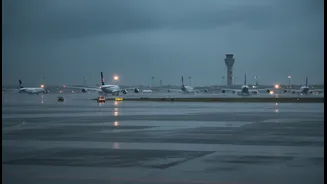
Not all delays are created equal. A 30-minute delay is frustrating but operationally different from a cancellation or a multi-hour diversion. The primary reasons for disruption during heavy rain are low visibility, strong crosswinds, and water accumulation on runways or taxiways. Poor visibility is a major safety concern; if pilots cannot see the required distance, air traffic control will delay landings. While dramatic images of flooded taxiways from previous years circulate online, official reports often clarify that main runways remain operational. For instance, past events have shown that even with waterlogging in some parking bays, primary runways and taxiways can be fully functional, allowing flights to continue, albeit sometimes with delays. The airport also deploys additional pumps to clear water from operational areas.
The Social Media Hype Machine
A single viral video of a waterlogged approach road or a crowded departure hall can create a narrative of total chaos. While the frustration for affected passengers is real, social media often amplifies the worst moments, making them seem representative of the entire situation. In reality, hundreds of flights may operate normally even on a bad weather day. It's crucial to look beyond dramatic, out-of-context visuals. For instance, traffic jams on roads leading to the airport due to city-wide waterlogging can cause passengers to miss flights, even if the airport itself is functioning. This is a city infrastructure issue, not strictly an airport operational failure, but online, it all gets bundled together as 'airport chaos'.
Where to Find Trustworthy Information
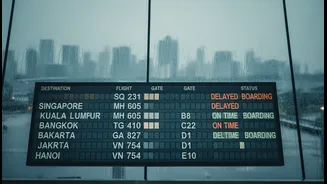
To get a clear picture, ignore the noise and go straight to the source. The most reliable information will come from your airline. Download the airline's app and enable notifications for your flight. Airlines like IndiGo and Air India have dedicated flight status trackers on their websites and apps where you can check your PNR for real-time updates on delays or cancellations. The official social media handles of the Kolkata Airport (run by the Airports Authority of India, AAI) and the airlines themselves are also primary sources for advisories. These are updated with operational realities, not sensationalism. A general news report about 'delays at the airport' is less useful than the specific status of your flight number.
Know Your Rights as a Passenger
Even when delays are caused by weather—an event outside an airline's control—you still have rights. According to the Directorate General of Civil Aviation (DGCA), airlines are not required to provide monetary compensation for weather-related disruptions. However, they still have a duty of care. For significant delays, passengers are entitled to refreshments and meals. If your flight is delayed overnight (typically for more than six hours on a flight scheduled between 8 pm and 3 am), the airline should provide hotel accommodation and transfers. If a flight is cancelled, the airline must offer you the choice of an alternative flight or a full refund. Knowing these rules helps you advocate for yourself calmly and effectively with airline ground staff.