




Saturn at its Best
October kicks off with a brilliant showing from the ringed planet, Saturn. Around October 4, it reaches opposition, meaning Earth is directly between Saturn and the sun. This makes it appear bigger and brighter in our sky than at any other time of the year,
visible all night long. Look for a steady, yellowish-white point of light rising in the east around sunset and travelling across the sky. While you won’t see its famous rings without a telescope, its brightness makes it an unmistakable and rewarding sight for any city-bound stargazer.
A Dance of Planets and the Moon
The first week of October features some beautiful celestial meetups, perfect for early risers. Before dawn on October 5, you'll see a crescent Moon cosy up to the reddish glow of Mars. The very next morning, October 6, the Moon will be exceptionally close to bright Jupiter. Throughout the month, Mars and Jupiter will be visible in the eastern sky before sunrise, a pair of bright beacons to start your day.
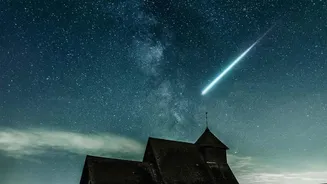
The Draconid Meteor Shower
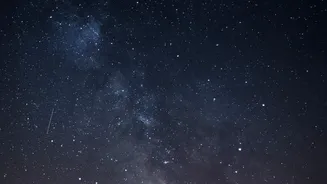
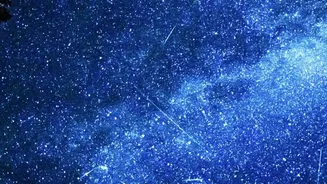
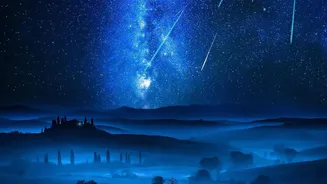
Mark your calendars for the evening of October 8-9 for the Draconid meteor shower. Unusually, this shower is best viewed in the early evening, just as darkness falls, rather than in the early hours of the morning. The radiant point—where the meteors appear to originate—is in the constellation Draco the Dragon, which is high in the northern sky at this time. In 2026, viewing conditions are excellent as the peak happens right around the New Moon, meaning no bright moonlight will wash out the show. While typically a modest shower with about 5-10 meteors per hour, the Draconids are known for occasional surprise outbursts of hundreds of meteors, so it's always worth a look.
The Orionid Meteor Shower
Later in the month, look for the Orionids, which peak on the night of October 21-22. These fast and often bright meteors are bits of debris left behind by the famous Halley's Comet. You can expect to see up to 20 meteors per hour from a dark location. The shower's radiant is in the constellation Orion, which rises in the east after midnight. This year, a bright Moon will be out during the evening, but it sets a few hours before dawn, leaving a perfect dark window for prime viewing in the early morning of October 22.
The Hunter's Full Moon
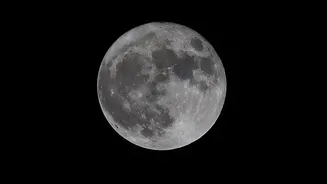
October's full moon, traditionally known as the Hunter's Moon, will be on full display on the night of October 25-26. It officially reaches peak illumination during the day on October 26 for audiences in India, so the best time to watch will be the moonrise on the evening of October 25. As it rises, it will appear huge and golden-orange on the horizon. This is a simple optical trick called the Moon Illusion, but it makes for a breathtaking sight.
Tips for Balcony Viewing
To make the most of your stargazing session, first, turn off all the lights on your balcony and in the adjacent room to reduce immediate glare. Give your eyes about 15-20 minutes to fully adapt to the darkness; you'll be amazed at how many more stars become visible. Try to block any direct light from streetlamps if possible. While a telescope isn't needed, a pair of binoculars can enhance the view of planets and the Moon. Finally, consider using a stargazing app on your phone (in red-light mode to preserve your night vision) to help you locate constellations and planets with ease.