




Seal Your Home from the Outside In
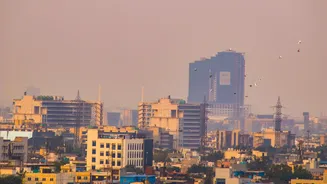
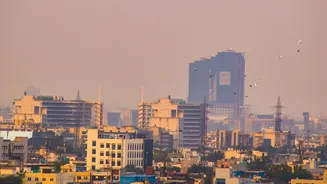
Your first line of defense against outdoor smog is to prevent it from entering your home. During high pollution events, keep all windows and doors closed. This simple step can significantly reduce the amount of harmful particulate matter, known as PM2.5,
that infiltrates your living space. PM2.5 particles are microscopic—about 3% the diameter of a human hair—and can penetrate deep into your lungs and even your bloodstream, making them a primary health concern during smog events. If your home has an HVAC system with a fresh air intake, set it to 'recirculate' mode or close the outdoor damper to stop it from pulling in polluted air. The same logic applies to your car's air conditioner; use the recirculation setting to avoid drawing in traffic emissions.
Purify the Air You Breathe
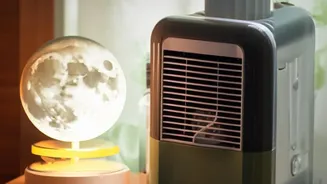
Even with windows closed, pollutants will find a way in. This is where air purifiers become essential. Invest in a portable air cleaner equipped with a High-Efficiency Particulate Air (HEPA) filter. HEPA filters are designed to capture at least 99.97% of airborne particles as small as 0.3 microns, which includes the fine particles found in smoke and smog. Studies show that using a HEPA filter can reduce indoor fine particulate matter by over 50%. For best results, place the air purifier in the room where you spend the most time, such as the bedroom, and run it continuously on the highest setting you can tolerate. If you have a central HVAC system, upgrading your filter to a MERV 13 rating or higher can also help capture these tiny particles as air circulates throughout your home.
Don't Add to the Indoor Pollution
When outdoor air is poor, it becomes crucial to minimize activities that generate indoor pollutants. Cooking, especially frying and broiling, can release a significant amount of particles and gases into the air. If you must cook, use an exhaust fan that vents to the outdoors. Avoid burning anything indoors, including candles, incense, or wood in a fireplace, as these are major sources of particulate matter. It’s also wise to steer clear of strong-smelling cleaning products, aerosol sprays, and even vacuuming, which can stir up settled dust unless your vacuum has a HEPA filter. The goal is to avoid adding to the burden on your indoor air when it's already under stress from outside pollution.
Leverage Your HVAC System Wisely
Your home's heating, ventilation, and air conditioning (HVAC) system can be a powerful ally. As mentioned, upgrading to a high-efficiency filter (MERV 13 or higher) is a key step. To make the most of it, run your system's fan continuously, even when not actively heating or cooling. By switching the fan from 'auto' to 'on', you constantly circulate the air in your home through the filter, capturing more pollutants. While standard air conditioners don't bring in fresh air, their filters do trap some larger particles. However, they are not a substitute for a dedicated air purifier with a HEPA filter for capturing fine smog particles. Think of your HVAC filter as whole-house support and a portable purifier as targeted, high-intensity cleaning for specific rooms.