



The Quiet Before the Downpour
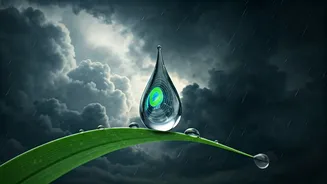
There’s a moment just before the sky opens up, a stillness that even the city’s animals seem to respect. Research suggests that birds and other animals can be sensitive to the drops in barometric pressure that signal a coming storm. [22] You might notice
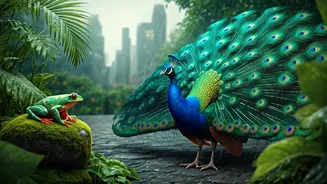
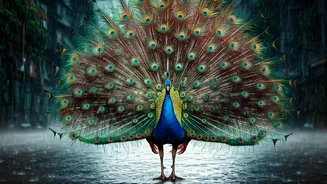
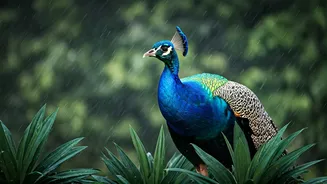
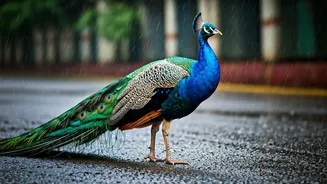
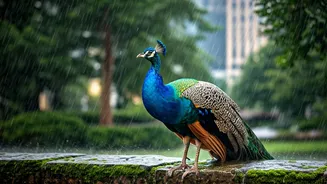
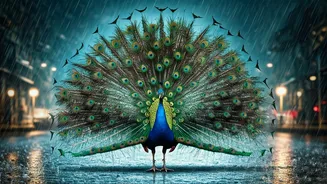
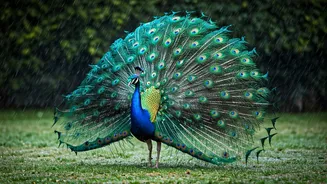
the frantic, last-minute foraging of squirrels, or the flurry of activity at a bird feeder as they load up on food. [22] In India, there's an old belief that a peacock's dance can herald the rain. [21] While perhaps more folklore than fact, there is a palpable shift in the air. The usual chaos of the streets quiets down, replaced by a sense of anticipation that is shared by human and animal alike. The sky darkens, the wind picks up, and the city holds its breath, waiting for the release.
The Dance of Shelter and Survival
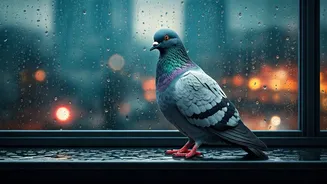
When the deluge begins, a city’s architecture becomes a vertical landscape of refuge. Pigeons, who don’t mind a light shower, will seek shelter from a heavy downpour under overhangs, windowsills, and building parapets. [19, 15] Their feathers are water-repellent, but a true soaking can limit their ability to fly and lead to a dangerous drop in body temperature. [19, 15] Crows, being highly intelligent, will find refuge in the dense foliage of trees, where the inner micro-habitat can remain surprisingly dry and stable. [22] For India's vast population of stray dogs and cats, the monsoon is a significant challenge. [2] They are masters of improvisation, finding sanctuary under parked cars, in the covered stairways of apartment buildings, or within makeshift shelters provided by kind residents. [2, 9] These animals face immense struggles to find dry spots and unspoiled food, as garbage bins, a common source, become quickly sodden and useless. [2, 8]
The Post-Rain Re-emergence
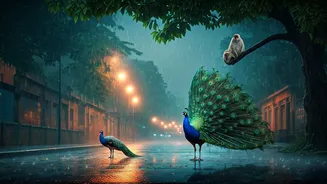
After the rain, the city is washed clean and seems to sparkle. This is when a new kind of activity begins. Squirrels, who may have been hiding in hollow trees or their dreys, re-emerge. [3] In a light rain, an adult squirrel might even use its bushy tail as a makeshift umbrella while it forages. [4, 10] The monsoon replenishes water sources, and birds can be seen taking advantage of puddles for a much-needed bath. [12] For some, like mynas, the rain is a dinner bell, bringing worms and insects to the surface of the soil. [15] Primates like monkeys, whose fur is not waterproof, generally dislike the rain and will wait it out. [16] Once the downpour stops, they venture out from their sheltered spots, perhaps shaking the water from their coats as they navigate the slick, gleaming branches of their urban homes. [18]
A Different Kind of Urban Jungle
The monsoon alters the city’s ecosystem. The surge in insect populations provides a feast for birds and bats, and many bird species begin their breeding cycles, taking advantage of the abundance of food. [12] However, the season also brings hazards. Heavy rains can flood nesting sites, and stagnant water increases the risk of water-borne diseases for strays. [12, 11] Yet, these animals demonstrate remarkable adaptability. Their resilience is a quiet drama that unfolds on our balconies, in our parks, and on our streets every year. Watching a cat meticulously clean its paws on a dry step, or a line of crows patiently waiting out the storm on a high wire, offers a moment of connection to a world that runs parallel to our own, governed by instinct and the rhythm of the seasons.