
The Cosmic Neighborhood Watch
Our solar system is a busy place, filled with millions of asteroids, which are rocky remnants from its formation. Most keep to themselves in the main asteroid belt between Mars and Jupiter. Some, however, have orbits that bring them into Earth’s vicinity.
These are known as Near-Earth Objects, or NEOs. While the vast majority pose no threat, the potential for a collision makes finding and tracking them a global priority. This is the core mission of planetary defense, an effort coordinated by bodies like NASA's Planetary Defense Coordination Office (PDCO), which was established in 2016. The goal is to catalogue and monitor any object large enough to cause significant damage if it were to hit Earth.
Automation: The All-Seeing Eyes
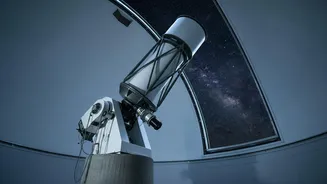
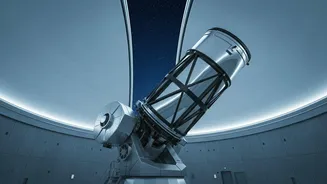
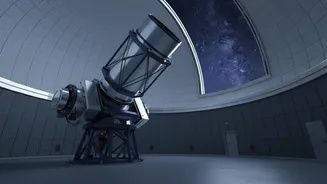
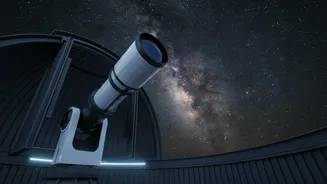
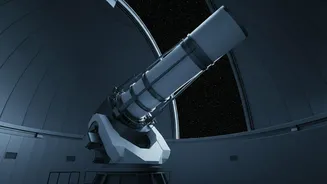
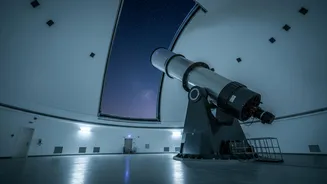
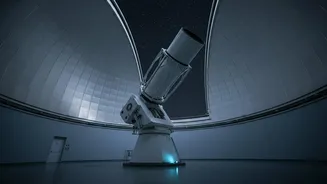
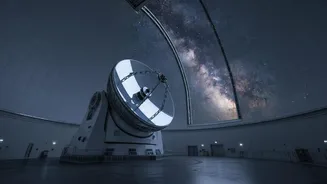
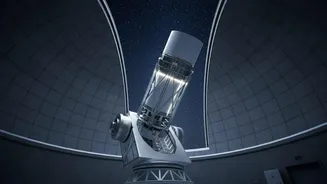
Finding these objects is a monumental task. They are small, often dark, and moving at incredible speeds. It's like trying to find a piece of coal in the night sky. This is where automated surveys come in. Projects like the Catalina Sky Survey in Arizona, and the Pan-STARRS and ATLAS projects in Hawaii, use robotic telescopes to systematically photograph the entire sky. Instead of a human peering through an eyepiece, these telescopes take thousands of digital images every clear night. Special software then compares these images. Stars remain fixed in their positions, but an asteroid will appear as a dot of light that has moved from one image to the next. When the software detects such a moving object, it flags it for further review.
From a Dot of Light to a Defined Orbit
A few initial sightings aren’t enough to know if an asteroid is dangerous. Once a potential NEO is identified, its coordinates are sent to the Minor Planet Center, a global clearinghouse for all small body observations. This triggers a call for reinforcement, with astronomers around the world, including dedicated amateurs, pointing their telescopes at the object to gather more data. Each new observation helps refine the asteroid's path. Using these precise measurements of the object’s changing position, scientists can calculate its orbit around the Sun. This process, known as orbit determination, reveals the six key elements that define the asteroid's unique trajectory through space, allowing for predictions of its future location.
Gaining Deeper Insights
Simply knowing an asteroid's orbit is just the beginning. The real 'deep insights' come from long-term, high-precision tracking, often aided by planetary radar. Continuous observation allows scientists to account for incredibly subtle forces that can alter an asteroid's path over time. One of the most important is the Yarkovsky effect. This is a tiny push caused by the way an asteroid absorbs sunlight and then radiates it away as heat. As the asteroid spins, its 'afternoon' side is warmer and radiates more heat than its 'morning' side. This creates a minuscule, jet-like thrust that, over millions of years, can significantly change an asteroid's orbit, pushing it either closer to or farther from the sun. Understanding these non-gravitational forces is the difference between predicting that an asteroid might come close and knowing with high certainty that it will safely miss us by a specific distance on a specific date.
The Future of Planetary Defense
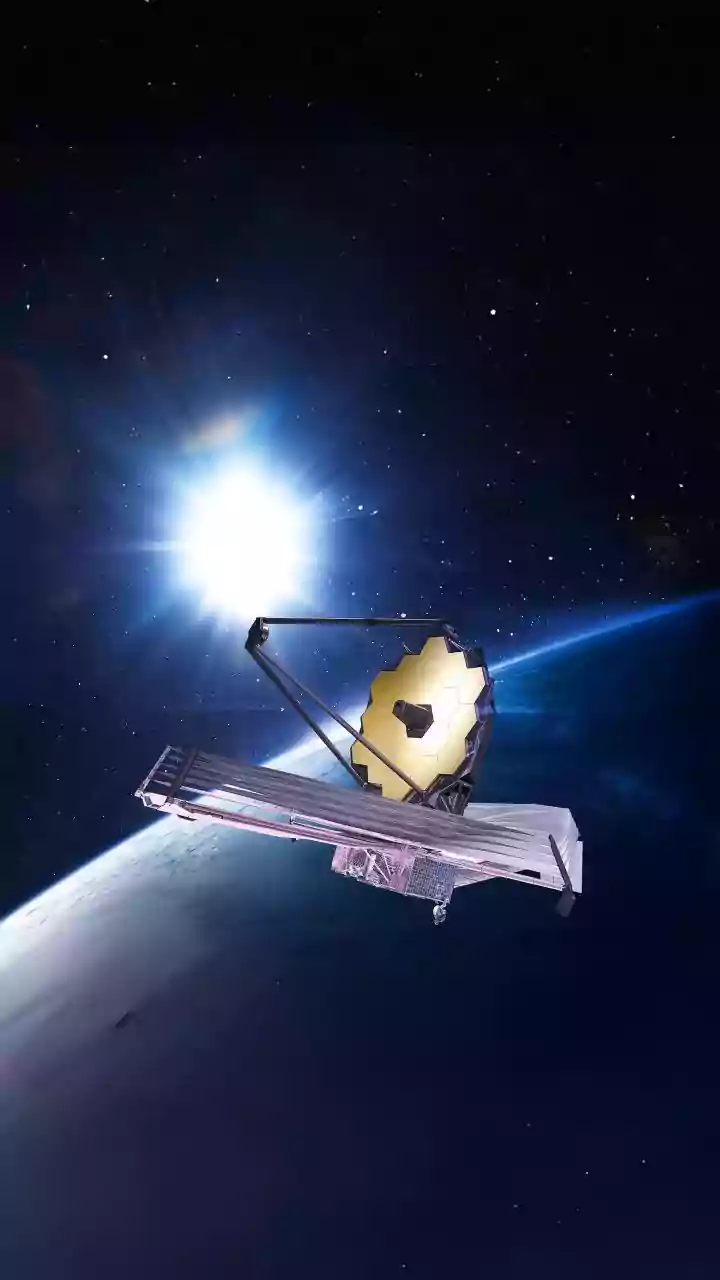
These automated surveys have successfully identified thousands of NEOs, including over 90 percent of the 'dinosaur-killer' sized objects over a kilometer wide, none of which currently pose a threat. The focus is now on finding objects down to 140 meters in size, which could still cause regional devastation. The work is far from over, but the technology is constantly improving. Soon, the Vera C. Rubin Observatory in Chile will join the hunt, capable of surveying the entire sky with unprecedented speed and depth. It will be complemented by space-based missions like NASA's NEO Surveyor, an infrared telescope designed to find even the darkest, most elusive asteroids by detecting the heat they emit. Together, these systems form a sophisticated, multi-layered defense, giving us the one thing we need most in the face of a potential threat: time.