








A Strategic Shift in the Stars
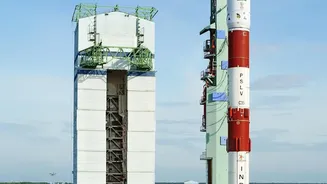
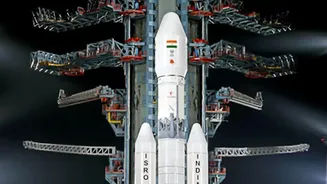
A major policy evolution is transforming India's space program. In a landmark shift, the Indian Space Research Organisation (ISRO) is strategically moving away from the routine manufacturing of its workhorse rockets like the PSLV and LVM3. This task will
now be handled by India's burgeoning private sector. The move, facilitated by the Indian National Space Promotion and Authorisation Centre (IN-SPACe), is not an abdication but a reallocation of focus. Announced in recent years and solidified under the Indian Space Policy 2023, this change allows ISRO to concentrate its formidable expertise on pioneering research, deep-space exploration missions like Gaganyaan (human spaceflight), a future space station, and landing an Indian on the Moon. In essence, ISRO is evolving from the sole builder and operator into the chief architect and enabler of a much larger national space ecosystem.
The Rise of the Private Fleet
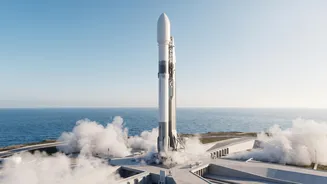
The policy shift has ignited a vibrant start-up scene. The number of private space companies in India has skyrocketed from just one in 2014 to over 400 by 2026. These companies are not just suppliers; they are developing and launching their own rockets. Hyderabad-based Skyroot Aerospace made history in July 2026 with the successful orbital launch of its Vikram-1 rocket, making India only the third country with a private orbital launch capability. Another key player, Agnikul Cosmos, incubated at IIT-Madras, has successfully tested its unique 3D-printed semi-cryogenic engine and launched a suborbital tech demonstrator, the Agnibaan SOrTeD. These start-ups bring agility, innovation, and a focus on the booming global market for small satellite launches—a segment that requires faster turnaround times and lower costs than what a national agency focused on large strategic missions can typically provide.
A Symbiotic Orbit, Not a Rivalry
The narrative of 'ISRO vs. start-ups' is a misleading one. The reality is a deeply symbiotic relationship. Private companies rely heavily on ISRO’s decades of experience, its world-class testing facilities, and its launch infrastructure at Sriharikota. IN-SPACe acts as the crucial single-window interface, facilitating this access and authorising private missions. In return, by taking over routine launches, start-ups free up ISRO's resources for more ambitious scientific and exploratory goals that push the boundaries of knowledge. Furthermore, ISRO's commercial arm, NewSpace India Limited (NSIL), helps transfer proven technologies to industry, ensuring that the private sector builds upon a foundation of established success. This collaboration allows India to pursue a two-pronged strategy: maintaining a lead in scientific exploration while simultaneously capturing a larger share of the commercial launch market.
The Economic Lift-Off
The commercialisation of India's space sector is poised to create a massive economic impact. Currently valued at around $8-9 billion, India's space economy is projected to grow five-fold, reaching between $40 to $45 billion by the next decade. The government's goal is to increase India’s share of the global space market from its current 2-3% to 8% by 2033. This growth is fuelled by significant investment, including liberalised FDI norms allowing up to 74% foreign direct investment in satellite manufacturing and 49% in launch vehicles. It also translates into job creation across high-tech manufacturing, data analytics, and engineering, building a skilled workforce for the future. As private companies begin to not only launch but also own and operate satellite constellations, a whole new downstream market for space-based data and services will unlock further value.