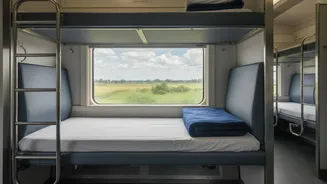







The Upper Berth: A Private Retreat
For many travellers, especially solo voyagers and those who value privacy, the upper berth is the top choice. Once you've made the climb, that space is yours for the entire journey. You can lie down and sleep at any time of day without having to negotiate
with co-passengers. This makes it ideal for those on long trips or anyone who wants to sleep early or wake up late. The elevation offers a welcome escape from the constant foot traffic, chatter, and vendors in the aisle below, providing a sense of seclusion and quiet. Many also feel it's a safer spot for their luggage, which can be tucked away securely beside them.
The Midnight Climb: The Upper Berth's Catch
The primary drawback of the upper berth is its biggest advantage: its height. Accessing it requires navigating a small, often awkward ladder. For elderly passengers, pregnant women, people with mobility issues, or families with small children, this climb can be difficult and even risky. The headline's warning holds true—if you anticipate needing the washroom multiple times during the night, the repetitive journey up and down in the dark can be a significant hassle. Furthermore, you're far from the window, missing out on passing scenery. In non-AC sleeper coaches, the upper berth can also get quite hot as it's just under the coach's roof.
The Lower Berth: Ultimate Convenience
The lower berth is all about accessibility. It is the undisputed best choice for senior citizens and passengers with health conditions, as it requires no climbing. Indian Railways even reserves a quota of lower berths for seniors and women over 45 to ensure their comfort. With a lower berth, you have easy access to the washroom, the aisle, and your luggage stored underneath. It also comes with the coveted window seat, allowing you to enjoy the views throughout your journey. During the day, it serves as the main seating area, making it a social hub where you can easily interact with fellow travellers.
The Social Hub Dilemma
The convenience of the lower berth comes with a trade-off: a lack of privacy. Because it functions as the default daytime seating area for all passengers in the bay, you lose your personal space from morning until night. You can't simply decide to nap in the afternoon, as you'll be sharing the space. The constant flow of people sitting, talking, and moving around can be disruptive if you're looking for a peaceful journey. While it's great for socialising, those seeking solitude may find the lower berth's communal nature to be a significant downside.
The Compromise: Middle and Side Berths
The middle berth, found in 3-Tier coaches, is often seen as the least desirable. It can only be used during sleeping hours (typically 10 PM to 6 AM) and must be folded down during the day, offering no personal space outside of that window. The headroom is also limited, which can feel claustrophobic. Side berths (Side Lower and Side Upper) are another option. They are positioned lengthwise along the aisle. While they offer more privacy with only one other person sharing the bay, they are often narrower and slightly shorter than the main berths, which can be uncomfortable for taller individuals. The Side Lower offers a great window view, but the Side Upper shares the same accessibility issues as the main upper berth.