

The Best Meteor Shower of the Year
August’s main event is the Perseid meteor shower, one of the most brilliant and reliable showers of the year. Active from mid-July to late August, the Perseids are set to peak on the night of August 12 and into the pre-dawn hours of August 13. This year’s
peak is especially promising because it coincides with a new moon, which means the sky will be exceptionally dark, making it easier to spot the fainter meteors. For viewers in India, the best time to watch will be after midnight, ideally between 2 a.m. and 5 a.m. IST on August 13. You can expect to see up to 100 meteors per hour under perfect conditions, though urban light pollution will reduce that number. These meteors are particles shed by the comet Swift-Tuttle, and they burn up in our atmosphere, creating fast, bright streaks across the sky.
A Parade of Bright Planets
August 2026 is a fantastic month for planet-watching. A rare alignment will make six planets visible in the pre-dawn sky around mid-August. While Uranus and Neptune require binoculars, you can easily spot four planets with the naked eye. Look for bright Jupiter and Mercury low on the eastern horizon before sunrise. Mars will also be visible. The star of the show, however, is Saturn. The ringed planet will be a bright, steady golden point of light visible for most of the night. It rises in the east in the evening and travels across the sky. Unlike twinkling stars, planets shine with a constant glow, making them easier to identify. This month is a great warm-up for Saturn's opposition on October 4, when it will be at its biggest and brightest for the year.
Constellations of the Monsoon Sky
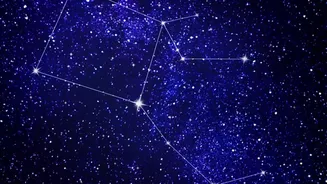
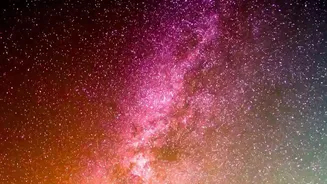
Despite the challenges of the monsoon season, there are clear nights when prominent constellations make their appearance. High overhead, look for the Summer Triangle, an unmistakable formation of three bright stars: Vega, Deneb, and Altair. These stars are so luminous they can often punch through the urban skyglow. Lower in the southern sky, you might be able to trace the distinct 'J' shape of Scorpius, the Scorpion. From a truly dark site, this region of the sky is where the bright core of our own Milky Way galaxy resides, though seeing it from a city is extremely difficult. The Great Square of Pegasus also begins to rise in the east, heralding the coming autumn skies.
Tips for City Stargazing Success
Viewing the cosmos from a city requires some strategy. First, find the darkest spot you can access safely. This could be a terrace, a local park away from streetlights, or the top floor of your building. Second, give your eyes time to adapt. It takes about 20-30 minutes for your eyes to become fully adjusted to the dark, which will allow you to see much fainter objects. Third, avoid looking at your bright phone screen. If you need to use a stargazing app to identify planets or constellations, switch it to red-light mode to preserve your night vision. Finally, be patient. Meteor showers are not a constant downpour; they come in spurts. Find a comfortable spot, lie back, and give yourself at least an hour of viewing time. No special equipment is needed for the Perseids, as your eyes are the best tool to take in the wide view.
Enhancing Your View
While not essential, a simple pair of binoculars can dramatically improve your stargazing experience. They can reveal the faint glow of Comet 10P/Tempel in the western sky in early August or show you the beautiful Pleiades star cluster, which the moon passes near on August 7. Binoculars will also give you a better view of Jupiter’s largest moons and might even offer a glimpse of Saturn’s shape, distinguishing it from a simple point of light. They are a great first step into amateur astronomy without the cost and complexity of a full telescope, making them a perfect companion for any urban stargazer looking to see a little deeper into the night.