




Keep It Simple: Your Starter Kit
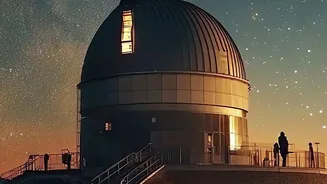
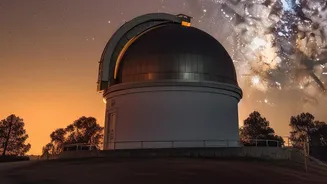
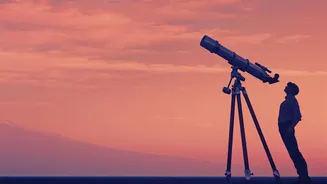
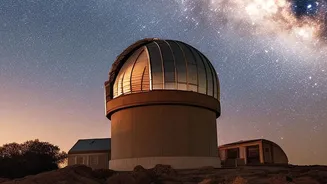
The best news for aspiring stargazers is that you already have the most important tool: your eyes. The secret to a great night of stargazing isn't a powerful telescope, but a dark location. City lights wash out all but the brightest objects, so try to find
a spot away from urban glow, like a rural park or a quiet suburban street. Give your eyes at least 20 minutes to fully adapt to the darkness. Avoid looking at your phone, as its bright screen will reset your night vision. If you need a light, use a red-light torch, which is less disruptive. Dress in warm layers, as even mild evenings can get chilly when you’re standing still. A comfortable chair and a warm drink will make the experience much more pleasant. For a modern twist, a stargazing app on your phone can help you identify stars and constellations in real time. Just be sure to use its red-light mode.
Mark Your Calendar: October's Meteor Showers
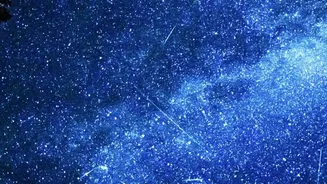
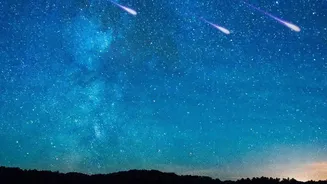
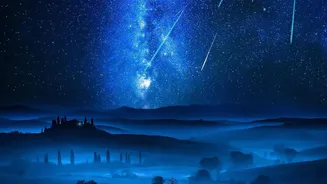
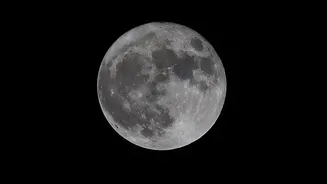
October is a fantastic month for 'shooting stars'. These are not actually stars, but tiny bits of space debris burning up in our atmosphere. This month features two notable meteor showers. First are the Draconids, which are active from October 6-10 and peak on the evening of October 8-9. This is an unusual shower because it's best viewed in the early evening, just after nightfall, rather than after midnight. The skies will be wonderfully dark for the Draconids' peak this year, as the new moon arrives on October 10, ensuring minimal interference. Later in the month, look for the Orionids, which peak on the night of October 21-22. These are fast, bright meteors created by debris from the famous Halley's Comet. While a bright moon will be present in the early evening, it sets after midnight, leaving the pre-dawn hours dark for optimal viewing. You might see up to 20 meteors per hour from a dark location during the peak.
The Brightest Lights: Planet Spotting
Planets are some of the most rewarding objects to spot because they shine with a steady, bright light, unlike the twinkling of distant stars. This October, Saturn is a prime target. The ringed planet reached opposition on October 4, meaning it is at its closest and brightest for the year and will be visible all night long. You can find it rising in the east around sunset. While you'll need a telescope to see its rings, its bright, yellowish glow is easily visible to the naked eye. Jupiter, another brilliant planet, will be a stunning sight in the early morning sky. Look for it in the eastern sky before dawn. On October 6, the waning crescent moon will pass very close to Jupiter, creating a beautiful pairing for early risers. Mars will also be visible in the pre-dawn sky, appearing near the Moon on October 5.
Finding Your Way: Easy Constellations
Learning constellations can feel daunting, but starting with a few prominent patterns makes it much easier. In the early evening, look high overhead for the Summer Triangle, an asterism formed by three bright stars—Vega, Deneb, and Altair—from three different constellations. As the night progresses, look for the distinctive 'W' shape of Cassiopeia high in the northeastern sky. You can use Cassiopeia as a signpost to find other cosmic sights. Another easy-to-spot pattern is the Great Square of Pegasus, a large box shape made of four medium-bright stars, which will be high in the eastern sky. Don't worry about learning every star. The goal is to become familiar with these major landmarks, which will help you navigate the sky on your future stargazing adventures.