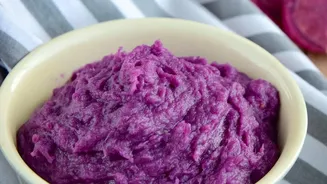




Imagine slicing into a potato and finding not the familiar creamy white or yellow, but a deep, vibrant purple. That's the Kufri Jamunia, an Indian-developed potato turning heads. But this striking colour isn't just for show.
The Secret is in the Pigment
The straightforward answer
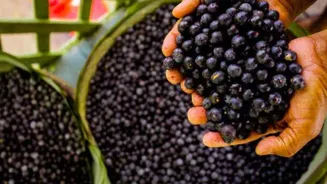
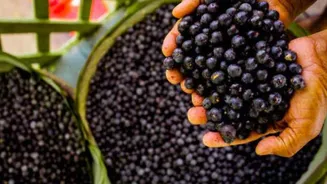
to the potato's purple mystery lies in compounds called anthocyanins. These are the same naturally occurring pigments that give blueberries, jamun, and red cabbage their distinctive, rich colours. While most potatoes contain antioxidants, the Kufri Jamunia is specifically bred to be rich in these powerful anthocyanins, which are present throughout its flesh, not just in the skin. This is a result of a process called biofortification, where scientists breed crops to increase their nutritional value.
An Antioxidant Powerhouse
So, what's the big deal about anthocyanins? They are a type of antioxidant. In our bodies, daily processes create unstable molecules called free radicals, which can cause cellular damage over time, contributing to inflammation and chronic diseases. Antioxidants act as defenders, neutralizing these free radicals. The high concentration of anthocyanins in purple potatoes gives them a significant edge over many white or yellow varieties in this department, making them a functional food that does more than just fill you up. Studies suggest that diets rich in anthocyanins are linked to numerous health benefits.
More Than Just Colourful
The Kufri Jamunia isn't just a pretty face; it's a nutritional standout developed by the ICAR-Central Potato Research Institute (CPRI) in Shimla. Compared to a regular potato, it packs a bigger punch. According to data from the Indian Council of Agricultural Research (ICAR), 100 grams of Kufri Jamunia contains significantly more Vitamin C, about eight times more zinc, and five times more iron than a standard potato. Released in 2024, it was specifically developed to help combat 'hidden hunger', a term for micronutrient deficiencies.
The Story of an Indian Innovation
The Kufri Jamunia is a testament to Indian agricultural innovation. It was developed by crossing two different parent potato lines to combine their best traits: high nutritional content and a vibrant colour. Its name, 'Jamunia', is a nod to its jamun-like purple hue. The variety builds on the work of earlier coloured potatoes from CPRI, like the purple-skinned Kufri Neelkanth and the red-skinned Kufri Manik, but Kufri Jamunia is distinct because its flesh is purple all the way through. It's adapted to grow in the North Indian plains, making it a viable crop for many farmers.
On the Plate
Beyond its health benefits, the Kufri Jamunia is versatile in the kitchen. It has a mealy texture, which makes it suitable for a wide range of traditional Indian dishes. You can use it for everyday preparations like curries, parathas, and soups, where its vibrant colour can add a fun twist. Unlike some coloured vegetables that lose their hue when cooked, the purple in this potato holds up well, especially when roasted, steamed, or baked. Its earthy flavour is similar to that of other potatoes, so it can be easily substituted into your favourite recipes.