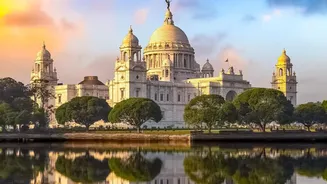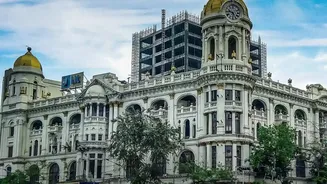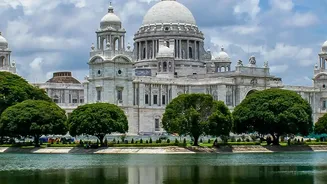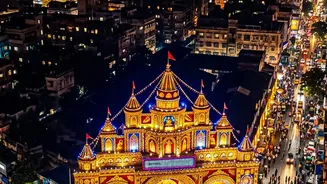






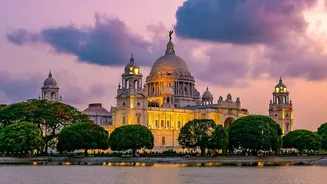
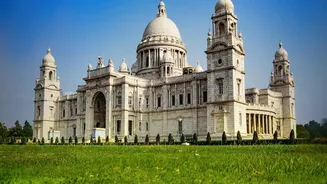
Kolkata carries many titles, but perhaps none are as evocative as the 'London of India' or the 'City of Palaces'. These nicknames aren't just poetic; they tell the story of a city deliberately shaped to be the jewel of the British Empire.
The Making of an Imperial Capital
The story begins
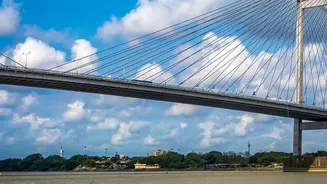
in the late 17th century when the British East India Company established a trading post in a collection of villages that would become Calcutta. Its strategic location on the Hooghly River made it an ideal hub for trade. In 1772, this trading hub was elevated, becoming the capital of British India under Governor-General Warren Hastings, who moved all major administrative offices from Murshidabad. For nearly 140 years, Calcutta was the epicentre of British power in the subcontinent, growing into the second most important city of the entire British Empire, surpassed only by London itself. This status as the administrative and commercial headquarters drove its explosive growth and the need for an infrastructure that reflected imperial might.
An Architectural Echo of London
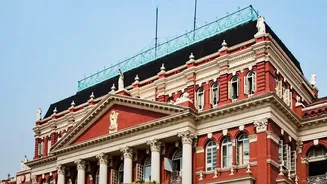
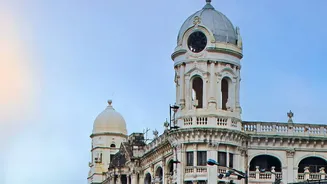
The nickname 'London of India' was largely born from the city's architecture. Governor-General Richard Wellesley, who served from 1797 to 1805, was instrumental in shaping Calcutta's public architecture, intending for it to be a city of palaces. The British built grand edifices in a mix of Neoclassical, Gothic Revival, and Victorian styles that consciously mirrored the aesthetics of London. Imposing structures like the Writers' Building, the General Post Office, and the Calcutta High Court were designed to project power and permanence. The High Court building was even designed as a replica of the Cloth Hall in Ypres, Belgium. The area around Dalhousie Square (now B.B.D. Bagh) became a showcase of extravagant European design, filled with promenades and manicured parks. This architectural grandeur, built by both the British and wealthy Bengali families, earned Calcutta the title 'City of Palaces'.
The Intellectual and Cultural Epicentre
Beyond the stone and mortar, Kolkata's development mirrored London's role as a global centre for culture and intellect. The city became the heart of the Bengal Renaissance, a period of profound social, cultural, and artistic awakening. It was a hub for education, law, science, and the arts, establishing universities and cultural institutions. India's first newspaper was printed here in 1780, chronicling the city's vibrant social life. This fusion of European tradition and Indian philosophy created a unique cultural landscape, making Calcutta the undisputed cultural capital of India, home to luminaries like Rabindranath Tagore and Satyajit Ray. The Coffee House on College Street became a legendary gathering spot for the nation's brightest minds, further cementing the city's reputation as a centre of 'furious, creative energy'.
The Capital Shifts South
Calcutta's reign as the capital ended in 1911. The decision to move the seat of power to Delhi was announced by King George V at the Delhi Durbar. The reasons were multifaceted. Geographically, Delhi was more centrally located to administer the expanding empire. More critically, Bengal had become a hotbed of nationalist agitation, particularly after Lord Curzon's partition of Bengal in 1905. The resulting protests, boycotts, and political violence made Calcutta a hostile environment for the British administration. Shifting the capital was a strategic retreat. Furthermore, by moving to Delhi, the historic seat of the Mughal Empire, the British sought to position themselves as the rightful successors to India's past dynasties.
A Legacy in Stone and Spirit
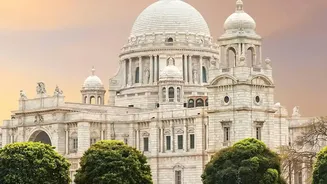
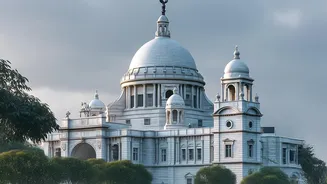
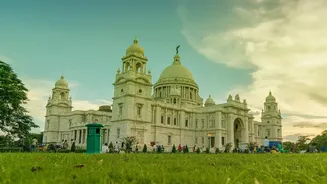
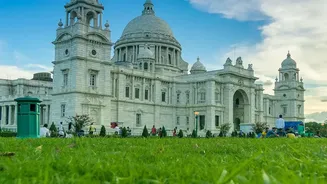
Though the capital moved, the legacy of its imperial past remains etched into the city's very identity. The grand colonial-'era buildings that earned Kolkata its famous nickname are not just relics; they are living parts of the city's fabric, housing government offices, museums, and courts. The Victoria Memorial, a breathtaking blend of British and Mughal styles, stands as a symbol of this complex history. While the 'London of India' moniker speaks to a specific colonial period, modern Kolkata has a vibrant culture that is uniquely its own. The city's trams, stately mansions, and bustling streets offer a character and sense of antiquity that is unparalleled, a place where history is not just remembered, but felt on every corner.