

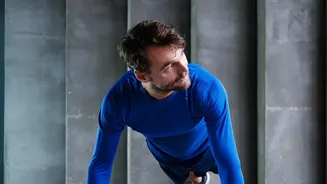
What is Functional Core Strength?
When people think 'core,' they often picture six-pack abs. But functional core strength is about so much more than what you see in the mirror. It’s about building a stable and powerful center that supports every move you make. Your core includes the muscles
in your abdomen, back, and pelvis. Functionally, these muscles work together as stabilizers to protect your spine, improve your balance, and transfer force between your upper and lower body. A strong, functional core makes everyday tasks like carrying groceries, lifting a child, or even just sitting at a desk feel easier and safer, significantly reducing your risk of back pain and injury.
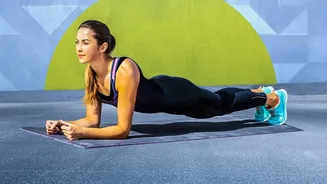
The Forearm Plank
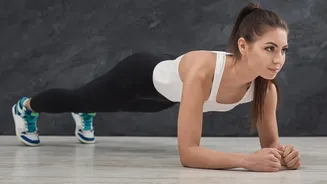
The plank is a foundational exercise for a reason: it engages your entire core, including the deep stabilizing muscles that crunches often miss. To perform a forearm plank, start by lying on your stomach. Place your forearms on the floor with your elbows directly under your shoulders. Push up so that your body forms a straight line from your head to your heels, keeping your core tight and your hips level. Avoid letting your lower back sag or your hips rise too high. Focus on breathing deeply while holding the position. If you're a beginner, start by holding for 15-30 seconds and gradually increase the time as you get stronger. For an easier variation, you can perform the plank on your knees.
The Bird-Dog
The Bird-Dog is an excellent exercise for improving stability, coordination, and balance. It teaches your core to resist rotation, which is a key function for protecting your lower back. Start on all fours, with your hands directly under your shoulders and your knees under your hips. Engage your core to keep your back flat. Slowly extend your right arm straight out in front of you while simultaneously extending your left leg straight back. Keep your hips square to the ground and avoid arching your back. Hold for a moment before returning to the starting position with control. Repeat on the other side, extending your left arm and right leg. The key is to move slowly and deliberately, preventing any wobbling or rotation in your torso.
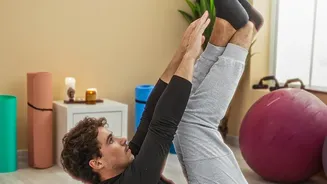
The Dead Bug
Don't let the name fool you; the Dead Bug is a powerhouse for developing deep core strength and spinal stability without putting stress on your back. Lie on your back with your arms extended toward the ceiling and your legs in a tabletop position, with knees bent at a 90-degree angle. Press your lower back gently into the floor. Slowly lower your right arm and left leg toward the floor, moving in opposition. Go only as low as you can without letting your lower back arch. Exhale as you return to the starting position with control, then repeat on the other side. This movement trains your core to brace and stabilize, a skill crucial for all other movements.
The Glute Bridge
While it might seem like a lower-body exercise, the glute bridge is fantastic for activating your entire posterior chain, including your glutes, hamstrings, and lower back, all of which are part of your core. Lie on your back with your knees bent, feet flat on the floor hip-width apart, and your arms by your sides. Engage your core and squeeze your glutes as you press through your heels to lift your hips off the floor. Your body should form a straight line from your shoulders to your knees at the top. Hold for a second, then slowly lower your hips back down with control. This move not only builds strength but also helps counteract the effects of sitting all day by activating underused glute muscles.