



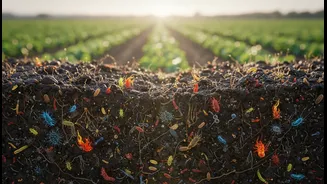


The Living World Under Our Feet
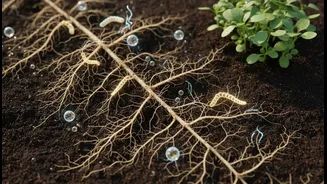
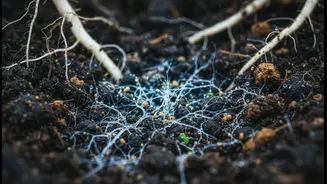
When we look at soil, we might just see dirt. But it's actually one of the most diverse ecosystems on the planet, teeming with billions of microorganisms like bacteria, fungi, and archaea. This complex community is known as the soil microbiome. Think
of it like the gut microbiome for humans; a vital, invisible force that plays a huge role in health and function. These microbes are constantly at work, decomposing organic matter, cycling essential nutrients like nitrogen and phosphorus, and fundamentally shaping the environment where plants grow. They are not just passive residents but active participants in creating a fertile and structured soil that can support robust plant life.
A Powerful Partnership for Growth
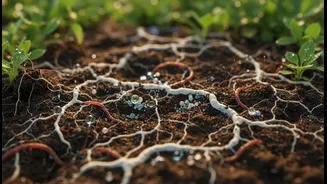
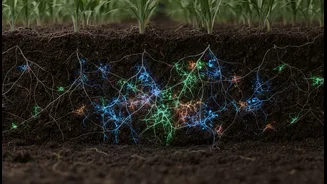
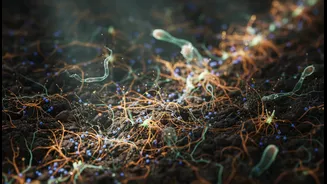
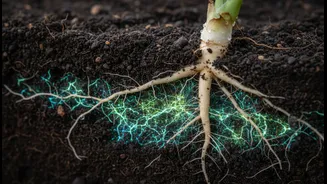
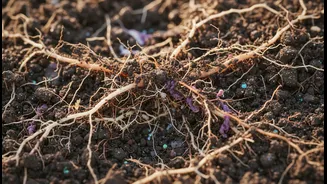
The relationship between plants and many of these microbes is a symbiotic one, built on mutual benefit. Plants, through their roots, release compounds like sugars and other exudates, which provide food for the microbes. In return, the microbes act as tiny assistants, helping plants in numerous ways. They can break down complex nutrients in the soil into forms that plants can easily absorb. Some fungi, known as mycorrhizal fungi, form vast networks of fine filaments that act as an extension of the plant's root system, drastically increasing its ability to take up water and immobile nutrients like phosphorus. Other bacteria are known for 'fixing' nitrogen from the atmosphere, converting it into a usable form for the plant, which is a critical process for growth.
Building Resilience Against Stress
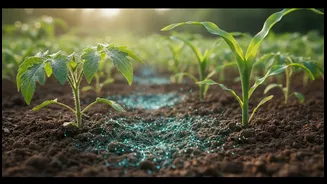
This is where it gets really interesting. Beyond just promoting growth, soil microbes can make plants fundamentally tougher and more resilient to a host of environmental challenges. Scientists have found that a healthy microbiome can help plants withstand periods of drought, high salinity in soil, and even extreme temperatures. Some microbes improve soil structure, creating aggregates that help the soil retain more water for the plant to access during dry spells. Others can produce hormones that signal a plant to respond to stress, for instance, by regulating the closure of its stomata (leaf pores) to reduce water loss. This induced resilience means plants can better survive and even continue to grow in conditions that would otherwise cause them to wilt and fail.
A Natural Defence System
Microbes also act as a plant's personal security team. They can help suppress harmful pathogens in the soil, protecting the plant from various diseases. They do this in a few ways: some outcompete the harmful microbes for resources, essentially starving them out. Others produce antimicrobial compounds that directly inhibit or kill pathogens. This phenomenon is called "induced systemic resistance," where the presence of beneficial microbes on the roots triggers a state of heightened alert throughout the entire plant, making it better prepared to fend off a wide range of diseases. This is a huge advantage over specific resistance genes, which often only work against a single type of pathogen.
The Future of Farming in India
The potential applications for agriculture, especially in a country like India, are immense. Harnessing the power of these beneficial microbes could lead to a 'brown revolution' in farming. By inoculating soils or coating seeds with specific microbial cocktails, farmers could enhance crop productivity, especially in regions prone to drought or with poor soil quality. This approach offers a sustainable alternative to the heavy reliance on chemical fertilisers and pesticides, which can degrade soil health over time and cause environmental pollution. Research is already underway to identify the most effective microbial strains and develop commercial bio-fertilisers and soil amendments that can deliver these benefits consistently in diverse farming systems.