








The Singular Dream of ISRO
For generations of aspiring engineers and scientists in India, the Indian Space Research Organisation (ISRO) was the final frontier. It represented the pinnacle of national achievement, a place where the country’s brightest minds built rockets and satellites,
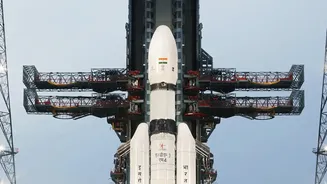
culminating in historic moments like the Chandrayaan and Mangalyaan missions. Getting into ISRO through its highly competitive recruitment board was seen as a job for life, offering prestige, stability, and the chance to work on projects of immense national importance. The career path was clear: join the government-led effort and contribute to a legacy programme. This singular focus made ISRO the primary, and often only, employer for those dreaming of the stars. The entire ecosystem, from university curricula to career aspirations, was oriented towards this one goal.
A Policy Big Bang: Opening the Sector
The landscape began to fundamentally shift around 2020, with the introduction of major policy reforms culminating in the Indian Space Policy 2023. This new framework was designed to do one crucial thing: open up the space sector to private enterprise. The government established the Indian National Space Promotion and Authorisation Centre (IN-SPACe) to act as a single-window agency to facilitate and authorise the activities of private companies. The goal was to transition ISRO's role away from routine manufacturing towards advanced research and development, allowing a new ecosystem of commercial players to handle tasks like building launch vehicles and satellites. This policy wasn't just a minor tweak; it was a deliberate strategy to grow India's share of the global space economy from around 2-3% to a projected 8% by 2030, aiming for a market size of over $40 billion.
Meet the New Constellation of Companies
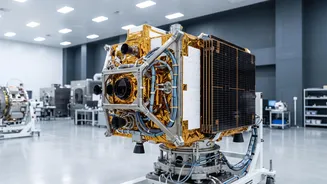
In just a few years, India's private space ecosystem has exploded. From a handful of companies in 2020, there are now over 400 space startups registered in the country. These aren't just paper concepts; they are well-funded entities with real hardware. Companies like Skyroot Aerospace, founded by former ISRO scientists, are building their own launch vehicles. Agnikul Cosmos is developing rockets with 3D-printed engines. Pixxel is deploying a constellation of the world's most advanced hyperspectral imaging satellites to monitor Earth's health. Others like Dhruva Space focus on satellite platforms, while Digantara is tackling the problem of space debris and traffic management. These firms are attracting significant investment and are already moving from prototypes to commercial contracts, creating a vibrant and competitive job market.
The Expanding Universe of Job Roles
The rise of commercial space has created a demand for a much wider array of job roles than ever before. While ISRO primarily recruited for research and long-term development projects, private startups operate on faster, commercially-driven timelines. This has led to an aggressive hiring landscape for roles across the entire value chain. The demand goes far beyond traditional aerospace engineers. Startups are looking for specialists in propulsion systems, avionics, robotics, and thermal engineering. There's also a massive need for software skills, including embedded systems programming, AI and machine learning for data analysis, and flight software development. Furthermore, companies like Pixxel and SatSure are creating jobs for data scientists and remote sensing specialists who can turn satellite imagery into actionable insights for sectors like agriculture, insurance, and urban planning.
Skills for the New Space Age
The skills required in this new era are also evolving. While a strong foundation in engineering, physics, and mathematics remains critical, the private sector places a premium on a different mindset. There is a greater emphasis on agility, interdisciplinary collaboration, and a product-focused approach. Proficiency in software like CAD for design, ANSYS for analysis, and programming languages like Python and C++ is essential. Experience with modern manufacturing processes, quality standards like AS9100, and an understanding of the entire mission lifecycle from design to launch are highly valued. Beyond technical skills, these fast-paced startups seek individuals with strong problem-solving abilities, a proactive attitude, and the ability to work in small, dynamic teams where individual contributions have a direct and immediate impact. The career calculus has changed; while ISRO offers a deep, research-oriented path, private firms offer a faster, more hands-on journey with potentially significant equity upside for early employees.