


The Weight of Almost
The narrative around Alexander Zverev was once painfully consistent. A generational talent, armed with a thunderous serve and a backhand weapon, who could beat anyone on his day. He had an Olympic gold medal and multiple ATP Finals titles, yet the biggest
prizes in tennis, the Grand Slams, remained agonizingly out of reach. The ghosts of finals past were long and daunting. The most searing memory was the 2020 US Open final, where he stood two sets to love up against Dominic Thiem, even serving for the championship in the fifth set, only to see the title slip through his fingers. Then came the 2024 Roland-Garros final against Carlos Alcaraz, another brutal five-set loss after leading two sets to one. These defeats weren't just losses; they were psychological blows that fed a narrative that Zverev, for all his gifts, lacked the final ingredient to become a major champion.
Forging a Champion's Mindset
So, what changed in 2026? The most significant evolution wasn't in his technique, but between his ears. Zverev himself acknowledged the mental supremacy of legends like Djokovic and Nadal, recognising that physical prowess alone wasn't enough. The 2026 version of Zverev was visibly calmer, more resilient. Where he once became tight and error-prone in crucial moments—often plagued by a shaky second serve—he now displayed a quiet confidence. He learned to manage the pressure points that had been his undoing. Instead of dwelling on a lost point or a missed opportunity, he developed a 'next point' mentality, a crucial trait of all great champions. This mental fortitude, likely honed through painstaking work with his team, allowed him to play with freedom when the stakes were highest, turning a history of five-set heartbreaks into a source of strength.
A Tactical Overhaul
This newfound mental strength was supported by key tactical adjustments. For years, analysts pointed to his second serve as a barometer of his nerves. In 2026, it transformed from a liability into a reliable asset. He didn't just roll it in; he served with purpose and aggression, refusing to let opponents attack him on the most important points. Furthermore, Zverev embraced a more proactive game style. He began to play more first-strike tennis, using his power to dictate rallies early and shorten points, rather than getting drawn into long, attritional battles. This included taking the ball earlier, being more willing to approach the net, and mixing in different plays to keep opponents off balance. It was a subtle but profound shift from a reactive baseliner to a player who took control of his own destiny on the court.
Coronation at Last: The 2026 Slams
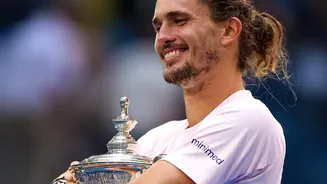
The culmination of this transformation was a spectacular 2026 season. After years of falling short, Zverev finally conquered his demons. The breakthrough came at Roland-Garros, the site of his devastating ankle injury in 2022 and his final loss in 2024. This time, he navigated the draw with a champion's resolve, culminating in a victory that felt like destiny. He didn't stop there. He carried that momentum to the hard courts of the US Open, the scene of his most painful defeat. Playing with a blend of power and poise, he marched to his second Grand Slam title of the year, emphatically silencing any remaining doubters. In winning two majors in a single season, he didn't just join the elite club of champions; he proved he belonged there all along.