




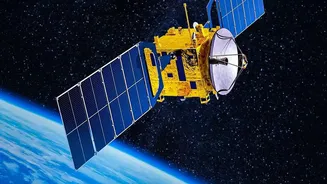

An Unblinking Eye in the Sky
Most earth observation satellites circle the planet in a polar orbit, capturing images of a specific location only a few times a day. While incredibly useful, they offer snapshots rather than a continuous video feed. GISAT-1A, also known as EOS-05, is
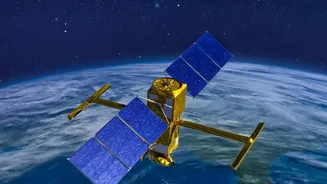
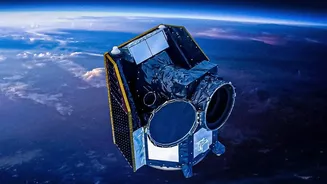
different. It is designed for a geostationary orbit, parking itself nearly 36,000 kilometres above the Earth. At this altitude, its speed matches the Earth's rotation, allowing it to remain seemingly fixed over the Indian subcontinent. This constant watch is the satellite's superpower. Instead of waiting for a satellite to pass over a developing cyclone or a swelling river, GISAT-1A can stare at it, providing a stream of data. This capability to image the entire Indian landmass every half hour, and specific areas of interest every five minutes, represents a monumental leap in monitoring capabilities.
From Prediction to Real-Time Response
Disaster management is a cycle: preparedness, response, and recovery. A satellite like GISAT-1A could revolutionize each phase. For preparedness, its frequent imagery can help create more accurate weather forecasts and track developing weather systems like cyclones with unprecedented detail. When a disaster strikes, the game changes to response. GISAT-1A can provide near-real-time updates on flood inundation, allowing authorities to identify the worst-hit areas and plan evacuation routes. For events like wildfires, it can detect and monitor fires, even in remote regions, helping allocate resources before they rage out of control. In the aftermath, the same satellite can assess the extent of damage to infrastructure like roads, bridges, and power lines, guiding relief and recovery efforts more efficiently.
A Second Chance at a Critical Goal
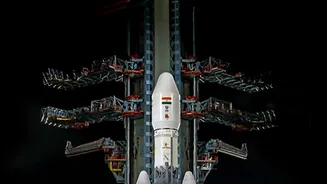
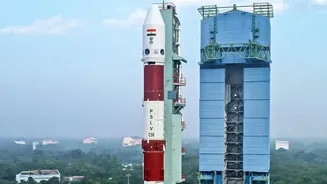
The upcoming launch of GISAT-1A on September 4, 2026, carries the weight of history. This mission is a second attempt after its predecessor, GISAT-1 (also called EOS-03), was lost during a launch in August 2021. A technical anomaly with the GSLV rocket's cryogenic upper stage prevented the satellite from reaching its intended orbit. That failure left a critical gap in India’s observation capabilities. ISRO’s meticulous work over the past five years to diagnose the issue, refine the GSLV rocket, and build a replacement satellite underscores the strategic national importance of this mission. A successful launch will not only place a vital asset in orbit but also serve as a redemption for the complex and powerful launch vehicle.
More Than Just Disaster Watch
While its primary role is pitched as a sentinel for natural disasters, the applications of GISAT-1A's continuous gaze are vast. The data gathered will be invaluable for a host of other sectors. In agriculture, it can monitor crop health, assess drought conditions, and estimate yields. For environmental management, it will help in tracking changes in forest cover and monitoring glaciers and water bodies. The satellite is also equipped with hyperspectral imaging, which can analyze materials on the Earth's surface, aiding in mineral prospecting. Furthermore, this high-powered 'eye in the sky' inherently possesses dual-use capabilities, offering significant strategic advantages for national security and border surveillance. Its ability to quickly revisit areas of interest makes it a powerful tool for security agencies.