


More Than Just a Walk With Sticks
Originating in Finland as a summer training method for cross-country skiers, Nordic walking is a specific fitness technique, not just hiking with poles. Unlike trekking poles, which are primarily used for balance on uneven terrain, Nordic walking poles are designed
to propel you forward. The technique involves using the poles to push off the ground, engaging your upper body in a way that regular walking does not. This creates a rhythmic, flowing motion where you use your arms, shoulders, and core muscles to a much greater degree, transforming a simple stroll into a comprehensive workout.
The Full-Body Workout Hiding in Plain Sight
The reason Nordic walking is gaining popularity is its impressive list of benefits. Research shows it can burn up to 46% more calories than regular walking without feeling like you're working much harder. By engaging approximately 90% of your body's muscles, it provides a cardiovascular workout while simultaneously toning the arms, chest, shoulders, and back. Furthermore, it’s a low-impact activity. The poles help absorb shock and can reduce the strain on your knees and hips, making it an excellent choice for individuals with joint concerns or those looking for a sustainable, long-term fitness routine. It also improves posture, balance, and coordination.
The 'Simple Equipment' in Focus: The Poles
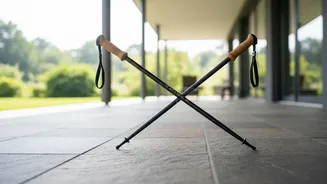
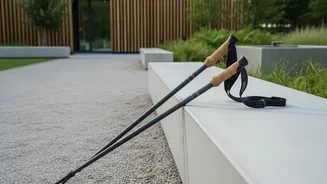
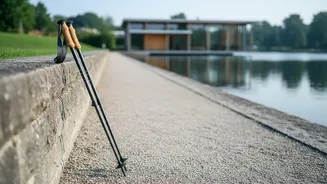
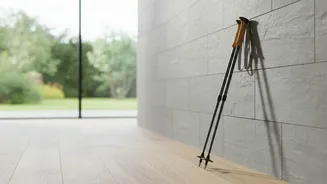
The effectiveness of Nordic walking hinges on one key piece of equipment: the poles. While they may seem simple, they are specifically designed for the sport. True Nordic walking poles are lightweight and feature a unique glove-like strap system. This strap is crucial because it allows you to push through the pole and then release your grip on the follow-through, which is essential for proper technique. Trekking or hiking poles typically have a simple loop strap and are designed for stability, not propulsion, making them unsuitable for the Nordic walking method.
Choosing Your First Pair of Poles
When selecting your poles, there are a few key things to consider. Pole length is critical; a general rule is that your elbow should be at a 90-degree angle when you hold the pole vertically with the tip on the ground. You can also calculate the ideal length by multiplying your height in centimeters by 0.68. Poles come in fixed-length and adjustable varieties. While fixed-length poles are often lighter, adjustable poles offer flexibility for travel or sharing. Materials range from durable, budget-friendly aluminum to lighter, shock-absorbing carbon fibre. Finally, look for quality rubber tips (often called 'paws' or 'boots') for use on pavement, which provide better traction and a quieter experience.
Getting Started: Your First Steps
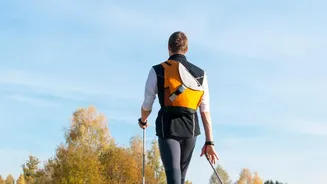
The basic technique involves an opposition movement, just like natural walking: as your right leg steps forward, your left arm swings forward to plant the pole. The key is to plant the pole at an angle behind you and push off, propelling your body forward. Your arms should swing from the shoulder, not the elbow, and you should maintain an upright posture. While it’s easy to learn the basics, consider watching tutorial videos or joining a local group to ensure you master the technique correctly to reap the full benefits. The rhythm can feel meditative, making it not just a physical workout but a mental one as well.