



The Agricultural Clock is Ticking
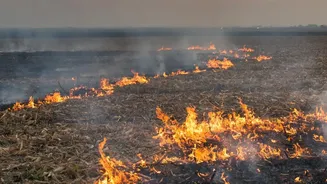
The story of Delhi’s smog begins in the fertile fields of Punjab and Haryana. Farmers here operate on a tight schedule dictated by India's two main cropping seasons. The Kharif season, which relies on the monsoon, ends around September and October with
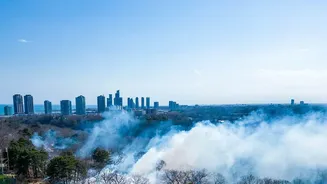
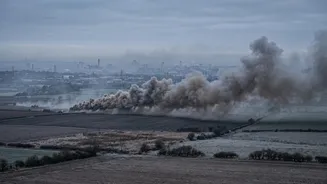
the harvest of paddy (rice). Immediately after, fields must be cleared to sow the winter or Rabi crop, primarily wheat, which has a narrow window for planting. To clear the leftover paddy stubble quickly and cheaply, many farmers resort to burning it. This practice, known as stubble burning, releases enormous plumes of smoke and particulate matter into the atmosphere precisely between October and November.
The Reversal of the Winds
For much of the year, particularly during the monsoon, winds in North India are generally easterly, blowing from the land towards the sea. However, as autumn sets in, this system reverses. The landmass cools down faster than the surrounding seas, creating a high-pressure zone over North India. This causes the prevailing winds to change direction, and they begin to blow from the northwest. These north-westerly winds travel directly from Punjab and Haryana, the epicentres of stubble burning, and head straight towards the landlocked National Capital Region (NCR).
A Smoke-Filled Highway in the Sky
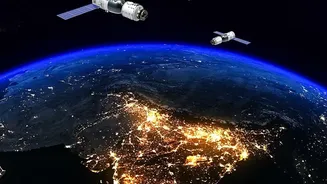
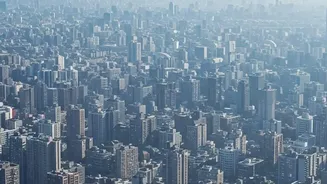
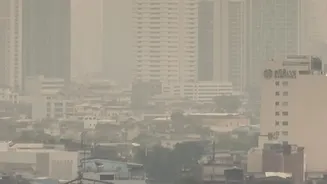
The shift in wind direction effectively creates a superhighway for smoke. The pollutants released from farm fires, rich in PM2.5 and PM10 particles, are picked up by these north-westerly winds and transported hundreds of kilometres. Delhi's geographical location makes it particularly vulnerable. The Himalayas to the north act as a massive barrier, preventing the air from dispersing further and effectively trapping it in a 'bowl'. This geographical containment means that once the polluted air arrives, it has nowhere to go.
An Invisible Lid on the City
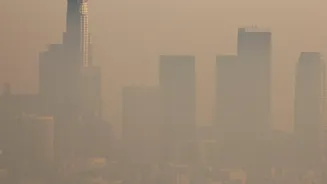
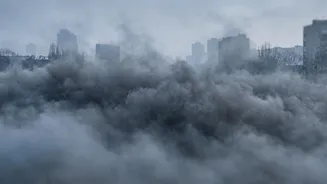
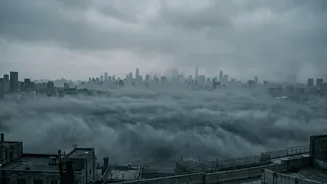
Compounding the problem is a meteorological phenomenon called temperature inversion, which becomes common during the cooler months. Normally, air is warmer near the ground and gets cooler with altitude, allowing pollutants to rise and disperse. In late autumn and winter, however, the ground cools rapidly at night, making the air near the surface colder than the air layer above it. This warmer upper layer acts like a lid, trapping the cold, dense, and now smoke-filled air close to the ground. The mixing height, or the altitude to which pollutants can disperse, drops dramatically, concentrating the smog at breathing level.
A Perfect Storm of Pollution
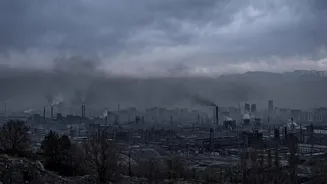
While stubble burning is a major trigger for the seasonal spike, it isn't the only culprit. The smoke from farm fires combines with Delhi's own yearround sources of pollution, including vehicular emissions, industrial discharge, and construction dust. During this period, wind speeds also tend to be very low and calm, which prevents the horizontal dispersal of pollutants and leads to stagnation. The combination of incoming smoke from the northwest, trapped by a temperature inversion, blocked by the Himalayas, and mixed with local emissions creates the perfect storm for the severe air quality episodes that plague the capital each year. While recent analysis suggests local sources play a huge role, the smoke's arrival is a critical tipping point.