




The AI Gold Rush and Its Power Bill
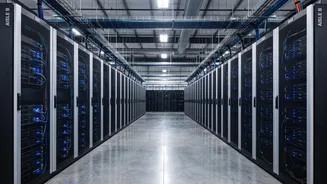
Around the world, a technological arms race is underway. Nations from the United States and China to the UAE, Singapore, and India are pouring billions into building the massive data centres required for AI development. These 'AI factories' are the backbone
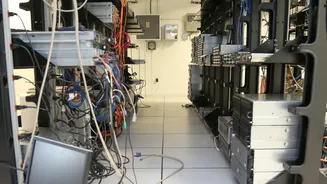
of the new economy, essential for training large language models and running complex applications. However, this digital gold rush comes with a hefty and often overlooked price tag. Unlike traditional data centres, AI workloads are intensely power-hungry, with some facilities consuming as much energy as a small city. This has turned electricity from a simple utility into a critical, and potentially scarce, strategic resource.
The IEA's Sobering 2030 Forecast
The International Energy Agency (IEA) has put a number on this growing concern. According to its latest projections, global electricity consumption from data centres is expected to more than double by 2030, reaching nearly 1,000 terawatt-hours. To put that in perspective, that is more than the entire current annual electricity consumption of Japan. The IEA pinpoints AI as the primary driver of this surge, responsible for about three-quarters of the growth. The agency warns this rapid expansion will put significant pressure on national power grids, many of which are already strained and unprepared for such a sudden, concentrated increase in demand.
A Looming Power Crunch
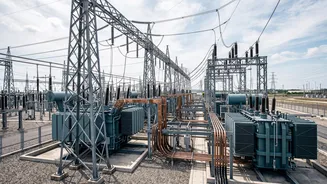
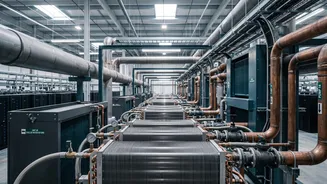
The core of the problem is that AI computing requires thousands of specialised processors, or GPUs, to run simultaneously for extended periods, generating immense heat and requiring constant, powerful cooling systems. This demand is not just large but also grows in concentrated clusters, often around major cities, creating local bottlenecks that can destabilise the grid. In some regions, the effects are already being felt. In parts of the U.S. like Northern Virginia and Silicon Valley, utilities are struggling to approve new data centre connections due to a lack of available power. The IEA's analysis shows that without massive new investment, this power crunch could become a major roadblock to AI innovation.
Fossil Fuels or a Green Revolution?
Faced with this challenge, countries are pursuing different strategies with significant consequences for climate goals. The IEA projects that in the race to power AI, the US will rely heavily on natural gas, while China will turn to coal for a substantial portion of its needs. This reliance on fossil fuels means that even as tech companies are among the world's biggest corporate buyers of renewable energy, the sector's overall carbon emissions are projected to rise sharply by 70% by 2030. Yet this dilemma is also sparking an innovation boom. The need for clean, reliable, 24/7 power is driving investment in next-generation solutions, from small modular nuclear reactors and geothermal energy to massive solar and wind farms paired with large-scale battery storage.
The New Geopolitics of the Grid
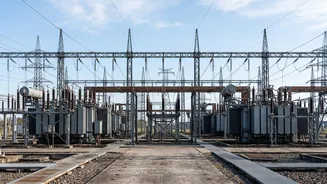
The energy challenge is fundamentally reshaping the geopolitics of AI. A nation's ability to provide secure, affordable, and increasingly clean energy is becoming a primary determinant of its competitiveness in the AI era. Countries that can successfully modernise their grids and deploy new power sources quickly will attract more investment and talent. We are seeing a shift from 'AI for Energy', where AI optimises power systems, to 'Energy for AI', where securing power becomes the main event. This makes grid infrastructure and energy policy central to national security and economic strategy, creating a new global playing field where the winners will be those who can solve the power puzzle first.