





A Breakthrough for Lunar Living
To make humanity’s return to the Moon sustainable, astronauts will need to do more than just visit; they’ll need to stay. That requires creating a self-sufficient environment, and a core component is a reliable source of oxygen. Shipping it all from Earth
is prohibitively expensive and complex. That's why NASA and its partners are developing ways to generate it on-site using the Moon's own resources. This concept, known as In-Situ Resource Utilization (ISRU), is the foundation for a long-term lunar presence. A recent series of tests on a technology called carbothermal reduction has marked a significant step forward. In early 2026, a team successfully demonstrated that concentrated sunlight could be used to extract oxygen from simulated moon dust, a process that could revolutionize exploration. This effort, part of the Carbothermal Reduction Demonstration (CaRD) project, is a collaboration between several NASA centers and commercial partner Sierra Space.
How to Cook Up Oxygen from Dust
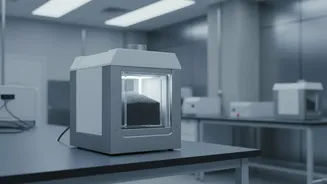
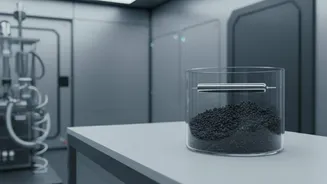
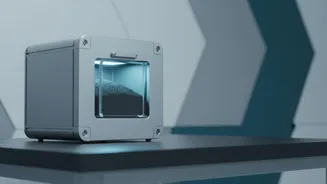
The dusty, rocky material covering the Moon’s surface, known as regolith, might seem lifeless, but it’s surprisingly rich in oxygen. By weight, lunar regolith is about 40-45% oxygen, but it is chemically bound to metals and minerals like silicon and iron in the form of oxides. The trick is breaking those strong chemical bonds. The CaRD system does this by heating the regolith to extreme temperatures—over 1,600 degrees Celsius—inside a specialized reactor. This high-temperature process, powered by focused solar energy, causes the oxygen to separate from the metals. The freed oxygen then combines with a carbon source to create carbon monoxide (CO) gas. This gas is collected, and in a subsequent step, the oxygen is separated out, ready to be used for life support or as a component in rocket propellant. The carbon can then be recycled back into the reactor to continue the process, creating a closed-loop system that minimizes the need for supplies from Earth.
The Ultimate Off-the-Grid Solution
The ability to generate oxygen on the Moon is a game-changer for the Artemis program, which aims to build a permanent base near the lunar South Pole. Every kilogram of supplies launched from Earth comes at an enormous cost, and a long-term habitat would require tonnes of oxygen per year for breathing and as a rocket propellant oxidizer. By producing it locally, NASA can drastically reduce the mass and cost of missions, making extended stays and more ambitious exploration goals feasible. One of the major advantages of the carbothermal reduction method is its versatility. Since it primarily targets silicates, which are abundant across the entire lunar surface, a production plant wouldn't be restricted to specific mining locations. It's a robust solution for establishing infrastructure almost anywhere future astronauts might land.
More Than Just Breathable Air
The process of extracting oxygen from regolith yields another valuable resource: metals. After the oxygen is stripped away, what remains is a molten slag rich in iron, aluminum, and silicon. These materials are the building blocks of an industrial ecosystem on the Moon. Instead of just being a waste product, this metal-rich material could potentially be used for manufacturing and construction. Future lunar inhabitants could use these extracted metals to 3D-print tools, spare parts, or even create building materials for habitats and landing pads. This multi-purpose outcome transforms lunar dust from a simple source of air into a comprehensive resource for building a self-sustaining outpost, further reducing dependence on Earth. It’s a critical step toward turning the Moon into a true proving ground for deeper space exploration, including future human missions to Mars.
From Earthly Labs to the Moon
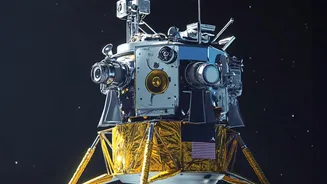
While the recent tests have proven the concept using simulated regolith on Earth, the next phase is to prepare the technology for the harsh lunar environment. The CaRD hardware is slated for further testing in a large thermal vacuum chamber at NASA's Johnson Space Center in Houston. This will help mature the system's Technology Readiness Level (TRL), ensuring it can operate reliably in the vacuum and extreme temperatures of space. Ultimately, the goal is to send a version of this reactor to the Moon, likely as a payload on one of the missions under NASA's Commercial Lunar Payload Services (CLPS) program. Paired with a robotic rover to excavate and deliver regolith, this technology could form the heart of the first lunar resource processing plant, paving the way for the permanent Moon Base envisioned by the Artemis program.