




The Soul of the Konkan Coast
Stretching along the Arabian Sea through Maharashtra, Goa, and Karnataka, the Konkan coast is a lush region where life is shaped by the monsoon and the sea. Its cuisine is a direct reflection of this geography. The food is built on a foundation of ingredients
pulled from the surrounding land and water: freshly caught seafood, fragrant rice, and, most importantly, the ubiquitous coconut. Unlike the heavy, spice-dominant dishes from further inland, Konkani cooking celebrates a balance of flavours where the sour notes of kokum, the sweetness of coconut, and the gentle heat of local chillies all play a distinct role. It’s a cuisine of place, telling the story of fishing villages and spice-laden backyards in every bite.
Mastering the Coconut Base
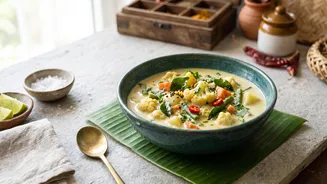
The heart of any Konkani curry is coconut, but its application is far from one-dimensional. Authentic flavour depends on how it's used. Freshly grated coconut is often ground into a fine paste, or 'vatan', sometimes with browned onions, to form the thick, flavourful base of a gravy. This paste provides both body and a subtle sweetness. In contrast, coconut milk lends a lighter, creamier texture to dishes like Sol Kadhi, a classic cooling beverage. Some recipes even use dry roasted coconut, or 'copra', which imparts a richer, more intense and oily flavour ideal for meat curries. Understanding when to use fresh paste versus milk is a key step toward an authentic taste.
The Signature Tang: Kokum and Tamarind
What truly distinguishes a Konkani curry is its signature tangy flavour. This doesn't come from tomatoes or yoghurt, but from unique local souring agents. The most prominent is kokum, the dried rind of a fruit from the mangosteen family. Used in dishes from fish curries to Sol Kadhi, kokum provides a gentle, sharp sourness and a beautiful pinkish hue without being overpowering. Tamarind is another common souring agent used to balance the richness of coconut and spices. Sometimes, raw mango is also used to lend acidity. Mastering the use of these ingredients is crucial for achieving that characteristic Konkani taste.
Building Flavour with a Konkani Masala
While recipes vary from household to household, a core set of spices defines the region's masala. A typical Konkani masala paste is a ground mixture of red chillies (often the colourful Kashmiri or Bydagi variety), coriander seeds, cumin seeds, black peppercorns, garlic, and turmeric. Some blends, particularly for fish curries, also feature 'tirphal' or 'teppal', a type of Sichuan peppercorn that adds a unique woody and citric aroma rather than intense heat. These spices are often roasted to awaken their essential oils before being ground with grated coconut and a souring agent into a smooth paste. This freshly prepared masala is the engine of flavour in the curry.
Achieving Foolproof Consistency and Taste
The 'safely' in delivering authentic taste refers to reliability—ensuring your curry is flavourful and perfectly textured every time. The biggest challenge is often the coconut milk, which can split or curdle when boiled aggressively. To prevent this, always cook coconut-based gravies on a gentle simmer and never a rolling boil. If a recipe calls for an acidic ingredient like kokum or lime juice, add it towards the end of cooking to minimise the risk of curdling. For foolproof thickness and stability, some cooks mix a little rice flour or cornflour into their ground masala paste, which acts as a natural stabiliser. Finally, taste as you go. The balance between the creamy coconut, tangy kokum, and spicy masala is what creates that perfect, repeatable Konkani experience.