

A Breakthrough 120 Light-Years Away
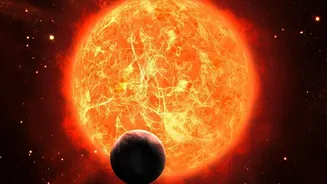
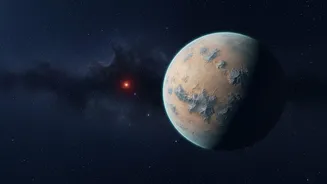
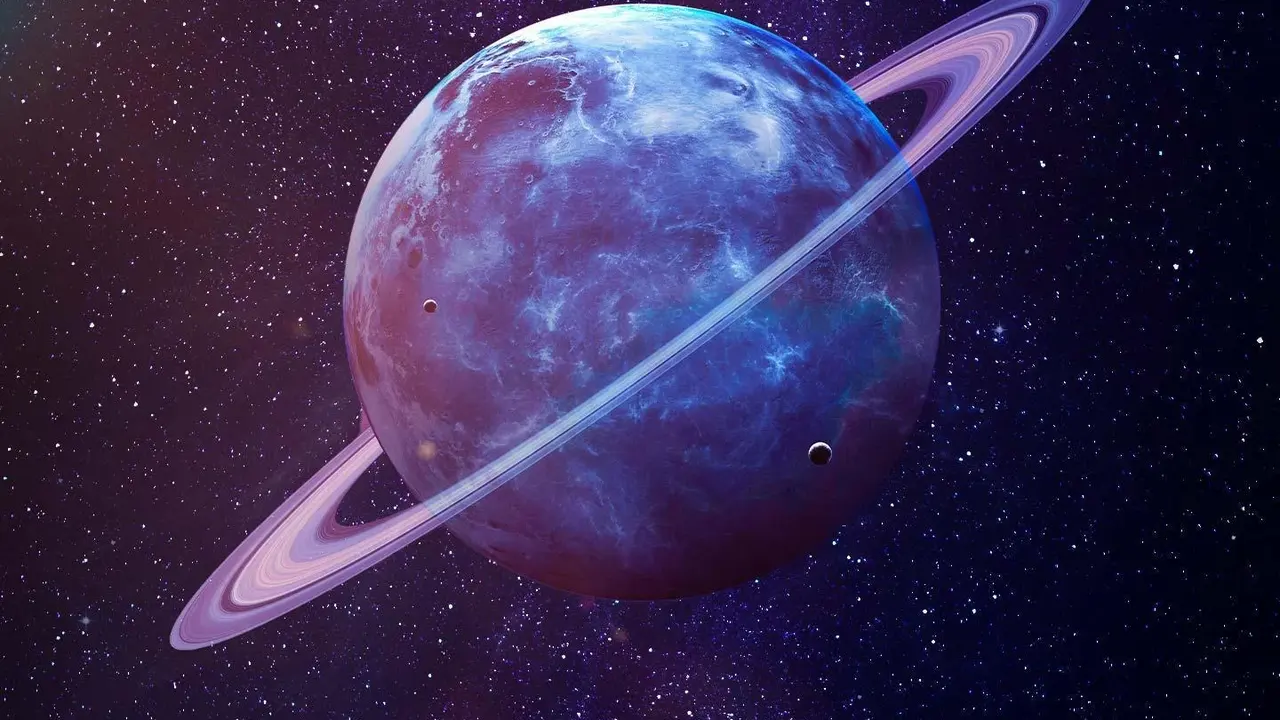
The focus of this excitement is an exoplanet named K2-18 b, located about 120 light-years from Earth in the constellation Leo. This planet is what's known as a 'sub-Neptune', meaning it's larger than Earth but smaller than Neptune, a type of planet we
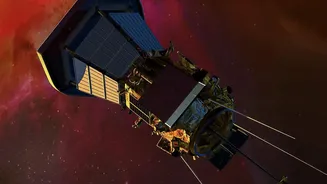
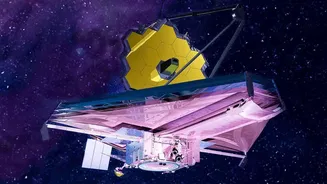
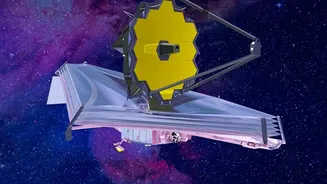
don't have in our own solar system. Using its powerful infrared instruments, the JWST peered into the atmosphere of K2-18 b as it passed in front of its star. This technique, called transit spectroscopy, allows scientists to see which wavelengths of light are absorbed by the planet's atmosphere, revealing its chemical makeup. The telescope made a groundbreaking discovery: the clear presence of carbon-bearing molecules, specifically methane and carbon dioxide.
The Significance of Carbon
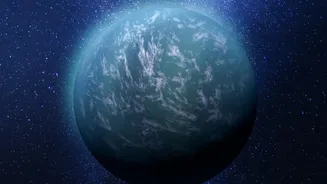
On Earth, carbon is the fundamental backbone of all known life. Finding carbon-based molecules on a distant world is a critical first step in assessing its potential for habitability. The detection of both methane (CH4) and carbon dioxide (CO2) is particularly compelling. Their presence, combined with a notable lack of ammonia, strongly supports a fascinating hypothesis that K2-18 b could be a 'Hycean' world. This new category of planet, first theorized in 2021, is defined as a world with a vast liquid water ocean underneath a hydrogen-rich atmosphere. The specific chemical mix found by JWST is precisely what models predict for such an ocean world, making K2-18 b a prime candidate for this exotic but potentially life-friendly environment.
More Than Just Being in the Zone
For decades, the search for habitable planets focused on the 'habitable zone'—the orbital distance from a star where a rocky planet could have liquid water on its surface. However, this new discovery expands our thinking. Sub-Neptunes like K2-18 b were often overlooked because their thick, hydrogen-rich atmospheres were thought to create pressures and temperatures far too high for liquid water. The data from JWST challenges this assumption. It suggests that a planet-wide ocean could exist under this dense atmosphere, creating conditions potentially similar to Earth's deep-sea vents. This finding vastly broadens the types of planets that could be considered for biological research, moving beyond just Earth-like rocky worlds. As some astronomers note, these larger Hycean worlds are actually more conducive to atmospheric observations, making them promising targets for JWST's future investigations.
A Possible Biosignature?
Adding another layer of intrigue, the initial observations also hinted at the presence of a molecule called dimethyl sulfide (DMS). On Earth, DMS is overwhelmingly produced by life, primarily marine phytoplankton. This makes it a tantalizing potential 'biosignature'—a chemical signpost of biological processes. However, scientists are exercising extreme caution. The DMS signal is currently weak and requires much more data to be confirmed. Subsequent analyses have shown that the evidence is not yet statistically significant, highlighting the immense challenge of these detections. Whether the DMS is truly there or not, its potential presence has jump-started a new phase in astrobiology, pushing scientists to consider what biosignatures might look like on non-Earth-like worlds.
What Comes Next in the Search
The discovery of carbon-based gases on K2-18 b is not an end-point but a spectacular beginning. Researchers are already planning follow-up observations using JWST's other instruments to further validate the findings and paint a more detailed picture of the planet's environment. The debate around Hycean worlds and their actual habitability is just getting started, with some recent models suggesting the formation of such water-rich worlds might be more complex than first thought. Regardless, these initial results prove that the JWST is capable of characterizing the atmospheres of habitable-zone exoplanets with unprecedented detail. Each new spectrum brings us closer to understanding our place in the universe and answering the ultimate question: is there life on a habitable exoplanet?