



What Is Land Degradation?
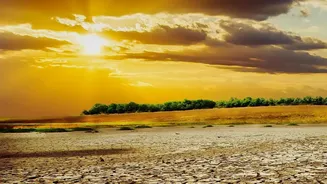
Land degradation is the decline in the health and productivity of land. It’s not just about turning land into desert. It means the soil is losing its structure, fertility, and vital organic matter. In India, nearly a third of the country's total land area
is already facing this issue. This degradation is driven by factors like deforestation, over-irrigation, and the overuse of chemical fertilisers, which disrupt the natural balance of nutrients in the soil. Decades of these practices have left vast tracts of land less able to support the very crops we depend on, with soil organic carbon levels in some areas falling from a healthy 1% to a critical low of 0.3%.
The Climate Shock Amplifier
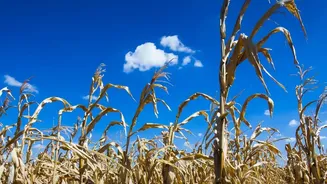
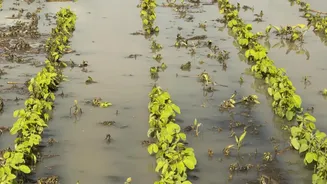
Healthy soil acts like a natural buffer against extreme weather. It is a living ecosystem, teeming with microorganisms that create a porous, sponge-like structure. This structure allows it to absorb and hold water during heavy rains, reducing flood risk and storing moisture for dry periods. However, degraded land loses this ability. Its compacted, lifeless soil cannot absorb water effectively. During a drought, it offers no stored moisture, leading to crop failure. During intense monsoons, water runs off the surface, taking the precious topsoil with it and causing flash floods downstream. India loses a staggering 5.3 billion tonnes of topsoil to erosion annually. In this way, degraded land doesn’t just suffer from climate shocks; it actively makes them worse.
A Vicious Cycle of Damage
Climate change and land degradation are locked in a dangerous feedback loop. Climate change brings more intense rainfall and prolonged droughts, which accelerate soil erosion and nutrient depletion, thus degrading the land. In turn, this degraded land releases the carbon it once stored back into the atmosphere as carbon dioxide, further fuelling climate change. Agriculture and deforestation are responsible for nearly a quarter of all human-caused greenhouse gas emissions. This cycle makes each subsequent climate event more damaging, creating vulnerability hotspots where food security and livelihoods are under constant threat.
The Impact on India's Food Basket
The consequences for India are profound. With over half the workforce dependent on agriculture, declining soil health directly translates to reduced yields and lower incomes for millions of farmers. Studies show that land degradation can reduce agricultural productivity by 2-5% annually in severely affected regions. This isn't a distant problem; states like Punjab and Haryana, crucial to the nation's food supply, are experiencing severe soil nutrient deficiencies and falling water tables from unsustainable practices. For consumers, this means reduced availability and higher prices for staple foods. If the trend continues, a nation currently self-sufficient in food may face the prospect of future imports to feed its growing population.
Rebuilding from the Ground Up
The good news is that land degradation is reversible. The solutions lie in restoring soil health through sustainable and regenerative practices. Techniques like agroforestry, which integrates trees with crops, and the use of cover crops can help prevent soil erosion, enhance water retention, and rebuild organic matter. Reducing over-tillage, managing water use through watershed development projects, and shifting towards more balanced fertiliser use can break the cycle of degradation. These methods not only help sequester carbon and build climate resilience but also improve long-term farm productivity and profitability. India has committed to restoring 26 million hectares of degraded land by 2030, a goal that requires a concerted effort from policymakers, scientists, and farming communities alike.