





Understanding the Onam Sadhya
An Onam Sadhya is a multi-course vegetarian meal served on a banana leaf, commemorating Kerala's harvest festival. Thiruvonam, the main day of Onam, falls on August 26, 2026. The Sadhya is more than just food; it's an elaborate ritual of flavours, textures,
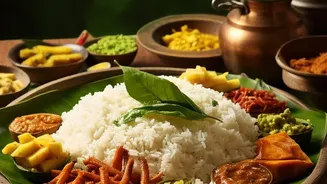
and tradition. A full Sadhya can feature over two dozen dishes, but don't let that intimidate you. The essence lies in the balance of tastes: sweet, salty, sour, and spicy. Key components include red Matta rice, various curries ('koottan'), side dishes, pickles, and desserts ('payasam'). The goal is to create a nourishing, satisfying experience that honours the spirit of abundance.
Your Sadhya Game Plan: Start Early
Successful Sadhya cooking is all about planning. Trying to do everything on the main day is a recipe for stress. Start your prep work at least a few days in advance. One Week Before: Plan your menu. Decide how many dishes you can realistically make. Create a detailed shopping list for vegetables, coconut, spices, jaggery, and other essentials. Three to Four Days Before: This is the time to make items that keep well. Prepare your Puli Inji (ginger-tamarind chutney) and pickles. These condiments often taste better after a few days as the flavours meld. The Day Before: This is your main prep day. Chop all the vegetables for your dishes like Avial, Sambar, and Thoran, and store them in separate containers in the fridge. You can also grate coconut, boil the dal for Parippu, and even prepare the payasam base. Some people also fry the pappadams a day ahead and store them in an airtight container.
The Core Dishes: A Flavour Map
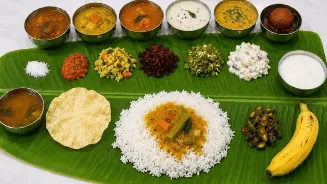
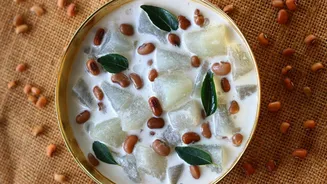
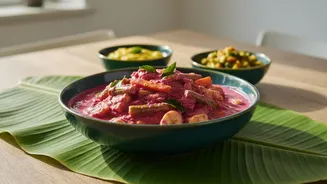
While a 26-dish spread is traditional, a home Sadhya can be wonderful with a smaller, curated selection. Focus on variety. Rice: Kerala's red Matta rice is the foundation. Gravies (Ozhichu Curries): Start with Parippu (a simple dal with ghee), followed by Sambar (a hearty lentil and vegetable stew), and then Rasam (a thin, peppery soup to aid digestion). Side Dishes: Aim for a mix. Avial (mixed vegetables in a coconut-yogurt gravy) is essential. Add a Thoran (a dry stir-fry, often with cabbage or beans), an Erissery (pumpkin and lentil), and an Olan (ash gourd in coconut milk). Yogurt-based Dishes: Pachadi (mildly sweet, often with pineapple) and Kichadi (more savoury, with cucumber or beetroot) provide a cooling contrast. Condiments and Snacks: No Sadhya is complete without banana chips (Upperi), sweet jaggery-coated chips (Sharkara Varatti), tangy pickles, and the indispensable Pappadam.
The Art of Serving on a Banana Leaf
Serving the Sadhya is a ritual in itself. If you can source a banana leaf, it adds to the authenticity. Place the leaf with its narrow end pointing to the left of the guest. All the dry dishes and accompaniments are served on the top half of the leaf. Start from the far left with a pinch of salt, banana chips, Sharkara Varatti, pickles, and Puli Inji. To their right, place the Pachadi, Kichadi, Olan, Avial, and other side dishes. Rice is served on the bottom half, in the center, only after the guest is seated. The first course is rice with Parippu and ghee. Sambar and other gravies are served in subsequent helpings. The dessert, Payasam, is often served last, either in a bowl or on the leaf itself.