




The Rise of the Aesthetic Monsoon
Every year, as the first rains arrive, a familiar trend emerges. Social media platforms like Instagram and TikTok are filled with videos capturing the romantic side of the monsoon. [29] From slow-motion shots of raindrops hitting a puddle to time-lapses
of storm clouds gathering over a city skyline, these clips are visually stunning and incredibly popular. [26] They evoke a sense of 'pakora' weather, a feeling of cosiness and nostalgia that is deeply ingrained in Indian culture. This content is shareable and relatable, turning the national weather phenomenon into millions of individual main-character moments. It's the monsoon as a vibe, curated and presented for maximum engagement. But this trend, while harmless in itself, often overshadows a far more critical aspect of the season: understanding the weather, not just appreciating its beauty.
What a Viral Video Won't Tell You
A ten-second clip of a downpour, no matter how artistic, lacks essential information. It cannot tell you if the rain will last for 30 minutes or for the next eight hours. It doesn’t indicate whether the downpour is a localised event or part of a larger system that could lead to widespread waterlogging and traffic chaos in cities like Mumbai. [31] It offers no warning about the intensity of the winds, the risk of lightning strikes, or the potential for flash floods. [30] While a video of peacocks on a city street after a shower is a delightful sight, it doesn't prepare you for a 'Red Alert' from the India Meteorological Department (IMD) warning of life-threatening rainfall. [29, 23] Relying on these snippets for your weather information is like trying to navigate a highway by looking at a postcard.
The Unseen Science of a Forecast
Behind every official weather forecast is a monumental effort of science and technology. The IMD, established in 1875, uses a vast network of automatic weather stations, Doppler radars, weather balloons, and satellites like the INSAT series to gather billions of data points every day. [18, 16, 7] This data—on temperature, humidity, wind speed, and atmospheric pressure—is fed into powerful supercomputers like 'Mihir' and 'Pratyush', which run complex mathematical models to predict the weather. [7] These numerical weather prediction (NWP) models simulate the atmosphere's behaviour to provide forecasts ranging from short-term 'nowcasts' for the next few hours to long-range outlooks for the entire monsoon season. [16, 18] It is a sophisticated, data-driven process designed to provide actionable intelligence, not just a pretty picture.
From Farms to Cities, Why Forecasts Are Lifelines
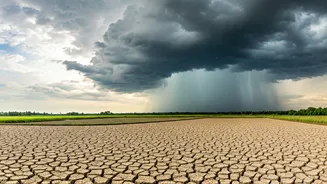
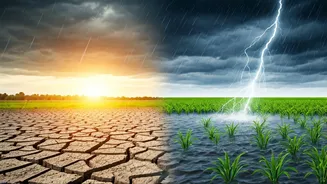
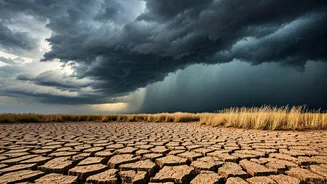
For a huge portion of India's population, accurate weather forecasts are not a matter of convenience but of survival and livelihood. Agriculture, which employs nearly half the country's workforce, is deeply dependent on the monsoon. [8, 14] Forecasts on the monsoon's onset and distribution help farmers make crucial decisions about when to sow, which crops to plant, and how to manage irrigation, directly impacting their income and the nation's food security. [3, 4] In cities, IMD alerts about heavy rainfall allow municipal authorities to prepare for waterlogging and commuters to plan their travel. [22] For disaster management agencies, these warnings are critical for planning evacuations and mitigating the impact of extreme events like cyclones and floods, which have become more unpredictable due to climate change. [4, 9]
How to Be a Smart Weather Consumer
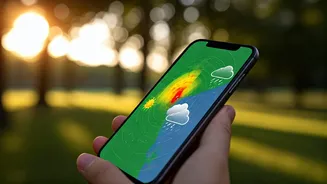
Becoming a responsible weather consumer is simple. Start by identifying reliable sources. The IMD's official website ('mausam.imd.gov.in'), its 'Mausam' mobile app, and official social media handles provide the most accurate information. [25] Learn to understand the colour-coded alerts: Green (no warning), Yellow (be updated), Orange (be prepared), and Red (take action). [6, 19, 21] An Orange alert, for instance, warns of intense rainfall that could disrupt daily life, while a Red alert signals a need for immediate safety measures. [6, 23] Pay attention to district-specific warnings and nowcasts, which provide highly localised information for the next few hours. [15] By integrating these official sources into your daily routine, you can make informed decisions that protect your safety, your property, and your schedule.