



For decades, we thought we knew the age of the universe: a reassuringly specific 13.8 billion years. But science is never truly settled. New measurements and provocative theories are creating a cosmic puzzle, forcing a rethink of everything we know.
The Established Age: A Tale of Two Methods
For
years, scientists felt confident in dating the universe to 13.8 billion years old. This number wasn't plucked from thin air; it was the result of incredible precision and came from two main, powerful methods. The first involves looking at the 'oldest light' in the cosmos, the cosmic microwave background (CMB), which is the faint afterglow of the Big Bang. The European Space Agency's Planck satellite meticulously mapped this radiation, and based on its patterns, calculated an age of 13.77 billion years. Another method, independent of the CMB, relies on what's called the 'cosmic distance ladder'. By measuring the brightness of certain types of stars and exploding supernovae, astronomers can calculate how fast the universe is expanding—a value known as the Hubble constant. Winding the clock back on that expansion also points to an age around 13.8 billion years. The agreement between these different techniques gave cosmologists confidence that they had pinned down one of the most fundamental numbers in nature.
The Hubble Tension: A Cosmic Disagreement
The problem is, the closer scientists look, the more the agreement frays. While measurements of the early universe (like the CMB) consistently give a slower expansion rate (about 67 km/s/Mpc), measurements of the 'local' or more recent universe give a faster one (around 73 km/s/Mpc). This disagreement is called the 'Hubble Tension', and it's one of the biggest problems in cosmology today. The difference might seem small, but it's statistically significant, meaning it's unlikely to be a simple mistake. It suggests there might be something missing from our standard model of the universe, known as the Lambda-CDM model. This model, which includes ordinary matter, dark matter, and dark energy, has been incredibly successful, but the tension implies it might be incomplete.
New Evidence: An Older Universe?
The latest chapter in this debate comes from a provocative new model that suggests a radical solution: what if the universe is much, much older? A theory from researchers at the University of Ottawa, dubbed CCC+TL, proposes that the universe could be as old as 26.7 billion years—nearly twice the current estimate. This model challenges the very existence of dark matter and dark energy, suggesting instead that certain fundamental forces of nature may have changed over time. This idea helps solve another puzzle: the James Webb Space Telescope has been finding galaxies in the early universe that seem surprisingly large and mature. Under the standard 13.8-billion-year timeline, these galaxies would have had very little time to form. But if the universe is actually 26.7 billion years old, these 'impossible' early galaxies suddenly make perfect sense.
The Other Side: Reinforcing the Standard Model
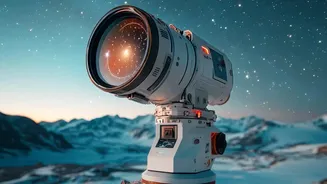
However, not all new data points to a radical revision. Other recent findings have actually strengthened the case for the 13.8-billion-year age. Ground-based experiments like the Atacama Cosmology Telescope (ACT) in Chile have made new, independent measurements of the cosmic microwave background. Their results align almost perfectly with the original Planck satellite data, suggesting an age of 13.77 billion years, give or take 40 million years. This confirmation from a different instrument makes it harder to dismiss the CMB findings as a fluke. Furthermore, attempts to age the universe by studying its oldest stars also seem to align with the 13.8-billion-year figure. The logic is simple: the universe cannot be younger than its oldest stars. Precision measurements of ancient stars in our own Milky Way suggest a lower bound of 13.6 billion years for the cosmos's age, fitting comfortably within the standard model.