



What is the Tower-Catch Strategy?
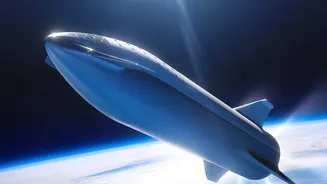
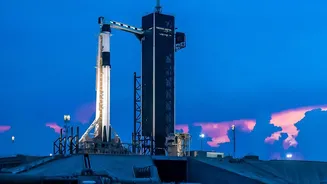
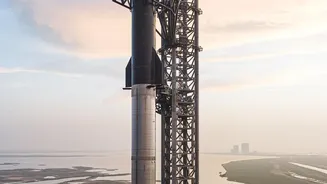
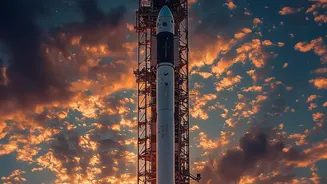
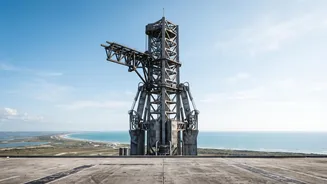
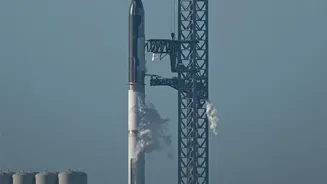
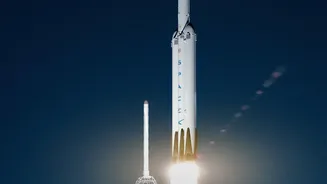
Imagine the most powerful rocket ever built, the Super Heavy booster, returning from the edge of space. Instead of landing on legs, it precisely maneuvers itself back to the launch pad, where a nearly 400-foot tower awaits. Two huge mechanical arms, nicknamed
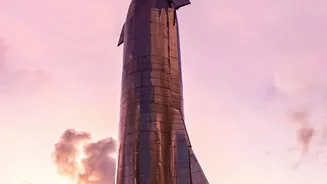
'Mechazilla' or 'chopsticks', extend from the tower, brace for impact, and catch the booster before it touches the ground. This isn't science fiction; it's the core of SpaceX's strategy for making its Starship system fully and rapidly reusable. The system is designed to catch not only the first-stage Super Heavy booster but eventually the Starship upper stage as well, placing both directly back onto the launch mount, ready for the next flight.
How Does 'Mechazilla' Actually Work?
The process is a masterpiece of engineering and precision. After separating from the Starship spacecraft, the Super Heavy booster performs a flip maneuver and fires its engines to fly back to the launch site. As it descends, it uses four large, waffle-patterned grid fins near the top of the rocket to steer itself with incredible accuracy. These fins are not just for control; they are also the strong points where the tower arms will make contact. The 'chopstick' arms, powered by powerful hydraulic systems, move up and down the tower on a carriage. They position themselves to intercept the descending booster, absorbing its momentum and securing it by its grid fin hardpoints. Once caught, the arms can then lift the booster and place it directly back onto the launch mount.
Why Not Just Use Landing Legs?
SpaceX's Falcon 9 rocket perfected propulsive landings using retractable legs, so why change a winning formula? The answer lies in mass and speed. Landing legs strong enough to support the colossal Super Heavy booster would be incredibly heavy. By removing them entirely, SpaceX saves a significant amount of mass, which directly translates into the ability to carry heavier payloads to orbit. Every kilogram of landing gear is a kilogram that isn't fuel or cargo. This strategy moves the complex, heavy landing hardware from the rocket to the ground, where weight isn't a penalty. The second major advantage is turnaround time. Catching the booster and placing it right back on the pad eliminates the need for transportation from a landing zone or a droneship at sea. This makes it possible to refuel, attach a new upper stage, and relaunch in a matter of hours, not days or weeks—a key step toward making spaceflight more like airline operations.
The Risks and Bigger Picture
The tower-catch maneuver is arguably one of the most complex and high-risk operations in rocketry today. It requires near-perfect accuracy; the booster must arrive at exactly the right spot, at the right velocity, and in the correct orientation for the arms to succeed. A miscalculation could be catastrophic for both the multi-million dollar rocket and the ground infrastructure. However, the reward is worth the risk in SpaceX's view. This capability is not just an engineering flex; it is the fundamental enabler of the company's long-term vision. Founder Elon Musk's goal of establishing a self-sustaining city on Mars depends on a massive fleet of Starships making frequent and affordable trips. Rapid reusability is the only way to achieve that cadence. By solving the tower-catch problem, SpaceX isn't just improving a rocket; it's attempting to build a gateway to making humanity a multi-planetary species.