



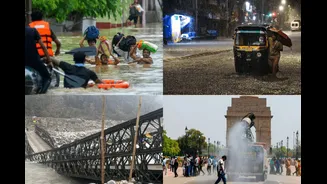


A Region Under Water
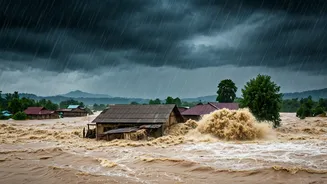
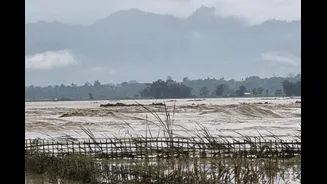
The first major wave of monsoon floods for 2026 has hit the Northeast, with Assam and Arunachal Pradesh bearing the brunt of the deluge. According to the Assam State Disaster Management Authority (ASDMA), over 22,000 people across six districts—Dhemaji,
Lakhimpur, Nalbari, Kokrajhar, Chirang, and Dibrugarh—have been affected. Dhemaji is the worst-hit district, with more than 15,000 residents grappling with rising floodwaters. The situation is also grim in Arunachal Pradesh, where incessant rains have triggered devastating flash floods and landslides. At least three fatalities have been confirmed in Keyi Panyor district, with several people reported missing. The downpour has affected ten districts in the state, cutting off key highways and displacing hundreds of families.
Decoding the Orange Alert
The India Meteorological Department (IMD) has issued 'orange alerts' for several northeastern states, a warning that signifies a high level of preparedness is required from officials and the public. An orange alert means that extremely bad weather is expected, which could disrupt travel, rail, and power supply, and pose a risk to life and property. The IMD uses a four-colour-coded system to issue weather warnings: Green (all clear), Yellow (be aware), Orange (be prepared), and Red (take action). The current alerts are in response to forecasts of heavy to very heavy rainfall, with some areas in Assam and Meghalaya predicted to receive extremely heavy spells. These warnings are crucial for disaster management agencies to mobilise resources and for residents in vulnerable, low-lying, and landslide-prone areas to take necessary precautions.
The Devastating Impact on the Ground
The on-ground reality for thousands is dire. In Assam, floodwaters have submerged 96 villages and inundated nearly 1,690 hectares of vital cropland. The swelling rivers, including the Disang which is flowing above the danger level in Sivasagar district, threaten to worsen the situation. Beyond agriculture, the floods have severely impacted infrastructure. A crucial railway bridge on the Simen River in Dhemaji district suffered damage due to erosion, forcing the Northeast Frontier Railway to suspend train services between Archipathar and Simen Chapari stations, disrupting a key transport link. In Arunachal Pradesh, flash floods have washed away and damaged dozens of houses, particularly in the NEEPCO Colony in Keyi Panyor district, where a relief camp now shelters displaced residents. Landslides have severed major roads, including the vital Pasighat-Pangin stretch of National Highway-13.
Why This Is Happening Now
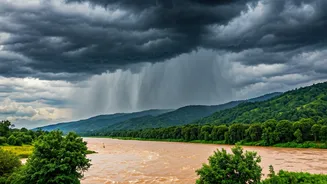
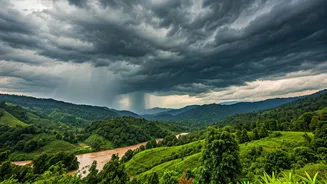
This intense weather event is being driven by the strengthening of the southwest monsoon over the region. The IMD has pointed to strong moisture incursion from the Bay of Bengal, which is feeding the weather systems and leading to widespread, heavy precipitation. The Northeast is naturally prone to heavy rainfall due to its unique topography, which funnels monsoon winds and moisture. However, the current spell has been particularly intense, with Mawsynram in Meghalaya—one of the wettest places on Earth—recording exceptionally heavy rainfall in recent days. The IMD forecasts that this pattern of heavy to very heavy rainfall is likely to continue across the region for several more days, keeping the risk of further flooding and landslides high.
Authorities Respond and Urge Caution
State and central authorities are actively engaged in response efforts. Assam Chief Minister Himanta Biswa Sarma has stated that the government is mobilising all resources for relief and rehabilitation, with ministers directed to oversee the process in the worst-hit districts. Union Home Minister Amit Shah has also been in contact with the Chief Minister, assuring all necessary support from the Centre. In Arunachal Pradesh, NDRF and SDRF teams have been deployed for search, rescue, and relief operations. Officials have urged the public to remain vigilant, avoid unnecessary travel, and steer clear of landslide-prone and waterlogged areas. Relief camps have been established to provide shelter and aid to those displaced by the floods, but with more rain in the forecast, the challenge for both residents and rescuers is far from over.