





Kolkata carries many titles, but few are as evocative as the 'London of India'. This nickname isn't just a fleeting comparison; it's rooted in a deep and complex history that shaped the city's very foundation, streets, and soul.
An Imperial Capital's Grand Design
The story begins when Kolkata,
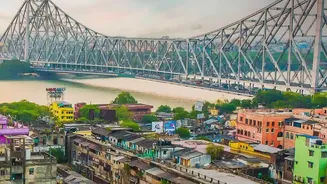
then called Calcutta, was the capital of British India from 1772 to 1911. During this era, it was the second most important city in the British Empire, surpassed only by London itself. As the administrative heart of the Raj, the British invested heavily in creating a city that mirrored their own capital's grandeur. Governor-General Richard Wellesley was largely responsible for its development, overseeing the construction of wide roads and impressive public buildings. This systematic urban planning, a conscious effort to build a 'City of Palaces', laid the very first stone in the foundation of its London-esque reputation. Much like London developed along the River Thames, Kolkata's growth was centered around the Hooghly River, which was a vital artery for trade and communication.
Architecture That Echoes London
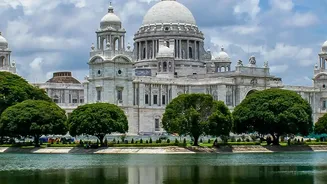
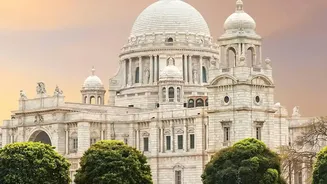
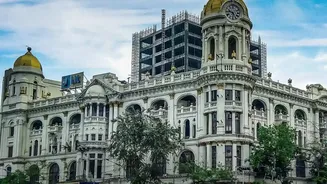
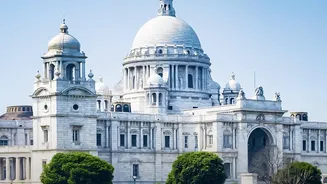
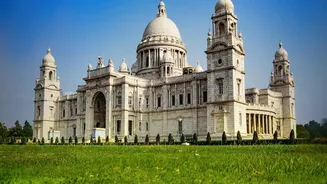
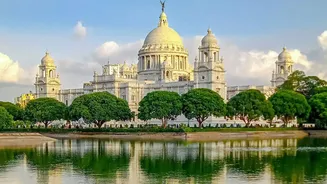
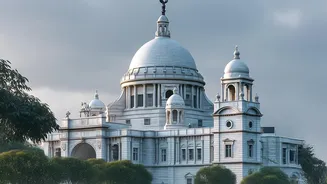
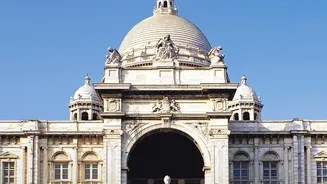
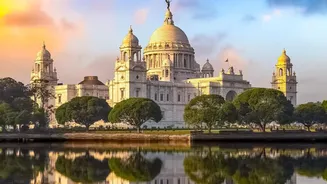
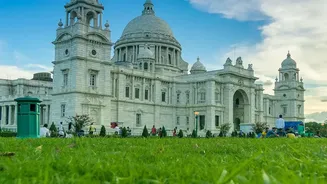
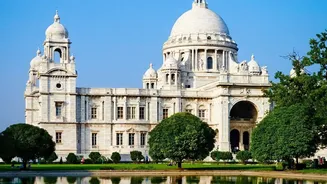
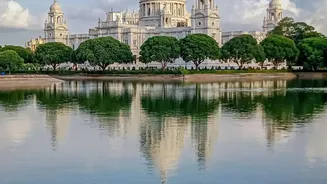
The most visible link between the two cities is Kolkata's stunning colonial architecture. The British built a vast collection of public buildings and monuments in a blend of European styles, including Neoclassical, Gothic, and Victorian. The magnificent Victoria Memorial, a grand white marble monument to Queen Victoria, stands as a prime example of the Indo-Saracenic style that blends British and Mughal elements. Other landmarks like the St. Paul's Cathedral, built in the Gothic Revival style, the Neoclassical Raj Bhavan (formerly Government House), and the Writers' Building further solidified the city’s European aesthetic. These structures were not just functional; they were symbols of imperial power, designed to make the Indian capital feel like a seamless extension of Britain.
A Cultural and Intellectual Awakening
Beyond bricks and mortar, the nickname is also tied to a significant cultural shift. The colonial period ushered in the Bengal Renaissance, a phenomenal intellectual and artistic awakening centered in Kolkata. The introduction of Western education through institutions like the Hindu College (now Presidency University) created a new class of Indian intellectuals. This era produced luminaries like Rabindranath Tagore, the first non-European Nobel laureate in Literature. While influenced by Western thought, this was not a period of simple imitation. It was a dynamic fusion that led to profound social reforms, questioning traditions like the caste system and advocating for women's education. This intellectual fervour made Kolkata the undisputed cultural capital of India, a hub of literature, art, and progressive ideas.
The Enduring Legacy Today
After the capital was shifted to Delhi in 1911, Kolkata's journey took a different course. Today, the 'London of India' nickname is viewed with a mix of historical appreciation and a strong sense of the city's unique identity. Many colonial-era buildings still stand, preserved as a testament to history. The city's iconic tram system, another colonial-era remnant, continues to lend a vintage charm. However, modern Kolkata is a bustling metropolis defined by its own distinct Bengali culture, a spirit forged in the fires of the independence movement and post-colonial evolution. While the architectural parallels to London are undeniable, Kolkatans have reclaimed and reinterpreted this heritage. The colonial past is a reference point, but the city's soul is entirely its own, a sentiment captured in its other, perhaps more fitting, moniker: the 'City of Joy'.