




A New Window to the Cosmic Dawn
For decades, astronomers have been trying to piece together the story of the universe's infancy. According to our best understanding, the cosmos began with the Big Bang, expanded, and cooled. For hundreds of millions of years, it was a dark, foggy place,
filled with a neutral hydrogen gas that blocked energetic light. This period, known as the cosmic 'dark ages', ended when gravity began pulling clouds of gas together to ignite the first stars and galaxies. The powerful light from these first stellar nurseries then began to burn away the fog, clearing the universe and making it transparent as we know it today. Until recently, observing this critical era was nearly impossible. But the James Webb Space Telescope (JWST), with its unparalleled sensitivity to infrared light, has changed everything. It acts as a powerful time machine, capturing light that has traveled for over 13 billion years, allowing us to see the universe as it was in its formative first billion years.
Finding the Unexpected
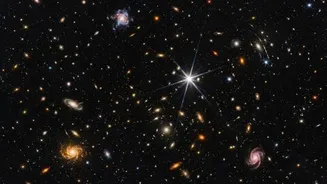
The central promise of the JWST was to find the very first, faintest galaxies. What it has found instead has been far more surprising. The latest images reveal galaxies from this early epoch that are far brighter, more massive, and more chemically complex than any existing model predicted. Some galaxies, seen when the universe was only a few hundred million years old, appear to have mature structures and significant amounts of dust and heavier elements. Astronomers refer to anything heavier than hydrogen and helium as 'metals', and these are forged inside stars and scattered when they die. Finding them in such early galaxies suggests that star formation began incredibly quickly and efficiently. In other words, the early universe wasn't just building small, chaotic starter galaxies; it was already constructing surprisingly settled systems, forcing a major rethink.
Surfboards and Pool Noodles in Space
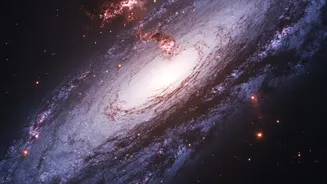
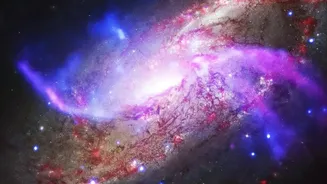
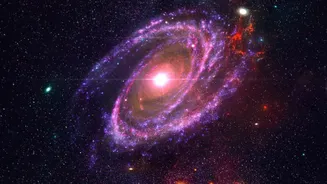
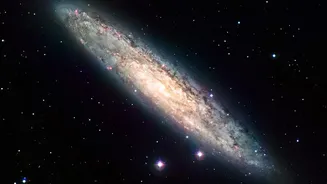
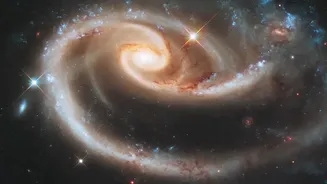
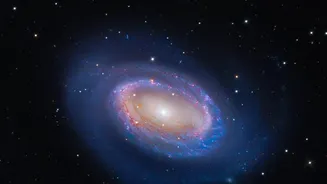
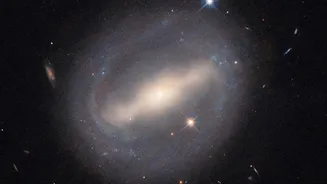
Beyond their surprising maturity, the physical shape of these first galaxies is also upending old assumptions. Current models and observations of nearby galaxies show us familiar shapes like grand spirals (like our own Milky Way) or round ellipticals. But analysis of JWST's images shows that the most common shapes in the early universe were very different. An international team of scientists found that between 50% and 80% of the early galaxies they studied were flattened and elongated, with shapes described as being like 'surfboards' or 'pool noodles'. These distant, ancient galaxies were also much less massive than the ones we see today, simply because they had less time to grow. This discovery suggests that the majestic spirals we see in the modern cosmos had to evolve from these more basic, stretched-out forms over billions of years.
Rewriting the Textbooks
These discoveries are not just minor footnotes; they are creating 'good problems' for science, forcing a re-evaluation of foundational theories. The sheer number of bright, massive galaxies found so early is in tension with established cosmological models. How could these galaxies grow so big, so fast? How did they produce heavy elements so quickly? And how did some of them manage to clear the thick fog of hydrogen around them to become visible? Scientists are now exploring new possibilities. Perhaps the first stars were more massive and burned out faster than previously thought, seeding the universe with metals at an accelerated rate. Or maybe the processes that govern how gas collapses to form stars were simply far more efficient in the early universe’s unique conditions. Each new image from the JWST provides another clue, sending theorists back to their models to create a more accurate story of our cosmic origins.