


The festive season leaves us with full hearts and happy memories, but often also a feeling of sluggishness. The first instinct for many is to jump on the weighing scale, hoping for a miracle but fearing the worst. There's a better way.
The Problem with the Scale
Chasing a specific
number on the scale is what experts call an 'outcome goal'. The problem is, you don't have complete control over that outcome. Your body weight can fluctuate daily due to water retention, hormones, and digestion. Seeing the number go up, even slightly, can be incredibly discouraging, leading to negative feelings and a cycle of self-criticism. This emotional rollercoaster can sabotage your motivation, making you want to give up before you've even truly started. Basing your success on a number that is often misleading can harm your self-esteem and create an unhealthy obsession. True fitness is about feeling strong, energetic, and capable in your body, not about hitting a magic number.
A Kinder Alternative: Process Goals
Instead of focusing on the outcome (losing 'X' kilos), shift your focus to the 'process'. A process goal is a specific action or behaviour that you have direct control over. It's not about the destination, but about the steps you take to get there. For example, instead of a goal to 'lose 5 kg', a process goal would be 'I will walk for 30 minutes every morning' or 'I will drink two litres of water daily'. These are actions you can perform and tick off a list. Achieving them gives you a small, immediate win, which builds confidence and momentum. This approach shifts the focus from a potentially distant and frustrating outcome to the satisfying feeling of showing up for yourself every single day.
Why This Method Works So Well
The beauty of process goals lies in psychology. They empower you by focusing on what you can control: your own actions. Every time you complete a process goal—whether it's choosing a home-cooked meal or getting enough sleep—you build a habit. This consistency is the true secret to long-term health and fitness. This method builds resilience. If you have an off day with your eating, it doesn't derail your entire week, because you can still achieve your goal of walking or staying hydrated. It detaches your sense of accomplishment from the unpredictable scale and connects it to your consistent effort, which is a much healthier and more sustainable way to build a routine.
Your Post-Festival Action Plan
Getting back on track doesn't need to be complicated. Start with a few simple, manageable process goals. The key is to choose actions that you can realistically integrate into your daily life. Here are some ideas:
Movement: Instead of aiming for an intense hour-long workout, commit to 'walking for 20 minutes after dinner' or 'doing 15 minutes of stretching each morning'.
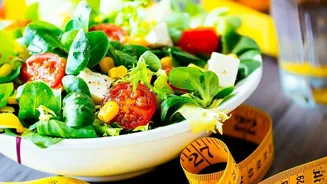
Nutrition: Forget about restrictive diets. Focus on a goal like 'eating at least one fruit with breakfast' or 'making sure half your plate at lunch is vegetables'.
Hydration: A simple and powerful goal is to 'drink a glass of water first thing in the morning and before every meal'.
Sleep: Quality sleep is crucial for recovery and metabolism. A great process goal is 'turn off all screens 30 minutes before bedtime'.