





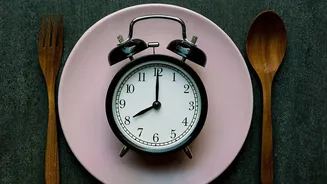


The Body's Internal Clocks
Every cell in your body runs on a 24-hour schedule known as a circadian rhythm. Think of it as a master internal clock, located in the brain, that coordinates countless bodily functions. This central clock is primarily set by light and dark cycles, telling
your body when to be alert and when to rest. But there are also secondary, or peripheral, clocks in your organs, including your liver, pancreas, and gut. While the brain's clock responds to light, these organ clocks are powerfully influenced by another cue: the timing of your meals. In a perfect world, all these clocks are synchronised, working together to manage everything from hormone release to digestion efficiently.
How Shift Work Creates Chaos
Shift work throws this finely tuned system into disarray. When you work at night and sleep during the day, you create a conflict between your environment and your internal programming. Your brain's master clock receives light at a time it expects darkness, while your behaviour—staying awake, working, and eating—is completely inverted. This mismatch is called circadian misalignment. It forces your digestive organs and metabolic systems to be active when they are biologically programmed to be resting and repairing. Studies show that even long-term shift workers rarely adapt fully to this schedule, leaving their bodies in a state of constant internal confusion.
The Resulting Metabolic Damage
This chronic misalignment isn't just tiring; it has serious metabolic consequences. Research consistently links shift work to a higher risk of developing metabolic syndrome, a cluster of conditions that includes high blood pressure, abdominal obesity, high blood sugar, and abnormal cholesterol levels. Eating at night, when your body is least prepared to handle nutrients, impairs glucose tolerance. One study found that night eating increased average glucose levels by over 6% during simulated shift work. Over time, this can lead to insulin resistance, where your cells stop responding properly to insulin, paving the way for type 2 diabetes, weight gain, and cardiovascular disease.
Using Food to Reset the Clocks
If light is the main lever for the brain's clock, food is the primary lever for the clocks in your metabolic organs. This is the core of a field called chrononutrition. By timing your meals strategically, you can help resynchronise your peripheral clocks, even when your master clock is being disrupted by an unusual work schedule. Studies have shown that when shift workers consume all their calories during daylight hours and fast overnight, many of the negative metabolic effects are prevented. This practice, known as time-restricted eating (TRE), helps align the activity of the liver and pancreas with the body's natural daytime rhythm, improving blood sugar control and fat metabolism.
Making Daytime Eating Work for You
The most effective strategy appears to be confining all food intake to a consistent window during the daytime, for instance, an 8 to 10-hour period. A landmark study demonstrated that simply restricting meals to the daytime prevented the rise in blood glucose levels typically seen in night workers. While fasting through a long night shift can be challenging, the benefits are significant. For many participants in these studies, the approach proved flexible and acceptable. The goal is to avoid sending a "time to be active" signal to your digestive system when the rest of your body is in a resting and recovery state. This allows your metabolic organs to follow a more consistent and healthy daily rhythm, despite the challenges of your work schedule.