



Understanding Digital Eye Strain
Digital eye strain, or computer vision syndrome, is the physical discomfort felt after two or more hours in front of a digital screen. Symptoms include dry, itchy eyes, blurred vision, headaches, and even neck and shoulder pain. It happens because we
blink less frequently when staring at screens, leading to dryness. Furthermore, our eyes have to work harder to focus on pixelated characters compared to solid print, and they are constantly adjusting to the contrast and glare from the display.
Find the Right Screen Brightness
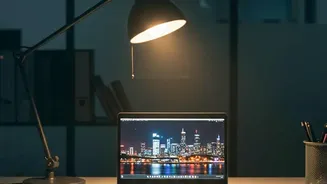
The single most important rule for screen brightness is to match it to your surrounding environment. A screen that is much brighter than your room lighting acts like a light source, forcing your eyes to constantly adjust and causing fatigue. Conversely, a screen that's too dim causes you to squint. A good test is to hold a piece of white paper next to your screen; the screen's white background should have a similar level of brightness. For typical office lighting (300-500 lux), a brightness of around 100-150 cd/m² (or nits) is often recommended. In a dimly lit room, you might lower that to 80-120 nits, while a very bright room near windows may require up to 180 nits or more to remain legible.
The Importance of Screen Position
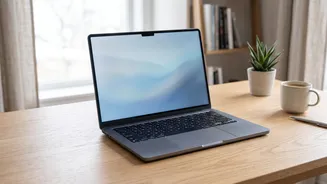
Proper screen positioning is crucial for both eye and neck comfort. The general rule is to place your laptop so that the top of the screen is at or slightly below your eye level. This allows you to look slightly downward toward the center of the screen, which is a more relaxed posture for your neck. The ideal viewing distance is about an arm's length away, typically 20-28 inches. Since a laptop's screen and keyboard are attached, achieving this ideal position usually requires separating them. Using a laptop stand to elevate the screen and an external keyboard and mouse is the most ergonomic solution.
Battling Reflections and Glare
Glare from windows and overhead lights is a major contributor to eye strain. The most effective way to combat this is by positioning your workstation correctly. Ideally, your screen should be placed at a right angle (perpendicular) to the main light source, like a window. You should avoid having a window directly in front of you (creating high contrast) or directly behind you (creating reflections on the screen). If you can't move your desk, use blinds or curtains to control the light. Angling the screen slightly downward can also help reduce reflections. For persistent glare, an anti-glare screen protector can be a worthwhile investment.
Beyond the Screen: Essential Habits
Your habits are just as important as your setup. Remember to follow the 20-20-20 rule: every 20 minutes, take a 20 second break to look at something at least 20 feet away. This simple practice allows the focusing muscles inside your eyes to relax. It’s also important to make a conscious effort to blink more often to keep your eyes lubricated. Using artificial tears can also help alleviate dryness. Finally, many devices have a 'night mode' or 'blue light filter' that shifts the screen to warmer tones in the evening, which can be easier on the eyes and may help support better sleep hygiene.