





Explore the Labyrinth of Ancient Caves
Meghalaya is home to some of the longest and most complex cave systems in India, with over 1,700 identified so far. Forget simple, well-lit tourist paths; this is a journey into a subterranean world. Caves like Mawsmai, while popular and accessible, offer
just a glimpse. For a true adventure, head to the Jaintia Hills to explore systems like Krem Liat Prah, the country's longest natural cave, stretching over 30 kilometres. Inside, you'll find everything from massive chambers nicknamed 'Aircraft Hangars' to rivers flowing through the dark and fossils embedded in the limestone walls. These caves are not just geological wonders; they are archives of the planet's history, formed over millions of years by the region's heavy rainfall.
Walk Across Bridges That Are Alive
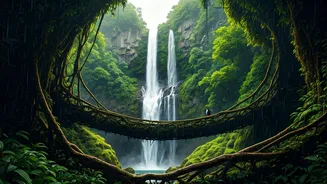
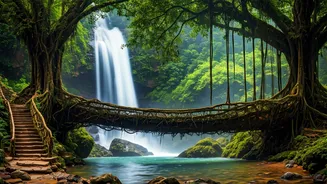
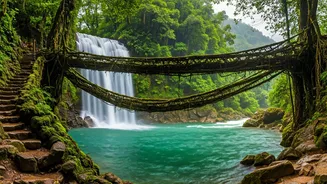
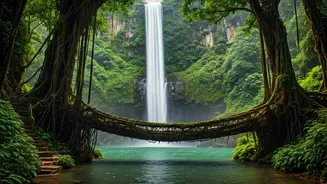
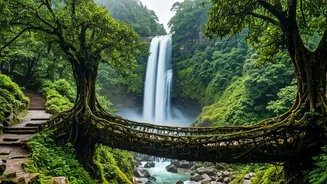
Long before concrete and steel, the Khasi and Jaintia peoples mastered a unique form of bio-engineering: living root bridges. These aren't built, but grown, by guiding the aerial roots of the Ficus elastica (rubber fig) tree across rivers and streams. The process can take decades, with bamboo scaffolding used to direct the roots until they take hold on the opposite bank. Over time, the roots intertwine and strengthen, creating structures so durable some are estimated to be over 500 years old and can support dozens of people. While the double-decker bridge in Nongriat is famous, hundreds of these functional, living marvels connect remote villages, embodying a deep, sustainable relationship with nature.
Discover Asia's Cleanest Village
In 2003, Discover India magazine gave the village of Mawlynnong the title of 'Asia's Cleanest Village', a reputation it proudly maintains. This isn't the result of a government initiative, but a community-driven way of life. Every resident, including children, participates in keeping the village spotless. Bamboo dustbins are placed at every corner, plastic is banned, and cleanliness is a core part of the local Khasi culture. Nicknamed 'God's Own Garden', Mawlynnong is more than just clean; it boasts a 100% literacy rate and is a window into the matrilineal society of the Khasi people, where children inherit their mother's surname.
Float on a Crystal-Clear River
If you've seen photos of boats that seem to be floating in mid-air, you've seen the Umngot River in Dawki. Located near the India-Bangladesh border, this river is famous for its astonishingly clear water, where the riverbed is often perfectly visible from the surface. While a boat ride is the most popular activity, the nearby village of Shnongpdeng offers a more immersive experience with camping, kayaking, and snorkelling. The surreal beauty of the Umngot is a different kind of water wonder, offering a peaceful and mesmerizing experience that stands in gentle contrast to the thundering power of the state's waterfalls.
Savour an Authentic Khasi Meal
To truly know Meghalaya, you have to taste it. Khasi cuisine is hearty, rustic, and deeply connected to the land. It relies on fresh, local ingredients and techniques like smoking and fermenting rather than heavy spices. The staple is rice, often served with flavourful meat dishes. A must-try is Jadoh, a rice and pork dish that is the Khasi equivalent of a pulao, often enriched with a nutty black sesame paste called Dohneiiong. For the adventurous, there's Doh Khleh, a refreshing and zesty pork salad. Even the rice beer, known as Kyat, is a part of ceremonial life. A traditional meal is a direct taste of Khasi culture.