




Hollywood's Newest Cinematographer: A Telescope
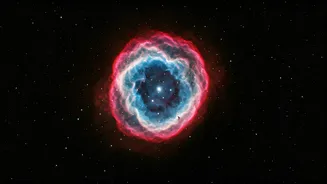
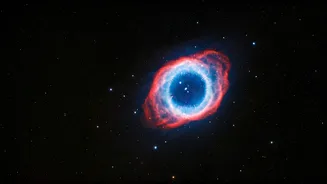
The James Webb Space Telescope (JWST) isn't just a scientific instrument; it's the most expensive and powerful camera ever built, and its output is pure spectacle. The images of the Carina Nebula and Stephan's Quintet weren't presented on dusty university
websites. They were revealed in a global, NASA-hosted live stream, optimized for social media, and immediately splashed across every screen you own. These weren't just data points; they were art. The raw infrared data was painstakingly translated by visual artists into a palette of golds, ochres, and electric blues, designed to evoke awe. In effect, NASA has become a new kind of dream factory. They’re not just showing us the universe; they’re producing it for us. The release of a new batch of JWST photos has become a cultural event, akin to a Marvel movie trailer drop. It generates memes, analysis videos, and a collective sense of wonder that few scripted dramas can match. The universe, it turns out, has an incredible production value.
The Billionaire Race as Reality TV
If the JWST is providing the stunning visuals, the commercial space race is delivering the human drama. The competition between Elon Musk’s SpaceX, Jeff Bezos’s Blue Origin, and Richard Branson’s Virgin Galactic is less a story of engineering and more a high-stakes reality show. We have our main characters: the eccentric visionary (Musk), the methodical titan (Bezos), and the flamboyant showman (Branson). Each rocket launch is a live-streamed episode, complete with countdowns, suspense, and post-flight press conferences that feel like post-game interviews. We watch billionaires and celebrities suit up and blast off for a few minutes of weightlessness, turning the final frontier into the ultimate influencer vacation. It’s part “Lifestyles of the Rich and Famous,” part X-Games. The narrative is irresistible: immense wealth, personal rivalry, and the primal thrill of watching humans strap themselves to controlled explosions. It’s a spectator sport where the stadium is the entire planet and the stakes feel impossibly high, even if the flights themselves are becoming routine.
Scientists as the New Storytellers
The era of the stuffy, incomprehensible scientist is over. Today’s great science communicators are bona fide media personalities. Figures like Neil deGrasse Tyson have mastered the art of the talk show circuit and the viral tweet, using pop culture analogies to explain cosmic phenomena. On TikTok and YouTube, a new generation of astrophysicists and engineers are building massive followings by breaking down complex topics into bite-sized, engaging videos. They aren't just lecturing; they are storytelling. They use humor, slick editing, and a knack for narrative to explain black holes, quantum physics, and the search for alien life. They’ve realized that in an attention economy, facts aren't enough. You need a compelling story, a charismatic narrator, and a hook that can compete with Netflix. They are the showrunners, writers, and hosts for the universe’s ongoing narrative, translating the mysteries of the cosmos into content we can’t stop scrolling through.
An Infinite, Unscripted Content Stream
Perhaps the biggest reason the universe is succeeding as entertainment is its sheer scale. It is the ultimate open-world game, an endless source of novelty. Unlike a TV series that must eventually end or a film franchise that runs out of ideas, the cosmos is a content engine that will never run dry. There will always be a new star to discover, a new galaxy to image, a new mystery to solve. Every asteroid sample return mission is a treasure chest. Every new planetary probe is a potential cliffhanger. The universe provides an unscripted, high-stakes narrative that is fundamentally real. In a world saturated with fictional stories and manufactured drama, the raw, unblemished awe of a new image from the edge of time or the visceral thrill of a rocket launch offers something different: a connection to a story that is bigger than all of us, and one in which we all have a stake.