



The Science of a Stable Start
A breakfast heavy in simple carbohydrates, like plain white bread or sugary cereals, causes a rapid spike in blood glucose. Your body releases a surge of insulin to manage it, which can lead to a subsequent 'crash', leaving you tired and hungry long before
lunch. The solution is a meal built around protein, fibre, and healthy fats. This combination slows down digestion, ensuring a gradual release of sugar into the bloodstream for steady, reliable energy. Many traditional Indian breakfast ingredients are perfectly suited for this, requiring just a few simple tweaks to become powerhouses of morning nutrition.
Moong Dal or Besan Chilla
These savoury pancakes are a fantastic choice for blood sugar management. Both moong dal (split green gram) and besan (gram flour) are rich in protein and fibre with a low glycemic index, meaning they digest slowly and prevent sharp glucose spikes. For a quick morning meal, the batter can be prepared the night before. Simply blend soaked moong dal with ginger and green chillies, or mix besan with water and spices. In the morning, just pour and cook like a thin pancake. To boost the nutritional value, add finely chopped vegetables like spinach, onions, and tomatoes to the batter. Serving it with a side of plain curd adds more protein, making it an even more balanced meal.
Vegetable and Paneer or Egg Bhurji
For a protein-packed start, bhurji (scramble) is a quick and versatile option. Eggs offer high-quality protein that helps control appetite and slow glucose absorption. A vegetable egg bhurji loaded with onions, tomatoes, and capsicum is ready in under 15 minutes. For a vegetarian alternative, paneer bhurji is an excellent choice, delivering a substantial amount of protein. Sautéing crumbled paneer with spices and vegetables creates a filling and delicious dish. To make it a complete meal, pair it with a small whole-wheat roti instead of white bread.
Sprouts Chaat or Salad
When you have absolutely no time to cook, a sprouted moong salad is a lifesaver. Sprouts are a powerhouse of nutrients, including protein and fibre. Lightly steaming them can improve digestion while retaining their crunch. For a quick chaat, toss the steamed sprouts with chopped cucumber, onion, and tomato, and add a squeeze of lemon juice for flavour. To make it more substantial, mix in some crumbled paneer or a bowl of thick curd. This no-cook breakfast is refreshing and keeps you full without feeling heavy.
Upgraded Poha and Upma
Poha and upma are staples in many Indian households but are often carb-heavy. With a few upgrades, they can be made much healthier. For poha, the key is to load it with vegetables and protein. Adding a generous amount of roasted peanuts, peas, and onions increases the fibre and protein content. Similarly, when making upma, you can reduce the amount of semolina (suji) and bulk it up with vegetables like carrots and beans. Serving either of these dishes with a side of curd or a boiled egg helps to balance the meal and slow down the release of sugar.
Yogurt Bowl with Nuts and Seeds
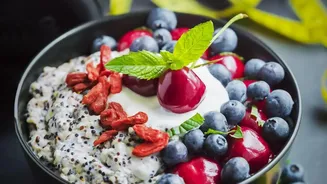
Perhaps the fastest option of all is a simple yogurt bowl. Unsweetened Greek yogurt or thick hung curd provides significantly more protein than regular curd. Simply top a bowl of yogurt with a handful of almonds, walnuts, and seeds like chia or flax. This combination offers a perfect trio of protein, healthy fats, and fibre. It requires zero cooking and can be assembled in minutes, making it ideal for the busiest of mornings.