






The Challenge of Lunar Living
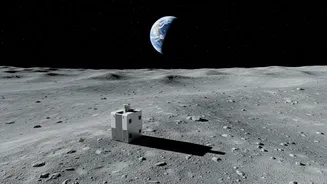
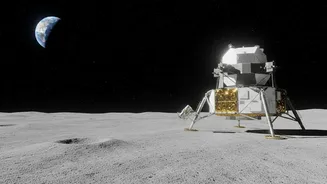
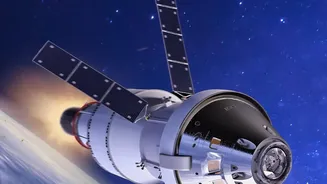
Establishing a permanent base on the Moon, a key goal of NASA's Artemis program, isn't as simple as just flying there. The biggest hurdle is logistics. Every kilogram of supplies, from food to fuel, must be launched from Earth at an astronomical cost.
Oxygen is one of the heaviest and most critical resources. Not only do astronauts need it to breathe, but it's also a primary component of rocket propellant. Constantly resupplying a lunar outpost with oxygen from Earth is simply not sustainable. This is where the concept of In-Situ Resource Utilization (ISRU) comes in. ISRU is the idea of living off the land, using local materials on the Moon to create what's needed for survival and exploration. It’s the only way to make long-term missions feasible, and at the top of the ISRU checklist is making air.
An Ocean of Oxygen at Our Feet
It might seem like a barren, airless world, but the Moon's surface is surprisingly rich in oxygen. The catch is that it's not freely available in the atmosphere. Instead, it is chemically locked away inside the minerals that make up the lunar regolith—the fine, grey dust and soil covering the entire Moon. This regolith is about 45% oxygen by mass, bound up in oxides of silicon, aluminum, iron, and other metals. This means the ground beneath a future astronaut's feet is a massive, untapped reservoir of the most essential element for life. The challenge for scientists hasn't been finding the oxygen, but figuring out an efficient way to break those strong chemical bonds and release it as a breathable gas.
Cooking Dust with Sunshine
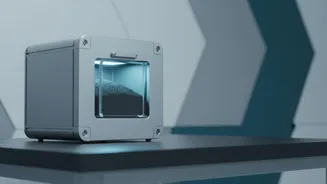
NASA is focusing on a process called carbothermal reduction to crack the code. The project, aptly named the Carbothermal Reduction Demonstration (CaRD), aims to use two abundant lunar resources: regolith and sunlight. The process works by heating the lunar soil to extremely high temperatures—over 1,650 degrees Celsius—inside a specialized reactor. At these temperatures, the regolith melts. By introducing a carbon source, like methane, a chemical reaction is triggered that 'steals' the oxygen atoms from the metal oxides in the molten soil. This reaction releases carbon monoxide (CO) gas. While not breathable, this carbon monoxide is the crucial first product. A secondary system can then easily split the carbon monoxide into breathable oxygen (O2) and carbon, which can be recycled for future reactions.
The CaRD Project in Action
This isn't just a theory; it's being actively tested. NASA, in collaboration with industry partners like Sierra Space, has built and successfully tested a prototype system. In a large vacuum chamber at the Johnson Space Center that simulates the airless lunar environment, the team used powerful lasers to mimic concentrated sunlight. They heated simulated moon dust in the carbothermal reactor and successfully detected the production of carbon monoxide, proving the core process works. The integrated prototype combines a solar concentrator to focus sunlight, precision mirrors, and a reactor that can operate autonomously, moving fresh regolith in and spent material out. Recent tests have confirmed the viability of this integrated system, moving the technology significantly closer to being ready for a real lunar mission.
More Than Just Breathable Air
The benefits of this technology extend far beyond just providing air for astronauts. The huge amount of oxygen needed for rocket propellant could also be produced on-site, turning the Moon into a refuelling station for deeper space missions, including trips to Mars. Furthermore, the carbothermal process leaves behind a valuable byproduct: a mix of molten metals. Once the oxygen has been extracted, the remaining material is a collection of iron, aluminum, and silicon. These metals could be used in 3D printers to manufacture tools, spare parts, and even construction materials for building habitats and infrastructure on the Moon. This single process could therefore provide the two most critical resources for a lunar economy: breathable air and building materials.