





The Ultimate Comfort Food
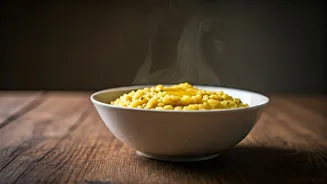
We're talking about khichdi. For many across India, that single word conjures a feeling of deep-seated warmth and security. A humble mix of rice and lentils, khichdi is the culinary equivalent of a hug from your mother. It's the meal you turn to when
you're feeling unwell, when the weather turns grey, or when you’re simply too tired to think about what to cook. Its genius lies in its simplicity. At its core, it’s a perfectly balanced meal-in-a-pot, providing carbohydrates for energy and protein for repair. Yet, to call it merely 'simple' is to overlook its profound versatility and its deep cultural resonance.
A Dish with Deep Roots
Khichdi isn't a modern invention; its history is as old as the subcontinent itself. The dish gets mentions in ancient Indian texts, with Greek ambassador Seleucus Nicator noting during his campaign in India (305-303 BC) that a rice-and-pulse dish was immensely popular among the locals. The famous Moroccan traveller Ibn Battuta wrote about 'kishri' in the 14th century, describing it as a staple meal of rice and mung beans. It later found a treasured place in Mughal kitchens, where it was often elaborated with rich spices, nuts, and expensive ingredients. Emperor Jahangir was reportedly so fond of a spiced version that it was named after him. From ancient staple to royal delicacy, khichdi has always been there, adapting to the times.
A Journey Across India
The “goes everywhere” promise of khichdi is most evident in its incredible regional diversity. In Bengal, the 'khichuri' is a celebrated dish, especially during Durga Puja. The 'bhoger khichuri', made with roasted moong dal, gobindobhog rice, and a medley of vegetables and spices, is a flavour-packed festive offering. Head west to Gujarat, and you'll find 'vaghareli khichdi', a spicier, drier version often served with a tangy yogurt-based 'kadhi'. In the South, the comforting 'pongal'—both the savoury 'ven pongal' and the sweet 'sakkarai pongal'—is a close cousin, sharing the same rice-and-lentil DNA. In Uttar Pradesh and Bihar, it's a winter staple, often enjoyed with a dollop of ghee, chutney, and fried vegetables. Each state, each community, and indeed, each family has its own signature version.
More Than Just a Meal
Khichdi’s role transcends the dinner plate. In Ayurveda, it is considered a 'tridoshic' food, meaning it helps balance all three bodily humours (Vata, Pitta, Kapha), making it ideal for detoxification and healing. This is why it’s the default prescription for anyone recovering from an illness—it’s gentle, easy to digest, and provides complete nutrition. It’s also often a baby’s first solid food, a soft, nourishing introduction to the world of grains and pulses. At the other end of the spectrum, it's a sacred food. As 'prasad' or a holy offering in temples and gurdwaras, it feeds thousands, symbolising community, humility, and the idea that everyone is equal before God. From sickbed to sanctuary, khichdi nourishes the body and the soul.
Make It Your Own
The beauty of khichdi is that there is no single 'correct' recipe. It's a canvas. The basic formula is one part rice to one part dal (often moong, but masoor or toor also work), cooked with water until soft. But from there, the possibilities are endless. You can start with a simple 'tadka' of cumin seeds and ghee. You can add turmeric for colour and its anti-inflammatory properties, or ginger for a bit of warmth. Throw in seasonal vegetables like peas, carrots, and potatoes to make it a one-pot wonder. Garnish with fresh coriander. Serve it with a spoonful of pickle, a side of plain yogurt, or a crunchy papad. The best khichdi is the one that tastes like your home.