




The Comfort Food Risk
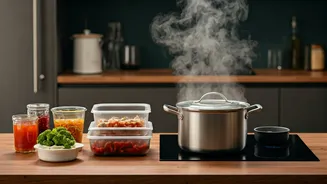
That steaming bowl of curry or hearty stew feels like the safest thing in the world, but cooked food can be a perfect breeding ground for bacteria if not handled correctly. Pathogens like Staphylococcus aureus and Clostridium perfringens thrive in cooked foods
left at the wrong temperature. Unlike the obvious dangers of raw meat, the risks in cooked food are invisible. Bacteria can be reintroduced after cooking and multiply rapidly, producing toxins that can cause significant illness even if the food is reheated. The problem isn't the cooking itself, but what happens afterwards—the cooling, the storing, the reheating, and the serving. Every step is a potential pitfall where a comforting meal can turn dangerous.
Know the Temperature Danger Zone
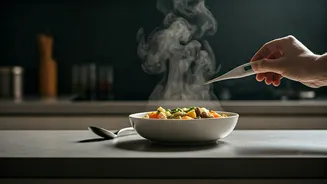
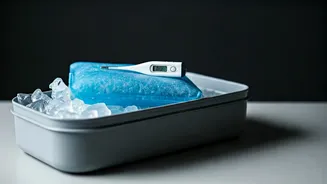
The single most important concept in food safety is the “Temperature Danger Zone.” This is the temperature range where bacteria grow most rapidly, often doubling in number in as little as 20 minutes. According to the USDA, this range is between 40°F (4°C) and 140°F (60°C). Perishable food should not be left in this zone for more than two hours. If the ambient temperature is high, above 90°F (32°C), that window shrinks to just one hour. Keeping hot food hot (above 140°F) and cold food cold (below 40°F) is the golden rule. A food thermometer is an essential, inexpensive tool to ensure your meals stay out of this danger zone, whether they are on the buffet table or cooling in your kitchen.
Reheating Rules for Leftovers
Simply warming up leftovers isn't enough; you need to reheat them thoroughly to kill any bacteria that may have developed during storage. All leftovers should be reheated to an internal temperature of 165°F (74°C). For liquids like soups and gravies, this means bringing them to a rolling boil. When using a microwave, cover the food to retain moisture and ensure it heats all the way through, stopping to stir partway to eliminate cold spots. Crucially, you should never use a slow cooker or a warming tray to reheat food. These devices don't get the food hot enough, quickly enough, potentially allowing it to linger in the danger zone. And remember, only reheat what you plan to eat; reheating food multiple times increases the risk of food poisoning.
The Slow Cooker Paradox
Slow cookers are fantastic for convenience, but they come with their own safety checklist. Because they cook food at low temperatures over many hours, there's a risk the contents could spend too much time in the temperature danger zone. To stay safe, always thaw meat or poultry completely before putting it in the cooker. Frozen chunks may not reach a safe temperature fast enough, allowing bacteria to multiply. If possible, start the cooker on the 'High' setting for the first hour to give it a heat boost before switching to 'Low'. Fill the cooker at least half but no more than two-thirds full, and keep the lid on to maintain a consistent temperature. Finally, use a thermometer to confirm the dish has reached a safe internal temperature (usually 165°F for poultry and mixed dishes) before serving.
Buffet and Potluck Strategy
Social gatherings where food sits out for hours are a major food safety challenge. At a buffet or potluck, food can quickly enter the danger zone. To keep dishes safe, hot foods must be kept in warming trays, chafing dishes, or slow cookers set to 'Warm' to maintain a temperature above 140°F (60°C). Cold foods must be nestled in bowls of ice to stay at or below 40°F (4°C). The two-hour rule is critical here: any perishable food left at room temperature for more than two hours should be discarded. When you are serving, use separate utensils for each dish and don't add fresh food to a platter that has already been sitting out. It is always better to replace it with a fresh dish.