








The Trillion-Dollar Question in Orbit
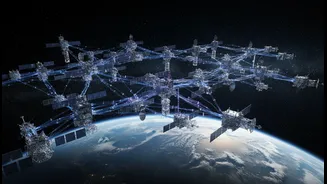
A California-based startup, Orbital Compute Inc., has formally asked the U.S. Federal Communications Commission (FCC) for permission to launch what could become a constellation of up to 100,000 satellites. The goal is not to provide internet, but to create
massive, AI-capable data centres in low Earth orbit. The company, founded in 2026, aims to deliver an astounding 10 gigawatts of computing power, arguing that space offers solutions to the biggest constraints facing the AI boom on Earth: a shortage of power, land, and water. Founder Euwyn Poon stated, "The demand for AI compute is outrunning what we can reasonably build on the ground... We think the next generation of data centers won't be built in the desert — they'll be built in orbit." This filing with the FCC, the body that regulates all US satellite communications, is the first critical step in a plan that could redefine the economics of both the space and technology industries.
What Is ‘Space AI’ or On-Orbit Computing?
At its core, Orbital’s plan is a massive extension of a concept called edge computing. Traditionally, satellites are 'dumb' collectors; they gather enormous amounts of raw data—like high-resolution images of Earth—and beam it all back to ground stations for processing. This creates a huge bottleneck in terms of time and bandwidth. On-orbit computing, or 'Space AI', flips this model. It places powerful processors directly on the satellites, allowing them to analyse data as it is collected. Instead of sending terabytes of raw imagery, the satellite can use AI to identify what's important—for example, spotting early signs of a wildfire or detecting illegal fishing vessels—and send only the processed insights back to Earth. This drastically reduces latency from hours to minutes, making data more actionable for time-sensitive applications like disaster response or defence.
Escaping Earth's Limits
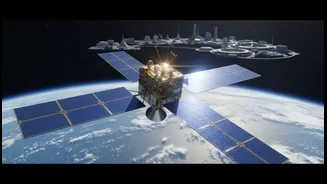
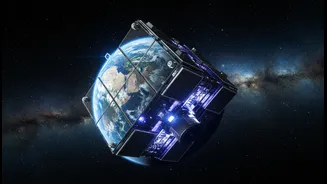
The rationale behind moving data centres to space is compelling. On Earth, data centres are voracious consumers of electricity and water for cooling, and their land footprint is ever-expanding. Orbital proposes to sidestep these issues entirely. Their satellites would be powered by vast solar arrays with near-continuous exposure to sunlight, and cooled by the vacuum of space, which is essentially free. Each satellite is envisioned as a single, high-density rack weighing about two tons. This approach aims to turn what are currently seen as terrestrial constraints into orbital advantages. The plan is ambitious, starting with a single GPU on a demonstration payload in 2027, followed by the first purpose-built satellite in 2028.
The View from India: A Booming Ecosystem
While Orbital's plan is a headline-grabber, it’s part of a global trend that India’s rapidly growing space-tech sector is well-positioned to join. India now has over 260 space startups, with companies like Skyroot Aerospace preparing for orbital rocket launches and Pixxel deploying hyperspectral imaging satellites that use AI analytics. Recently, Hyderabad-based TakeMe2Space announced a partnership to build India’s first indigenous optical inter-satellite link network, a critical technology for creating a sovereign, space-based data relay system. This move aims to deliver near-real-time intelligence without relying on foreign infrastructure. The work being done by these Indian startups in launch vehicles, satellite manufacturing, and data analytics creates a strong foundation to either compete with or collaborate on future on-orbit computing platforms.
A Crowded Sky and Regulatory Hurdles
Orbital is not alone in its ambition. SpaceX has also filed an application for its own gargantuan orbital data centre, potentially comprising up to one million satellites. These proposals have raised significant concerns among astronomers and regulators about orbital congestion, space debris, and the very appearance of the night sky. The FCC's role has expanded from a telecom regulator to a primary arbiter of the commercial space rush. The agency is grappling with how to apply existing rules to these novel space activities and is currently overhauling its licensing process to keep pace. An approval for a complex application can take a year or more, and the FCC is facing pressure to streamline this while ensuring safety and sustainability in orbit.