





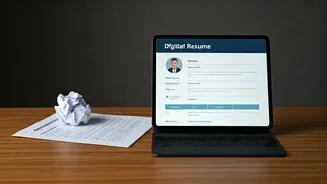



The Resume's Evolving Role
For decades, the resume was the undisputed king of job applications. It was your ticket in the door, a summarised history of your professional life. But the game has changed. Talent acquisition (TA) teams, especially in India’s booming tech, creative,
and marketing sectors, are drowning in applications. They spend mere seconds on each resume. In that short window, a static document listing job titles and responsibilities often fails to communicate true capability. It tells a recruiter what you were responsible for, but not how well you did it. This is where the portfolio steps in, changing the dynamic from 'telling' to 'showing'.
Why Portfolios Provide a Clearer Picture
A portfolio is a curated collection of your best work, presented in a dynamic, visual format. Unlike a resume, it provides undeniable evidence of your skills. For a developer, it's functioning code on GitHub. For a designer, it's a stunning user interface on Behance. For a writer, it's a collection of published articles. Recruiters prefer this because it cuts through the jargon and buzzwords. It allows them to see your thought process, your problem-solving abilities, and the tangible results you've delivered. A good portfolio tells a story of your professional journey, showcasing not just your skills but also your passion, personality, and potential cultural fit within a team.
What Recruiters Actually Want to See
Simply having a portfolio isn't enough; it needs to be strategic. Recruiters are looking for clarity and impact. They want to see case studies, not just final products. A powerful case study outlines the problem you were tasked with solving, the specific actions you took, and the measurable results of your work. For example, instead of just showing a website you designed, explain how your design improved user engagement by 20% or decreased bounce rate. Include testimonials from previous clients or managers. This social proof adds immense credibility. Finally, ensure your contact information is prominent. The goal is to make it as easy as possible for an impressed recruiter to get in touch.
Key Elements of a Winning Portfolio
Building your portfolio website can seem daunting, but focusing on a few key elements will set you up for success. Start with a clean, mobile-friendly design; many recruiters will view it on their phones. Prioritise quality over quantity by selecting only your 3-5 best projects that are relevant to the jobs you are targeting. Each project should have its own page with a detailed breakdown. Your 'About Me' section is crucial—use it to convey your professional brand and personality beyond a list of skills. Finally, link out to your professional social media profiles like LinkedIn and any relevant platforms like GitHub, Dribbble, or a personal blog. Use a simple, professional domain name, ideally your own name.
Don't Discard Your Resume Just Yet
While the portfolio is your new secret weapon, the resume isn't obsolete. Its role has simply changed. Many companies still use Applicant Tracking Systems (ATS) to filter initial applications. These systems are programmed to scan resumes for specific keywords related to the job description. Your traditional resume is what gets you past this digital gatekeeper. The portfolio is what wins over the human recruiter on the other side. Therefore, the best strategy is a two-pronged attack: a keyword-optimised resume for the machines, and a compelling portfolio link included within it for the humans. The resume gets you noticed; the portfolio gets you hired.