






The Seductive Simplicity of Megawatts
On paper, the goal is straightforward and ambitious. With policies like the Pradhan Mantri Kisan Urja Suraksha evam Utthaan Mahabhiyan (PM-KUSUM) scheme, India is driving the adoption of solar technology in the agricultural sector. The primary metric
for success often becomes the total installed solar capacity—a clean, easily measurable number that signifies progress towards renewable energy targets. For policymakers, megawatts are a tangible deliverable. For energy companies, they represent clear project goals. This focus has helped kickstart numerous pilot projects across the country. However, the very simplicity of this metric is its biggest flaw. It treats agrivoltaics as an energy project with an agricultural footnote, when in reality, it is a complex farming innovation that also happens to produce power. Recent reports show that even with this push, implementation has been slow, with key components of the KUSUM scheme falling well short of their targets due to financial, infrastructural, and awareness gaps.
Beyond Power: The Microclimate Advantage
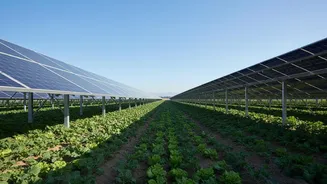
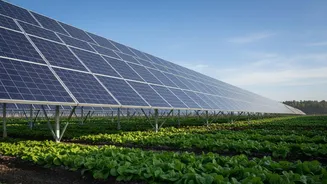
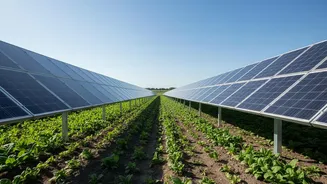
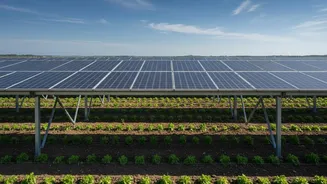
The true genius of agrivoltaics lies not in the electricity, but in the synergy. Solar panels create a unique microclimate that can be transformative for crops. By providing partial shade, they reduce the soil temperature and shield plants from the scorching afternoon sun, which is especially beneficial in India's increasingly hot climate. This shading effect significantly cuts down on water evaporation from the soil, with studies showing potential water savings of up to 30%. In a water-stressed country, this is a monumental advantage, potentially reducing the need for frequent irrigation and protecting farmers in drought-prone regions. This altered environment can lead to better growing conditions, reduced plant stress, and, for certain crops, a more stable and resilient harvest. Focusing only on the wattage produced by the panels overhead ignores these crucial, ground-level benefits that form the core of the system's value to agriculture.
The Critical Importance of Crop Science
Success in agrivoltaics is not a given; it is a science. Not all crops thrive in the shade. While shade-tolerant varieties like tomatoes, turmeric, chillies, and leafy greens have shown significantly higher yields under panels, light-hungry crops may suffer. The success of a project depends entirely on a careful pairing of crop, climate, and solar panel configuration. Factors like the height of the panels, the spacing between them, and whether they are fixed or track the sun all dramatically impact the amount of light reaching the plants below. A one-size-fits-all approach driven by maximizing solar exposure is destined to fail farmers. Research institutions like the Indian Council of Agricultural Research (ICAR) are studying these dynamics, but this knowledge needs to be at the forefront of policy and implementation. Without a 'crop-first' mindset, India risks creating systems that generate power but decimate farm yields, defeating the purpose of dual-land use.
The Farmer's Economic Reality
For agrivoltaics to be truly sustainable, it must be profitable for the farmer. The promise is a diversified income stream: one from selling crops and another from selling electricity or saving on power costs. This can provide a crucial buffer against crop failures and market volatility. However, the initial investment for elevated solar structures is substantial. While subsidies exist under schemes like PM-KUSUM, navigating the financial and bureaucratic hurdles can be a major challenge for small and marginal farmers. If the system design prioritizes solar capacity at the expense of agricultural productivity, the farmer could end up worse off. A slight drop in crop yield might be acceptable if offset by energy revenue, but a significant loss could be catastrophic. The economic viability hinges on a delicate balance, and policy must be designed to support this balance rather than just incentivizing power generation.
A New Blueprint for Success
To unlock the full potential of agrivoltaics, India needs to move beyond a singular focus on megawatts. The blueprint for success must be holistic. First, policy should incentivize integrated performance, rewarding projects based on a combined score of energy output, crop yield, and water efficiency, not just electricity. Second, farmer education and support are non-negotiable. Farmers need access to localized research on optimal crop choices and system designs for their specific region. Farmer Producer Organizations (FPOs) and cooperatives can play a vital role in bundling the needs of small farmers to overcome investment barriers. Finally, we must reframe our thinking. Agrivoltaics is not simply about placing solar panels on farms; it is about redesigning the farm itself to be a more resilient, productive, and sustainable ecosystem for the future.