


A Celestial Spectacle This Autumn
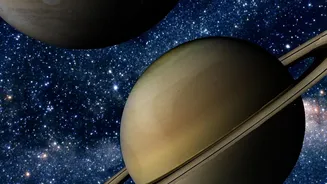
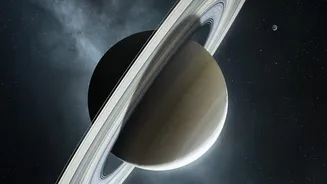
This autumn offers a fantastic window for planet-gazers. The main event for Saturn is its opposition on October 4, 2026. On this date, Earth passes directly between the sun and Saturn, making the ringed planet appear at its biggest and brightest for the year.
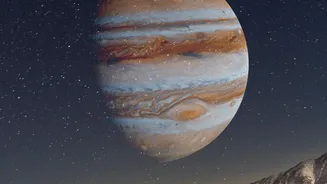
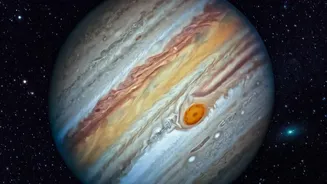
It will be visible all night long, rising in the east around sunset and shining brilliantly. Jupiter, while past its own opposition from earlier in the year, remains a dazzlingly bright object in the night sky. The autumn months provide clear opportunities to see both giants, often sharing the sky at different times of the night. Saturn in particular will be well-placed for observation from September all the way through November.
Your Pocket Observatory
Your smartphone is a powerful astronomy tool waiting to be used. Thanks to its built-in GPS and compass, your phone knows exactly where you are and which way you're pointing. When paired with a stargazing app, it uses this data to create a real-time map of the sky above you. This technology, often called augmented reality (AR), overlays information about stars, planets, and constellations onto your screen, turning a confusing starfield into a navigable map. It's an intuitive and accessible way to begin identifying the wonders of the night sky without any prior knowledge.
Choosing Your Stargazing App
A universe of apps is available, but a few stand out for their user-friendly design, making them perfect for beginners in India. Star Walk 2 is a great all-around choice, offering a beautiful interface and real-time tracking for both iOS and Android. SkyView Lite is another excellent free option, celebrated for its intuitive augmented reality feature that uses your camera to show you exactly what's in the sky. For those wanting a highly realistic and detailed view, Stellarium Mobile is a fantastic planetarium app that brings a comprehensive star map to your phone. All these apps are available on both Android and iOS and have free versions that are more than capable of finding Jupiter and Saturn.
Step-by-Step: Finding the Gas Giants
Ready to start your celestial hunt? It’s as simple as this: First, download your chosen app from the App Store or Google Play. Once installed, grant it permission to access your location so it can calibrate to your specific sky. For the best results, step outside into an open area away from tall buildings. Open the app and simply point your phone toward the sky. Most apps feature a search function; tap it and type in “Jupiter” or “Saturn.” An arrow or guide will appear on your screen. Follow this guide, moving your phone across the sky, and it will lead you directly to the planet, which will be identified and centered on your screen.
Beyond Finding: What to Look For
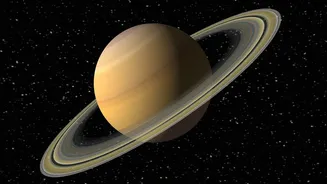
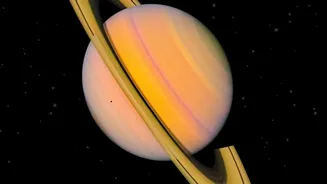
Once you’ve found them, take a moment to appreciate what you’re seeing. Even on a phone screen, the apps provide rich detail. For Jupiter, the app will simulate its appearance and often show the positions of its four largest moons—Io, Europa, Ganymede, and Callisto. These are the same moons Galileo Galilei discovered centuries ago. For Saturn, the main attraction is its stunning ring system. While seeing the actual rings requires a telescope, the apps will show you a beautiful rendering of the planet, complete with its iconic rings tilted towards us. This autumn is a great time to see them, as they have tilted back into view after being edge-on and virtually invisible in 2025.
Tips for the Best Viewing Experience
To make your stargazing session more enjoyable, a few simple tips can go a long way. The most important is to get away from city lights. Light pollution washes out fainter stars and makes it harder to see celestial objects. Find a park, a rooftop, or drive a short distance out of town for a darker sky. Give your eyes about 15-20 minutes to fully adapt to the darkness. Avoid looking at your bright phone screen during this time; many apps have a 'night mode' with a red tint that helps preserve your night vision. Finally, check the weather forecast for a clear, cloudless night and be mindful of the Moon’s phase—a bright full Moon can make the sky less dark and planets harder to spot.