





A Genuine Conservation Triumph
First, the good news is genuinely good. India has achieved something remarkable. Against a backdrop of global wildlife populations plummeting by an average of 73% since 1970, India has successfully increased the populations of several key species. Project
Tiger, launched in 1973 when the population was below 1,800, is a globally celebrated success. The most recent estimates from 2022 show the tiger population at 3,682 individuals, constituting over 70% of the world's wild tigers. This success isn't limited to tigers. Asiatic lion numbers grew from 674 in 2020 to a reported 891 in 2025, while leopard populations are estimated at over 13,800. This has been achieved through dedicated efforts like creating protected reserves (now numbering 53 for tigers), implementing stringent anti-poaching laws, and restoring prey populations.
The Science Behind the Count
The numbers themselves are the product of one of the world's largest and most sophisticated wildlife monitoring exercises. Gone are the days of relying on pugmark (footprint) analysis, which was notoriously unreliable and failed to detect the complete disappearance of tigers from Sariska in 2005. Today, the quadrennial All India Tiger Estimation uses a multi-phased, scientific approach. The primary method involves placing thousands of camera traps in pairs across vast forest landscapes. Since each tiger's stripe pattern is unique, like a human fingerprint, software can identify individual animals and prevent double counting. This is supplemented by sign surveys (documenting scat, tracks, and kills) and genetic sampling from collected scat, which provides further individual identification and data on population health. This rigorous, peer-reviewed methodology gives a much more robust, though still estimated, picture of the population.
The Squeeze: More Tigers, Less Space
Herein lies the central challenge that headlines often miss. While the number of animals in protected 'islands' has grown, the space available for them has not. In fact, it's shrinking. Many tiger habitats are now isolated pockets surrounded by a sea of human activity, including agriculture, settlements, and infrastructure like highways and railway lines. This fragmentation is the single biggest threat to long-term survival. Wildlife corridors—natural pathways that allow animals to move between these forest pockets to feed, breed, and maintain genetic diversity—are being degraded and severed. Studies show that a significant percentage of India's tiger population lives outside protected reserves. As these animals attempt to navigate a human-dominated landscape, they are forced into closer contact with people, setting the stage for conflict.
The Inevitable Rise in Conflict
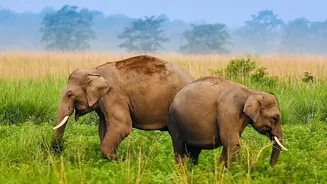
The success in boosting predator populations is directly linked to an alarming rise in human-wildlife conflict. This isn't an animal 'problem' but a space problem. As tigers, elephants, and leopards run out of room in reserves, they spill into surrounding areas, often seeking easy prey like livestock or foraging in agricultural fields. The consequences are tragic for both sides. Reports indicate that hundreds of human lives are lost annually in encounters with wildlife, particularly elephants. Farmers can lose entire portions of their income overnight to crop-raiding, pushing vulnerable families into debt. For the animals, the outcome is often retaliatory killings, death by electrocution from fences, or accidents involving trains and vehicles. This conflict is the difficult, unintended consequence of successful species-focused conservation.
Beyond the Big Cat Bias
The intense focus on flagship species like tigers and lions, while successful, creates a 'big cat bias'. It can divert attention and resources from other species and ecosystems that are equally under threat. Experts warn that while India excels in protected-area conservation, it lacks a clear strategy for animals that live largely outside these zones, such as the Indian wolf or the Great Indian Bustard. Furthermore, while mammal populations show gains, the picture for other life forms is less rosy. Reports indicate that many bird and amphibian species are in decline. A truly holistic approach to conservation requires looking beyond the charismatic megafauna and focusing on the health of entire ecosystems, from grasslands and wetlands to the smallest creatures within them.