







Why Traditional Diets Often Fail
For decades, the dominant approach to weight management has been simple calorie counting. Eat less, move more. While the maths is sound, the psychology is flawed. When we severely restrict calories without considering the *type* of food we're eating,
we are often left feeling perpetually hungry and deprived. This feeling of 'punishment' creates a negative relationship with food. Your body’s primal survival instincts kick in, increasing cravings for high-energy, often unhealthy, foods. This battle of willpower versus biology is one most people eventually lose, leading to feelings of failure and a rebound to old habits.
The Simple Science of Satiety
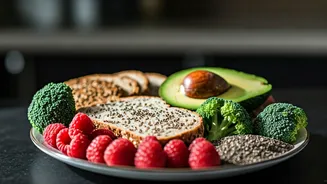
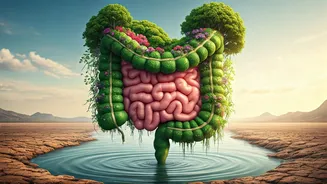
Satiety is the feeling of being full and satisfied after a meal. It's a complex process regulated by hormones and physical signals from your stomach to your brain. When you eat, your stomach stretches, sending a signal that you're getting full. Furthermore, certain nutrients—primarily protein and fibre—take longer to digest and trigger the release of hormones that tell your brain you've had enough. Foods low in these components (like sugary snacks or refined flour) are digested quickly, leading to a rapid spike and crash in blood sugar, and a swift return of hunger. The key, therefore, is to choose foods that maximise these fullness signals.
Embrace High-Volume, Low-Density Foods
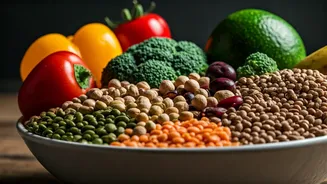
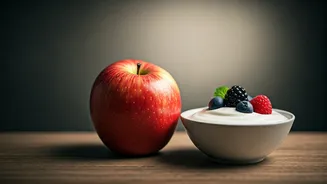
This is where the concept of 'volumetrics', or energy density, comes in. Energy density refers to the number of calories in a given amount of food. Foods with high water and fibre content—like fruits, vegetables, and soups—have low energy density. This means you can eat a large, physically satisfying volume of them for relatively few calories. For example, a cup of grapes and a small handful of raisins have similar calorie counts, but the grapes take up far more space in your stomach, contributing more to that feeling of fullness. By prioritising these high-volume foods, your plate looks abundant and your stomach feels full, eliminating the psychological feeling of scarcity.
Building a 'Fullness-First' Plate
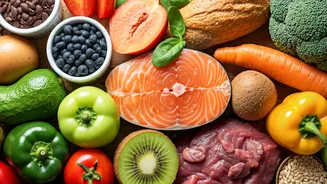
Making this shift in your daily meals is surprisingly simple. Instead of focusing on what to remove, focus on what to add. Start by filling half your plate with non-starchy vegetables like spinach, broccoli, cauliflower, or lauki. These are packed with fibre and water. Dedicate a quarter of your plate to a lean protein source. Think dal, chickpeas, paneer, tofu, eggs, or chicken. Protein is the most satiating macronutrient. The final quarter should be for complex carbohydrates—wholewheat rotis, brown rice, or millets like jowar and bajra. Their fibre content ensures a slow release of energy, keeping you fuller for longer. This framework ensures every meal is balanced to fight off hunger effectively.
Mindful Habits that Amplify Fullness
What you eat is only part of the equation; *how* you eat matters, too. It takes about 20 minutes for your brain to register that you're full. If you eat too quickly, you can easily consume more than you need before that signal arrives. Practice mindful eating: put away your phone, turn off the TV, and focus on your meal. Chew each bite thoroughly and pause between mouthfuls. Also, ensure you're well-hydrated. Sometimes our brains mistake thirst for hunger. Drinking a glass of water before a meal can help you gauge your true hunger levels more accurately and contribute to that feeling of fullness.