

A City Steeped in Mythology
To understand the peda, one must first understand Mathura. Situated on the banks of the Yamuna River in Uttar Pradesh, Mathura is one of Hinduism's seven sacred cities. Its significance comes from being the revered birthplace of Lord Krishna. This deep-rooted
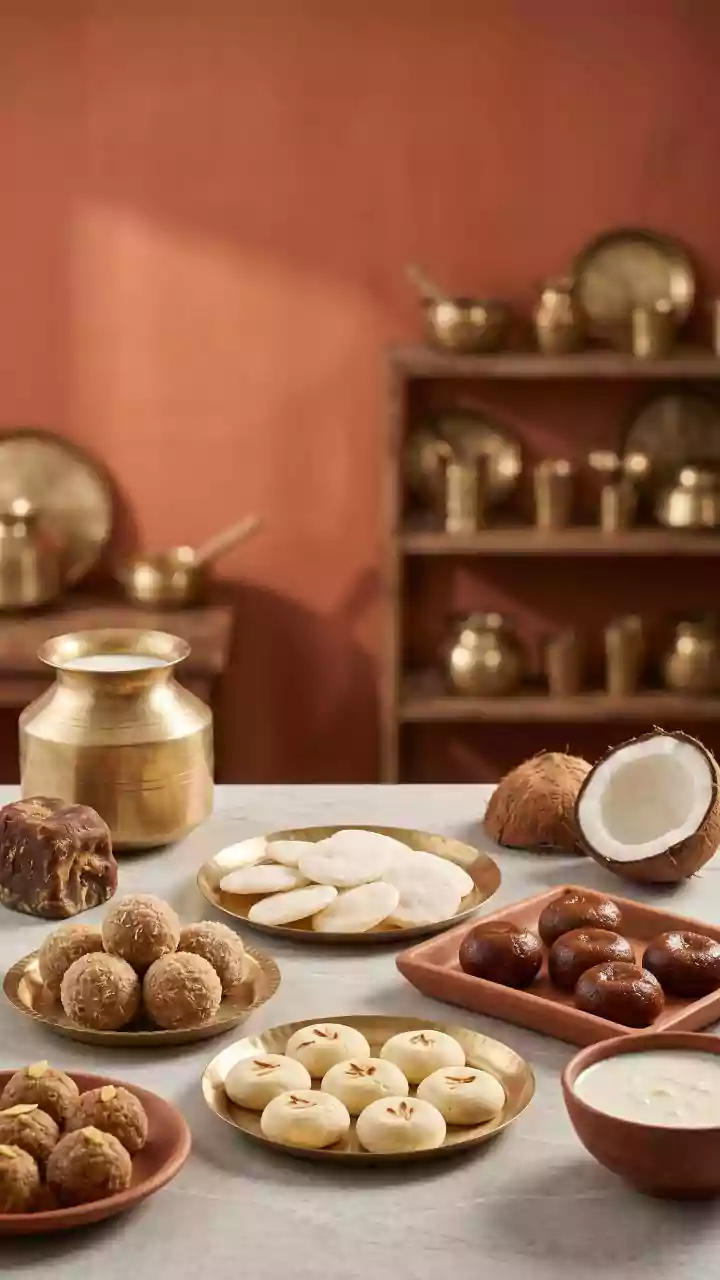
connection to Krishna's life and legends permeates every aspect of the city, from its ancient temples to its bustling markets. The region, known as Braj Bhoomi, is where Krishna spent his childhood, and tales of his love for milk and butter are central to local folklore. This pastoral heritage and abundance of dairy created the perfect environment for milk-based sweets to become a cornerstone of the local cuisine.
The Legend of a Sacred Sweet
The origin of the peda is intertwined with the divine. While exact historical records are scarce, oral traditions suggest milk sweets have been made in the region for centuries. A popular story credits the invention to Krishna's mother, Yashoda, who, after accidentally over-boiling a pot of milk, added sugar to the thickened result and created a treat her son adored. This connection cemented the peda's role not just as a sweet, but as 'prasad'—a blessed food offered to a deity and then distributed to devotees. Millions of pilgrims visiting Mathura's temples purchase peda as a spiritual souvenir, carrying a taste of the sacred city back home. This practice transformed the peda from a simple temple offering into a cultural icon.
The Art of the Authentic Peda
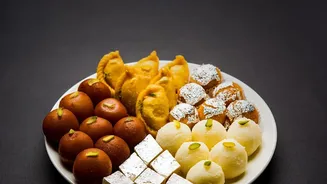
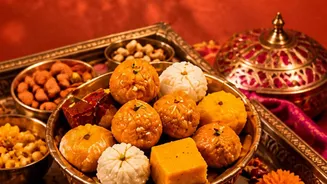
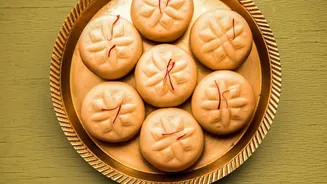
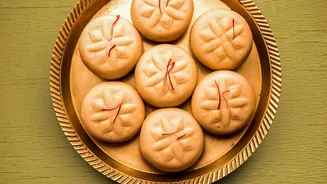
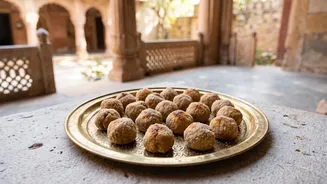
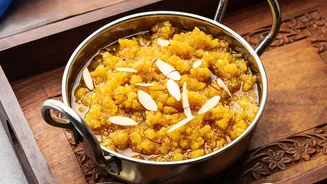
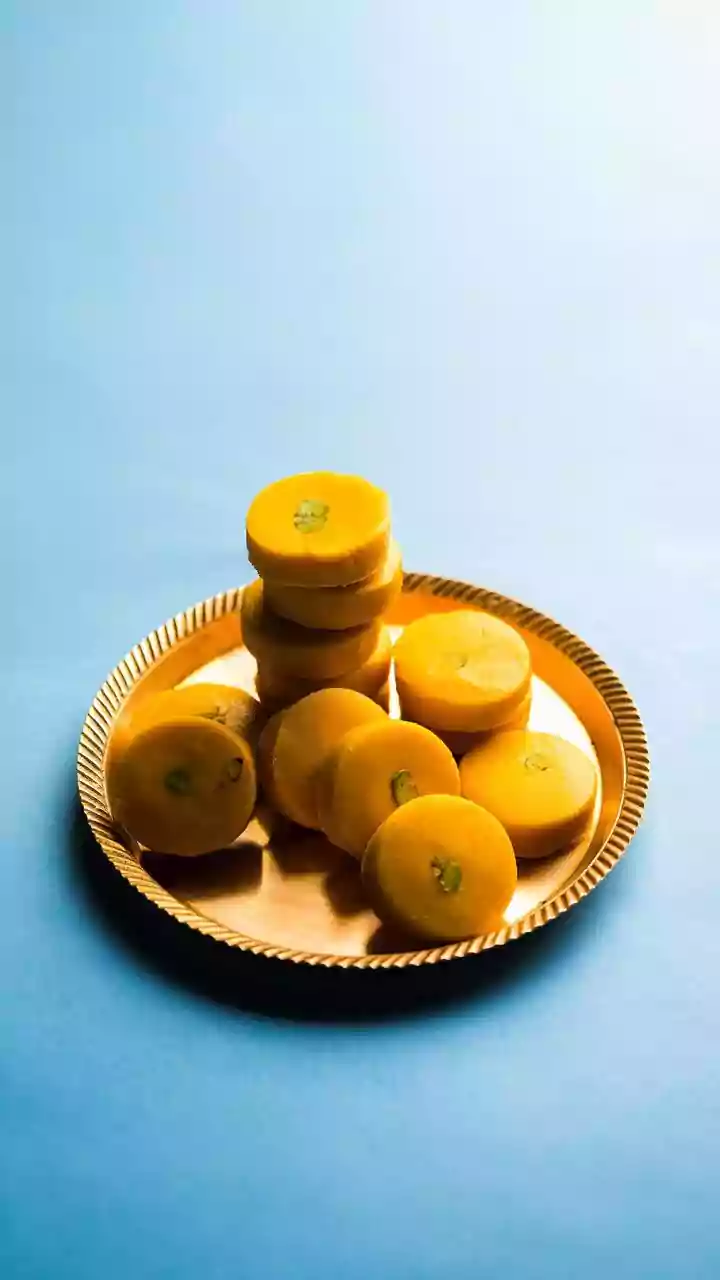
What distinguishes Mathura Peda from its many variations across India is its unique preparation, colour, and texture. The authentic process is one of patience. It begins with khoya, or mawa, which is milk that has been slowly cooked down to a solid. This khoya, traditionally from cow's milk but often now from buffalo's milk, is then roasted meticulously in a heavy-bottomed pan. This slow-roasting, or 'bhun-na', is the crucial step that gives the peda its signature brownish hue, a process of caramelization that imparts a deep, rich flavour. Once roasted, it's mixed with a special powdered sugar called 'tagar' and fragrant cardamom before being shaped into its familiar flattened rounds. The result is a dense, semi-soft sweet with a slightly grainy texture that melts in the mouth.
From Local Delicacy to National Fame
The phrase 'Mathura ka Peda' has become a brand in itself, entering proverbs and folk songs as a benchmark for quality. Its reputation has spread far beyond Uttar Pradesh, making it a staple at festivals like Janmashtami, Diwali, and Raksha Bandhan, and a traditional sweet to share when celebrating good news. This popularity has led to a thriving industry in the city, with countless sweet shops, some tracing their lineage back generations. However, this fame has also brought challenges, including the rise of imitations and the use of adulterated ingredients. To protect its authenticity, an application was filed to secure a Geographical Indication (GI) tag for the Mathura Peda. While the process, which began around 2022, is still underway as of late 2026, the move highlights the sweet's immense cultural and economic importance.