



Untangling 'Day' vs. 'Year'
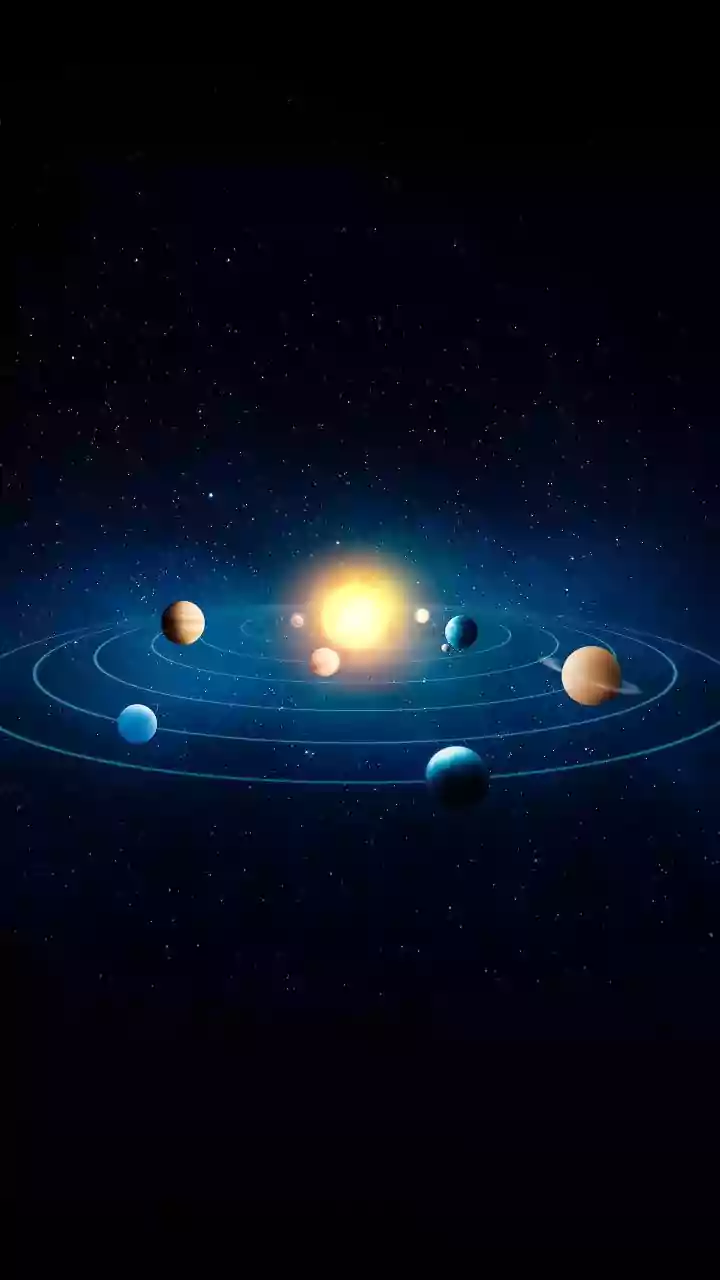
Before we dive into Venus’s bizarre schedule, let’s quickly reset our Earth-based assumptions. A ‘year’ is the time it takes a planet to complete one full orbit around its star. For Earth, that’s roughly 365 days. A ‘day’ is the time it takes for a planet to spin
once on its own axis. For us, that’s 24 hours. On most planets, including our own, you experience many, many days within a single year. But Venus breaks this fundamental rule in the most spectacular way.
The Venusian Calendar
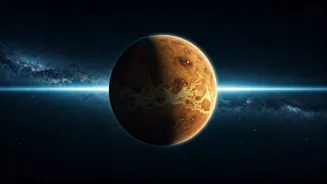
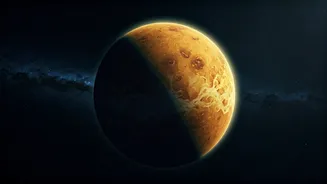
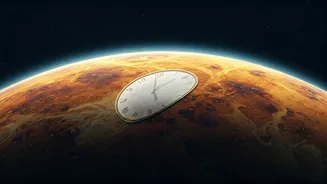
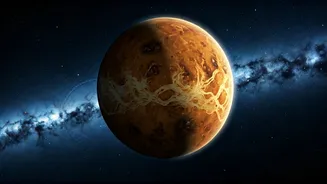
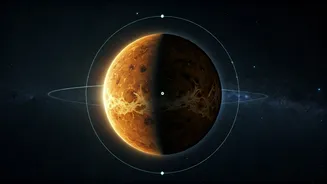
Let's look at the numbers, because they are truly mind-boggling. Venus completes one orbit around the Sun in about 225 Earth days. So, a Venusian year is 225 days long. However, Venus rotates on its axis incredibly slowly. It takes a staggering 243 Earth days to complete one full rotation. This means its rotational period (its day) is 18 days longer than its entire year. If you could stand on Venus, you would finish a trip around the Sun before the planet itself had even finished spinning once. This makes Venus unique in our solar system.
Slow and Backwards Rotation
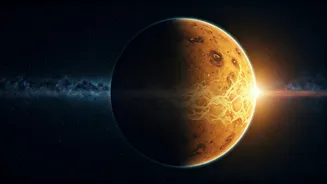
So, why is Venus such a slow spinner? The answer isn't entirely settled, but scientists have compelling theories. One leading idea is that Venus may have suffered a colossal impact with another large celestial body billions of years ago. Such a collision could have dramatically slowed its rotation and even knocked it 'upside down', causing it to spin in the opposite direction to most other planets in our solar system—a phenomenon known as retrograde rotation. This backward spin also has a weird effect on its solar day (the time from one sunrise to the next). Because the planet is rotating backward as it orbits forward, one sunrise-to-sunrise cycle on Venus takes about 117 Earth days. So while its rotational day is longer than its year, its solar day is shorter. Confusing, but true!
Earth's 'Evil Twin'
The strange calendar is just the beginning of what makes Venus so inhospitable. Often called Earth's 'evil twin' because of its similar size and mass, Venus is a hellscape. Its atmosphere is about 90 times denser than Earth's—the equivalent pressure of being 900 metres underwater. This thick blanket of carbon dioxide has triggered a runaway greenhouse effect, trapping heat and raising surface temperatures to an average of 465°C, hot enough to melt lead. To top it off, the planet is shrouded in thick clouds of sulfuric acid that rain down on the surface. It's a toxic, crushing, and scorching world.
Why We Study This Alien World
Studying Venus isn't just about cataloguing bizarre facts. Understanding how a planet so similar to our own could have ended up so different is crucial. It provides a natural laboratory for studying the greenhouse effect in its most extreme form, offering valuable lessons about climate change here on Earth. By examining its strange rotation, dense atmosphere, and volcanic surface, scientists hope to piece together the history of planetary formation and learn what makes a world habitable—or not. Missions like India's own planned Shukrayaan-1 aim to peel back the clouds and unlock more of Venus's secrets.