




The Anatomy of a 'Weak' Monsoon
Before we can connect a dry spell to global trends, it’s important to understand what a “weak” monsoon really means. For meteorologists, it’s not just a feeling; it’s a measurement. The India Meteorological Department (IMD) defines weak monsoon conditions
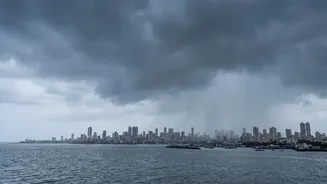
based on rainfall being significantly below the long-term average for a particular region. This can manifest in two ways: a lower overall volume of rain, or prolonged dry periods, known as 'breaks', interrupting the season. When rainfall is less than half the normal amount, conditions are officially considered weak. This has immediate, tangible consequences. It delays the sowing of crucial kharif crops like rice, cotton, and soybeans, strains our water reservoirs, and threatens the livelihoods of millions who depend directly on seasonal rains.
Weather's Mood vs. Climate's Personality
Herein lies the most crucial distinction: the difference between weather and climate. Think of weather as your mood—it can change day by day, even hour by hour. A sunny morning can turn into a stormy afternoon. A weak monsoon month is a weather event. Climate, on the other hand, is like your personality—it’s the long-term pattern, the sum of your moods over years. Scientists define climate as the average weather conditions over a period of 30 years or more. A single hot day doesn't prove global warming, and a single dry month doesn’t, by itself, signal irreversible climate change. It is a data point, an event within a much larger system. To understand the real story, we have to zoom out and look at the bigger picture.
The Influence of Natural Cycles
The monsoon has its own natural rhythms and is influenced by massive, planet-spanning climate patterns. The most famous of these is the El Niño-Southern Oscillation (ENSO). During an El Niño phase, the surface waters of the eastern Pacific Ocean become unusually warm. Though thousands of kilometres away, this shift has a powerful domino effect on global atmospheric circulation. For India, it often weakens the trade winds that drive the monsoon, leading to suppressed rainfall and a higher probability of drought. El Niño is a natural, cyclical phenomenon that has been occurring for centuries. Its presence can explain why a particular monsoon season might be weak, independent of the long-term warming trend. These cycles create variability, making some years wetter and others drier.
Finding the Signal in the Noise
So, if a single month is just weather, and natural cycles create ups and downs, how do scientists know climate change is happening at all? They do it by looking for the signal within the noise. This field, known as attribution science, uses powerful computer models and decades of data to find the 'fingerprint' of human-induced warming. Scientists compare our current reality with a simulated world that has no industrial-era greenhouse gas emissions. This allows them to determine if extreme weather events—like intense heatwaves or torrential downpours—have become more frequent or more severe because of climate change. They don’t focus on one event but on the shifting probability. Is a weak monsoon becoming more common? Are heavy rainfall events becoming more extreme? These are the trends that point to a changing climate.
The Verdict on India's Rains
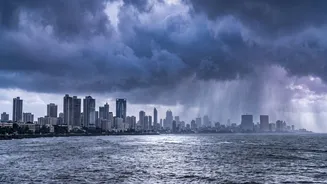
The scientific consensus is clear: while a single weak month is not definitive proof, climate change is making the Indian monsoon more erratic and unpredictable. Studies show that for every degree Celsius of warming, the monsoon is likely to carry more moisture, leading to an increase in overall rainfall. However, this doesn't mean evenly distributed showers. The trend is towards greater chaos: long dry spells punctuated by sudden, extreme downpours that can cause flooding. We are also seeing geographic shifts, where some traditionally dry regions are receiving more rain, while historically wet areas are seeing a decline. Climate change is amplifying the monsoon's natural variability, turning it into a less reliable, more volatile phenomenon.