





The Holy Trinity of Aroma
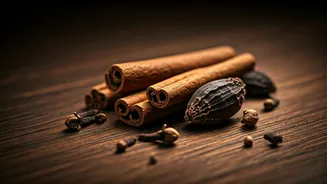
We're talking about cinnamon, cardamom, and cloves. Separately, they are potent and distinct. Together, they form a synergistic base that is the soul of countless dishes, from rich biryanis and kormas to fragrant chai and decadent sweets. This combination
is a masterclass in balance, providing warmth, sweetness, and a pungent depth that elevates everything it touches. It is the core of what many identify as the quintessential ‘garam masala’ aroma, a scent that is both comforting and complex, familiar yet endlessly fascinating. This trio doesn't just add flavour; it creates a memorable sensory experience that is deeply woven into the fabric of Indian culinary identity.
Cinnamon: The Warm, Sweet Embrace
Cinnamon, or ‘dalchini’, is the comforting anchor of the group. Its flavour profile is sweet, woody, and wonderfully warm. Harvested from the inner bark of Cinnamomum trees, its fragrant quills and powders have been prized for millennia, sparking trade wars and epic voyages. In Indian cooking, it provides a gentle, sweet counterpoint to more fiery spices. Think of the subtle warmth it lends to a pot of pulao, the way it rounds out the spice blend in a chana masala, or its essential role in holiday sweets and spiced cakes. Its inherent sweetness means it can reduce the need for sugar, while its aroma is one of pure comfort, reminiscent of festive kitchens and cosy winter evenings.
Cardamom: The Aromatic Queen
If cinnamon is the warm hug, cardamom (‘elaichi’) is the sophisticated, floral perfume. Often called the 'Queen of Spices,' its tiny black seeds are encased in a green pod, bursting with a complex flavour that is citrusy, minty, spicy, and floral all at once. It’s a flavour that cannot be easily substituted. Cardamom has the unique ability to cut through richness and add a bright, fragrant lift. It’s the reason your morning chai feels so refreshing and why a good kheer or phirni tastes so royally indulgent. While it shines in sweets and beverages, it’s also a key player in savoury dishes, providing an aromatic high note in biryanis and meat preparations that prevents them from feeling too heavy. Its price and potent flavour command respect in the kitchen.
Cloves: The Pungent, Pensive Note
Cloves, or ‘laung’, are the bold, pungent foundation of the trio. These dried flower buds pack an intense, almost medicinal punch, thanks to the compound eugenol. Their flavour is strong, peppery, and slightly bitter, with a numbing quality that speaks to their historical use as a pain reliever. In cooking, a little goes a long way. Cloves are the masters of adding deep, resonant bass notes to a dish. They provide the perfect sharp contrast to fatty meats in dishes like rogan josh and stand up to the strong flavours in pickling brines. In a rice pilaf or biryani, a few whole cloves infuse the grains with a distinct, earthy perfume that balances the sweetness of cinnamon and the fragrance of cardamom. They are the essential, grounding force that keeps the trio from becoming overly sweet or floral.
The Magic of Synergy
The true genius of this trio lies not in the individual spices, but in their perfect harmony. They create a complete flavour profile that is greater than the sum of its parts. The sweetness of cinnamon balances the sharp pungency of cloves, while the bright, complex aroma of cardamom weaves through them both, lifting and unifying the overall flavour. This is the art of ‘layering’ that is central to Indian cooking. This combination creates a foundational warmth that can be built upon with other spices like star anise, nutmeg, or black pepper. It’s a versatile base that works across sweet and savoury applications, and its enduring popularity across cultures—from Indian garam masala to European mulled wine—is a testament to its timeless and universal appeal.